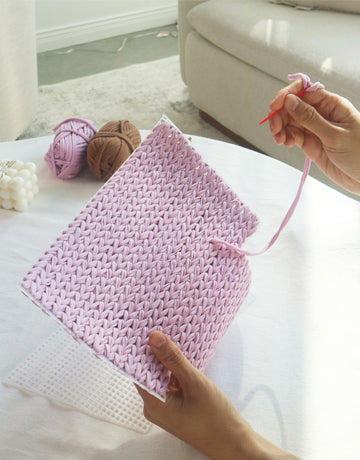

Crochet is a wonderfully accessible craft that turns a single strand of yarn into beautiful, tangible items using just a simple hook. This guide provides a comprehensive introduction for beginners, covering everything from the essential tools and fundamental stitches to your first easy projects and how to care for them. You will learn the slip knot, chain stitch, single crochet, and double crochet, and be guided through making a washcloth, scarf, and granny square. We'll also cover troubleshooting common mistakes to build your confidence and help you create handmade items you can be proud of.
Understanding the Fundamentals of Crochet
At its heart, crochet is wonderfully straightforward. You don't need a complicated machine or a whole arsenal of tools. It’s just you, a hook, and a ball of yarn. This simplicity is its superpower—making it an easy hobby to pick up, pop in a bag, and take anywhere.
But it's not just about the finished product. The gentle, repetitive motion of looping yarn is almost meditative. It’s a fantastic way to quiet a busy mind, making crochet a form of active mindfulness that helps melt away stress and unlock your creative side.
The Benefits of Learning Crochet
Beyond creating beautiful things, learning to crochet comes with some amazing benefits that enrich your life in surprising ways.
- Mindfulness and Stress Reduction: The steady, rhythmic motion of crochet is known to lower heart rate and reduce stress hormones like cortisol. It offers a focused, peaceful task that serves as a mental escape.
- Creative Expression: With an endless variety of yarn colors, textures, and patterns available, crochet becomes your personal canvas. You can create everything from stylish apparel to unique home décor that reflects your personality.
- Sense of Accomplishment: There's nothing quite like the satisfaction of finishing a project. Transforming a simple ball of yarn into something useful and beautiful is an incredible confidence boost.
Crochet is the art of creating fabric by using a single hook to interlock loops of yarn. Because you're working one loop at a time, you have the freedom to build everything from sturdy, dense fabric for baskets to light, airy lace for shawls.
The Crochet Community
One of the best parts of crochet is that you're never really doing it alone. The community is massive, friendly, and always excited to welcome newcomers. Just look at the yarn crafting scene in the US—events like the Bay Area Yarn Crawl are expected to bring together over 15,000 makers in 2026.
This boom shows how much people value mindful crafts and the connections they create. Many crocheters even turn their hobby into small businesses, sharing their passion with the world. Whether you connect with fellow crafters online or join a local group, you'll find a supportive network ready to share inspiration and help you along the way. Find out more about the growth of US crochet events and see for yourself how this craft brings people together.
How to Get Started: Essential Crochet Tools
Before you can magically turn a ball of yarn into a cozy scarf or a cute stuffed animal, you’ll need a few trusty tools. The good news? Getting started with crochet is one of the most budget-friendly crafts out there. You only need a couple of key items to get going.
Let's walk through choosing your very first hook, yarn, and a handful of other little helpers. Think of it like this: you wouldn't learn to paint with a dozen fancy brushes and oils. You'd start with a simple pencil and some paper. We'll take the same approach here, focusing on straightforward tools that make learning a breeze.
Choosing Your First Crochet Hook
The crochet hook is your wand, and they come in a surprising variety of materials and sizes. For now, let’s keep it simple.
- Aluminum Hooks: These are the standard recommendation for beginners. They are smooth, allowing the yarn to glide easily, which helps in establishing a steady rhythm. They are also durable and inexpensive.
- Bamboo Hooks: If you find yarn slipping off an aluminum hook too easily, give bamboo a try. They’re lightweight, warm to the touch, and have a little more grip.
- Ergonomic Hooks: These have cushioned, built-up handles designed to reduce hand strain. While not essential initially, they are a fantastic upgrade for comfort during longer crochet sessions.
A 5mm (H-8) aluminum hook is the gold standard for beginners. It's a versatile, mid-sized hook that works beautifully with the most common yarn for learners (worsted weight) and is specified in countless beginner patterns.
Choosing Your First Yarn
Stepping into a yarn shop for the first time can feel like a rainbow exploded. It’s a lot to take in! But you only need to know two things to make a great choice: the yarn’s weight (its thickness) and its fiber (what it's made of).
To set yourself up for success, find a yarn that’s easy to work with and, most importantly, easy to see.
Beginner Crochet Hook and Yarn Pairing Guide
Choosing the right hook for your yarn is a fundamental skill. This table provides a starting point for pairing common beginner-friendly yarn weights with the correct hook size. A yarn's weight is measured by a category number, with a higher number indicating a thicker yarn.
| Yarn Weight Name | Category Number | Recommended Hook Size (US) | Recommended Hook Size (Metric) |
|---|---|---|---|
| Worsted | 4 | G-6 to I-9 | 4.0mm to 5.5mm |
| Aran | 4 | H-8 to K-10.5 | 5.0mm to 6.5mm |
| Chunky | 5 | K-10.5 to M-13 | 6.5mm to 9.0mm |
| Super Bulky | 6 | M-13 to Q | 9.0mm to 15.0mm |
For your first project, pick up a worsted-weight (Category 4) yarn in a light, solid color. The yarn is thick enough to handle easily, and a pale shade makes it much easier to see your stitches.
Beyond just being a material, your yarn choice is part of the whole experience.

As you can see, crochet is so much more than a hobby—it's a way to practise mindfulness, express your creativity, and connect with others. And crafters are becoming more mindful of their materials. In Canada, for instance, we’re seeing a big shift toward sustainable fibres. While affordable acrylic still makes up a huge chunk of projects, the demand for organic and recycled yarns has been climbing steadily as people look for quality they can feel good about.
Other Essential Crochet Supplies
Okay, besides a hook and yarn, a few other little things will make your crochet life so much easier. They don't cost much, but they are absolutely invaluable.
- A Small Pair of Scissors: Any sharp pair will do. You’ll need them to snip your yarn when you finish a project or switch colors.
- A Tapestry Needle: This is a blunt-tipped needle with a large eye. It’s used to weave in loose yarn tails for a clean, professional finish.
- Stitch Markers: These small plastic clips are a beginner’s best friend. Use them to mark the first stitch of a round so you don't lose your place, or to help you keep an accurate stitch count.
And that’s it! With these simple tools in your bag, you’re all set to tackle your first real crochet project.
How to Crochet: The Four Fundamental Stitches
Alright, you've got your hook and yarn, and you're comfortable holding them. This is where the magic really starts to happen. We're about to learn the fundamental stitches—the handful of movements that are the heart and soul of every single crochet project you’ll ever make.
Don't aim for perfection right off the bat. Just relax, get a feel for the rhythm, and let your hands build that muscle memory. Soon, you'll be doing this without even thinking.

The Slip Knot (sl kn)
Literally every crochet creation begins with a slip knot. It’s an adjustable loop that you place on your hook to begin.
- Create a Loop: Drape the yarn over two fingers, with the tail end in front. Wrap the working yarn (attached to the ball) up and behind the tail end to form a cross.
- Pull Through: Reach through the loop, grab the working yarn, and pull it through to create a new loop.
- Tighten and Place: Gently tug both yarn ends to tighten the knot. Slide the new loop onto your crochet hook and pull the working yarn to snug it up. The loop should be firm enough to stay on the hook but loose enough to slide easily.
The Chain Stitch (ch)
The chain stitch (abbreviated as ch) creates the foundation for most crochet projects. It forms a simple line of loops into which you will work your first row of stitches. To make a chain, you must master the yarn over (abbreviated as yo), the most basic move in all of crochet. A "yarn over" is simply the act of wrapping yarn from back to front over the top of your hook.
- Start with the slip knot on your hook.
- Yarn over (yo).
- Use your hook to catch the yarn and pull it through the loop already on your hook.
- You have just made one chain stitch. Repeat this motion to create a foundation chain of the desired length.
The Single Crochet Stitch (sc)
The single crochet stitch (sc) creates a tight, dense fabric ideal for amigurumi (stuffed toys), durable washcloths, and sturdy bags. It is a short stitch, so projects grow slowly but result in a strong fabric.
- Insert Your Hook: Start with a foundation chain. Skip the first chain from your hook and insert the hook into the center of the second chain.
- Yarn Over and Pull Up a Loop: Yarn over, and pull that yarn back through the chain. You will now have two loops on your hook.
- Yarn Over and Pull Through Both Loops: Yarn over one last time and pull your hook through both of the loops on your hook. You are now back to one loop, and you’ve completed a single crochet stitch.
The Double Crochet Stitch (dc)
The double crochet stitch (dc) is about twice as tall as a single crochet. This extra height means your project works up much faster, creating a looser, more flexible fabric perfect for blankets, scarves, and sweaters.
- Yarn Over First: Before inserting the hook, yarn over.
- Insert and Pull Up a Loop: Insert your hook into the stitch (for a foundation chain, this is usually the fourth chain from the hook). Yarn over again and pull up a loop. You should now have three loops on your hook.
- Yarn Over and Pull Through Two: Yarn over and pull through just the first two loops on the hook. Two loops will remain.
- Yarn Over and Pull Through Final Two: Yarn over one final time and pull through the last two loops on your hook. That’s a complete double crochet.
Your First Easy and Satisfying Crochet Projects
Alright, you’ve practised your stitches, and now it's time for the really fun part—making something real! Moving from a practice swatch to a finished object is one of the most rewarding feelings in crochet. It’s that "I made this!" moment.
I've picked out three simple projects just for beginners. They only use the basic stitches you’ve already learned, so you can focus on building your confidence and creating something you can actually use and be proud of. Let's get hooking!

First Up: The Simple Single Crochet Washcloth
A washcloth is the absolute perfect first project. It’s small enough that you'll finish it quickly, and it’s a fantastic way to get your single crochet stitches looking neat and even. You'll get a great feel for turning your work and keeping your tension consistent—two skills you’ll use in every project from here on out.
- Materials Needed: One ball of 100% cotton worsted-weight yarn and your H-8 (5mm) crochet hook. Cotton is your best friend here because it’s super absorbent and tough.
- Stitches Used: Chain (ch) and Single Crochet (sc).
-
Pattern:
- Chain 31.
- Row 1: Single crochet in the second chain from your hook, and then in every chain all the way across. You should have 30 stitches.
- Row 2: Chain 1 (this is your turning chain and doesn't count as a stitch), and turn your work. Single crochet in each stitch across.
- Keep repeating Row 2 until your piece looks like a square. Fasten off, and use your tapestry needle to weave in those ends.
Next, Get Cozy with a Double Crochet Scarf
Ready to find your flow? A simple scarf made with double crochet stitches is perfect for getting into a comfortable rhythm. Because the double crochet stitch is taller, this project grows much faster than the washcloth, which is incredibly motivating!
- Materials Needed: Two skeins of soft worsted-weight acrylic or wool-blend yarn and your H-8 (5mm) crochet hook.
- Stitches Used: Chain (ch) and Double Crochet (dc).
-
Pattern:
- Chain 22.
- Row 1: Double crochet in the fourth chain from your hook, and then in each chain across. You'll have 20 stitches.
- Row 2: Chain 3 (this counts as your first double crochet), and turn your work. Double crochet in each stitch across.
- Repeat Row 2 until the scarf is as long as you like (around 60 inches is a great length). Fasten off and weave in your ends.
A handmade scarf isn’t just an accessory; it’s a wearable accomplishment. Finishing a project of this size is a huge confidence booster and proves you have the skills to tackle larger items like blankets and garments.
Finally, the Classic Granny Square
The granny square is pure crochet joy! It's an iconic little motif that will teach you how to work in rounds. Instead of going back and forth in rows, you'll work from the centre out. This is a game-changing skill for making everything from hats and stuffed toys to stunning blankets.
- Materials Needed: Scraps of worsted-weight yarn in various colours and your H-8 (5mm) crochet hook. This is perfect for using up leftover bits of yarn!
- Stitches Used: Chain (ch), Slip Stitch (sl st), and Double Crochet (dc).
-
Pattern:
- Round 1: Start with a slip knot and chain 4. Slip stitch to the first chain to form a ring. Chain 3 (this counts as your first dc), then work 2 more dc into the ring. (Chain 2, then 3 dc into the ring) three times. Chain 2, and join with a slip stitch to the top of your beginning chain 3.
- Round 2: Slip stitch into the next chain-2 space. Chain 3 (counts as your first dc), then work (2 dc, ch 2, 3 dc) all in that same space. Chain 1, then in the next chain-2 space, work (3 dc, ch 2, 3 dc). Repeat from * to * two more times. Chain 1, then join with a slip stitch.
Untangling the Knots: Fixing Common Crochet Goofs
Trust me, every single person who has ever picked up a crochet hook has made a lopsided scarf or a wonky-edged blanket. It's practically a rite of passage! Hitting these little snags is just part of the learning curve. So, let's look at the most common hiccups for beginners and figure out how to smooth them out.
Don't get discouraged when your project looks a bit... creative. A few simple tricks are usually all it takes to get things back on track.
Is Your Project Growing (or Shrinking) on Its Own?
This one’s a classic. You start out making a perfectly straight rectangle, but a few rows in, it starts to look more like a triangle or a trapezoid. Nine times out of ten, the mystery lies in your stitch count. It is incredibly easy to accidentally skip the last stitch in a row or add an extra one where it doesn't belong.
The fix is straightforward but absolutely essential: count your stitches. Seriously, count them after every single row. It takes a few seconds, but it will save you so much frustration. Popping a stitch marker into the first and last stitch of your row is also a game-changer; it gives you a clear target for where to start and stop.
Beginner's Tip: That little chain you make at the beginning of a new row? It's a sneaky troublemaker. Sometimes it counts as your first stitch, and sometimes it doesn't. Your pattern will always tell you, so double-checking those instructions will solve a world of shaping headaches.
Why Are My Edges Curling Up?
You've just finished a lovely, flat piece, like a dishcloth, only to see the edges curling inward like an ancient scroll. This almost always comes down to one thing: your tension is too tight. When you pull the yarn super taut with every stitch, the fabric has to curl up to release all that pent-up pressure.
The solution is to consciously relax. Take a deep breath and loosen your grip on both the yarn and your hook. Let the yarn glide more smoothly through your fingers instead of strangling it. If that doesn't quite do the trick, try switching to a slightly larger hook. A bigger hook naturally creates looser, bigger stitches, which will encourage your work to lay flat.
How Can I Get My Stitches to Look More Even?
Inconsistent tension is what happens when some of your stitches are tight and tiny, while others are loose and loopy. It can make your finished fabric look a bit bumpy. Don't worry, consistency is all about muscle memory, and there are ways to speed up that process.
- Find Your Flow: Play around with how you hold your yarn. A popular method is weaving it over and under your fingers (like around your pinky and over your index finger) to create gentle, even resistance. The goal is a smooth glide, not a death grip.
- Warm Up First: Before diving into a project, just make a small practice square (we call this a swatch). It gets your hands into the rhythm and helps you find that sweet spot for your tension.
- Let the Hook Do the Work: When you pull a new loop of yarn onto your hook, resist the urge to yank it tight. The barrel of the hook is designed to make the loop the perfect size, so just let it be.
Honestly, learning to fix your mistakes is a skill all on its own. Every time you sort out a problem, you're becoming a smarter, more confident crocheter.
How to Care for Your Handmade Creations
There’s nothing quite like weaving in that last end and holding your finished crochet project in your hands. You did it! Now, how do you make sure your hard work stays beautiful for years to come?
Proper care is everything, and the secret is hiding in plain sight: on your yarn label. That little piece of paper tells you the fiber content—like acrylic, cotton, or wool—and gives you specific washing instructions. Always, always check this first! A cozy wool sweater, for instance, needs a completely different kind of care than a sturdy cotton dishcloth.
Decoding Washing and Drying by Fiber
Every material reacts to water and heat in its own way. While the yarn label is your golden rule, here’s a quick rundown of what to expect from the most common fibers:
- Acrylic & Blends: These yarns are workhorses. They're generally machine-washable, so just use a gentle cycle with cool water. You can often tumble dry them on a low heat setting, too.
- Cotton: This natural fiber is strong and absorbent, so it can usually handle a machine wash. But be careful—it can shrink in high heat! Stick to cool water and either a low-heat dry cycle or, even better, let it air dry.
- Wool & Natural Fibers: These need the most delicate touch. Hand wash them in cool water with a tiny bit of no-rinse wool wash. Never wring or twist the fabric, as this can cause it to felt or stretch. Instead, gently squeeze out the extra water.
Always dry natural fibers flat on a towel, away from direct sunlight or heat. Hanging a wet wool sweater will cause it to stretch out of shape from its own weight, and it will never be the same.
The Finishing Touch: Blocking Your Crochet
Ever finish a project and wonder why it looks a bit rumpled or the stitches aren't perfectly even? The solution is a simple but game-changing technique called blocking. It’s the final step that takes your work from looking "homemade" to "handmade."
Blocking uses moisture to relax the yarn fibers, allowing you to shape your project and set the stitches for a polished, professional finish. It’s like ironing a dress shirt—it just makes everything look crisp and intentional.
There are three main ways to do it:
- Wet Blocking: Perfect for natural fibers like wool. You’ll soak the item completely, gently press out the excess water (don't wring it!), and then pin it to your desired shape on foam mats to air dry.
- Steam Blocking: This is your go-to for acrylics and blends. You pin the dry project into shape, then use a garment steamer or the steam function on an iron to apply steam without ever touching the fabric. The heat and moisture relax the plastic fibers into their new shape.
- Spray Blocking: The gentlest method of all. Just pin your project out and give it a good spritz with a water bottle until it's damp, then let it dry completely.
This one step truly transforms your crochet. It evens out your tension, defines your stitches, and opens up delicate lace patterns beautifully. Don't skip it!
Got Questions? We’ve Got Answers!
As you dive into the wonderful world of crochet, you’re bound to have a few questions. It’s totally normal! Here are some quick, straightforward answers to the things new crocheters ask most, so you can spend less time wondering and more time creating.
What Is the Main Difference Between Crochet and Knitting?
The easiest way to tell them apart is by looking at the tools. Crochet uses one hook, and knitting uses a pair of needles. This one simple difference changes everything about the fabric you create.
With crochet, you’re working with a single live stitch at a time. This makes it a dream for building sturdy, three-dimensional shapes like toys and baskets, but it's also fantastic for airy, lacy shawls. Knitting keeps many live loops on the needles at once, which produces a stretchier, drapier fabric often favoured for things that need a close fit, like sweaters and socks.
How Do I Start Reading a Crochet Pattern?
At first glance, a crochet pattern can look like a secret code. And in a way, it is! But it’s a code you can crack very easily. Patterns use a bunch of standard abbreviations to keep the instructions concise.
You’ll see these pop up all the time:
- ch: Chain stitch
- sl st: Slip stitch
- sc: Single crochet
- hdc: Half double crochet
- dc: Double crochet
Think of these abbreviations like a secret decoder ring. When a pattern says "sc in next 10 st," it’s just a shorthand way of telling you to work one single crochet stitch into each of the next ten stitches. Almost every pattern includes a key upfront, so you’ll never be left guessing.
How Long Will It Take Me to Learn Crochet?
This is the best part—you can get the hang of the basics incredibly fast! Honestly, most beginners can figure out a slip knot, a chain, and the single crochet stitch in just one weekend.
With just a few hours of practice, you’ll be ready to tackle your very first project, like a simple dishcloth or a cosy scarf. Your skills will naturally grow with every new thing you make. The most important thing is to relax, have fun with it, and don't worry about making it perfect right away.
Where Can I Find a Good Crochet Community?
Finding your people is one of the most rewarding parts of this hobby. You're joining a massive and wonderfully supportive global community! Online is a fantastic place to start.
- Ravelry: This is a crafter’s paradise. It’s a huge online database of patterns with forums for just about any project you can dream of.
- Social Media: You can find thousands of crochet groups on Facebook and Instagram. They’re perfect for showing off your work, asking for a second opinion, and finding endless inspiration.
- Local Yarn Shops: Never underestimate the magic of an in-person connection! Your local yarn shop is often the centre of the crafting community, hosting classes, workshops, and stitch nights where you can meet fellow makers.
Explore More on Stitch Mingle:
- Ready to get started? Check out our Beginner-Friendly Crochet Kits.
- Learn to speak the language of crochet with our guide on How to Read Crochet Patterns.
- Master the basics with our detailed Crochet Stitches Guide.