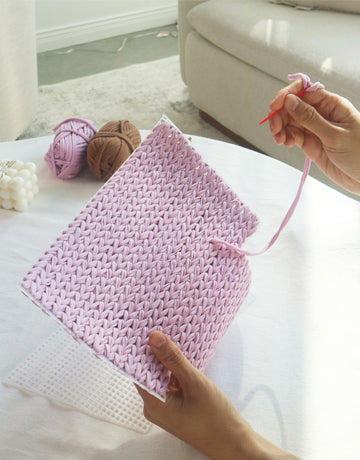

You might be here because you want a hobby that uses your hands, slows your breathing, and leaves you with something lovely at the end. Not another app. Not another half-finished craft haul. Something steady.
Hooked rug patterns are a wonderful place to begin. They look detailed, but the process is simple at heart. You pull strips of wool through a backing, one loop at a time, until a picture appears. It feels a bit like painting with wool.
If you have never tried it before, you do not need to be “good at art” to enjoy it. You need a pattern you like, a few basic supplies, and the patience to let the design grow row by row. Once that clicks, rug hooking starts to feel less mysterious and more like a rhythm.
The Enduring Charm of Rug Hooking
Many people fall for rug hooking the first time they see it because it feels old-fashioned in the best way. The tools are humble. The motion is repetitive. The finished piece has softness, texture, and character that printed décor cannot fake.
There is also comfort in how direct the craft is. You are not chasing perfection. You are building colour, shape, and surface by hand. A small flower, a hen, a heart, a grid of diamonds. Every loop adds to the story.
A craft born from need
Hooked rug patterns carry a history that gives the craft real depth. In the Canadian Maritime Provinces, especially Nova Scotia and Newfoundland, rug hooking took root around 1800 to 1825 as a practical craft among poor families who reused fabric scraps from old clothing and hooked them through burlap sacks to make warm floor coverings for harsh winters, according to this history of primitive rug hooking in Atlantic Canada.
Before 1830, many homes had bare floors and imported carpets were largely for the wealthy, so local women made their own rugs from discarded materials. That early style became known as Primitive Rug Hooking, and it still shapes how many people picture hooked rugs today.
Tip: If primitive hooked rug patterns appeal to you, start with simple shapes. Sheep, berries, stars, vines, and houses are forgiving motifs for a first project.
Why the history still matters
Knowing that history changes the way you see the craft. A hooked rug is not just décor. It comes from ingenuity.
Women took what they had on hand and turned it into something useful, durable, and beautiful. That spirit still lives in the craft today. Even when you choose a modern design, you are working in a tradition built on resourcefulness.
Here are a few reasons beginners often connect with rug hooking so quickly:
- It is tactile: Your hands stay busy, which many people find calming.
- It is visual: You see progress early, even after a short session.
- It is forgiving: Slight variation in loops often adds charm rather than causing problems.
- It is expressive: The same hooked rug patterns can look completely different in different colours.
From utility to folk art
Over time, rug hooking grew beyond necessity and became a recognised regional art form. The same Atlantic Canadian history notes that hooked rugs came to express local identity through motifs like ships, animals, and florals, drawing from daily life and seafaring culture.
That is part of the reason the craft still feels so personal. A hooked rug can be practical and expressive at once. It warms a room, but it also says something about the person who made it.
If you are new, that is good news. You do not need to begin with a masterpiece. Your first rug can be a small design that makes you smile. A pattern is not a test. It is a path.
Gathering Your Essential Rug Hooking Supplies
Buying supplies for a new craft can feel like wandering into a kitchen where every recipe uses unfamiliar ingredients. Rug hooking becomes much easier once you know what each item does.
The basic toolkit is small. You need a hook, a frame or hoop, a backing fabric, and wool strips or yarn suited to your design.

The four essentials
| Supply | What it does | What beginners should notice |
|---|---|---|
| Hook | Pulls wool strips through the backing | A comfortable handle matters more than fancy looks |
| Frame or hoop | Holds backing taut while you work | Tension should feel firm, not drum-tight |
| Backing fabric | Serves as the foundation for the whole rug | The weave affects both ease and accuracy |
| Wool strips or yarn | Creates the colour, texture, and design | Even cuts help your loops look consistent |
Backing fabric matters more than most beginners expect
This is the supply that causes the most confusion. People often assume any coarse fabric will do. In practice, your backing changes how smooth the process feels and how clean the finished design looks.
According to Ragged Life’s guide to rug hooking materials, primitive linen typically has 4.5 to 5.5 threads per inch, while burlap usually has 3 to 4 threads per inch. That denser weave helps primitive linen reduce stretch-induced distortion by up to 30% during long hooking sessions. The same guide notes that burlap tends to fray and tear more easily under repeated hook insertions, while primitive linen offers better visibility for tracing and hooking.
For a beginner, that means this:
- Primitive linen is usually easier to see and follow.
- Burlap can feel rougher and less stable.
- A clearer weave helps you place loops with more confidence.
If you want hooked rug patterns with tidy lines, linen gives you a friendlier start.
How each tool should feel in your hands
A hook should feel balanced, almost like a pencil with a purpose. If your grip is strained after a few minutes, the handle may not suit you.
A frame or hoop should hold the backing taut enough that the fabric does not sag while you work. Think of a small trampoline. Not hard as wood, but springy and secure.
Wool strips should glide, not fight you. If they snag constantly, your strips may be too wide for the backing, or your backing may be too coarse.
Key takeaway: Beginners often blame themselves when the craft feels awkward. Just as often, the issue is the material choice, especially the backing.
A simple shopping checklist
Take this list with you if you are sourcing supplies one piece at a time:
- Choose a basic hook: A simple primitive hook is enough to start.
- Pick a manageable frame: A hoop works for small projects, while a frame is useful if you like more workspace.
- Prioritise good backing: Primitive linen gives many beginners a smoother experience.
- Match wool to pattern style: Chunkier cuts suit bold, simple motifs. Finer cuts suit more detail.
If you enjoy beginner-friendly craft setups in general, this overview of latch hooking kits in Canada is useful for seeing how all-in-one kits remove the guesswork that often stops new crafters before they begin.
Decoding Hooked Rug Patterns and Motifs
A pattern can look confusing at first. Lines cross. Shapes overlap. Colour areas may seem random. Then, once you learn how to read it, the whole thing starts to feel like a map.
That is the best way to think about hooked rug patterns. They are not strict commands. They are guides that show you where shapes begin, where colours shift, and where texture can add life.
The main pattern families
Most beginner patterns fall into a few broad style groups.
Primitive patterns often include animals, berries, stars, flowers, houses, vines, and folk-art shapes. They usually favour bold outlines and strong, simple forms. If you like warmth and a handmade look, these are a lovely place to start.
Geometric patterns use repeated shapes such as diamonds, stripes, grids, arches, and blocks of colour. They often feel fresh and modern, especially in contemporary homes.
Pictorial patterns show scenes or objects more directly. Think of birds, baskets, seasonal motifs, or stylised natural scenes.
How to read the “language” of a pattern
When you first look at a printed or drawn pattern, focus on three things:
- Outline lines: These define the main shapes.
- Interior spaces: These tell you where colour or texture changes will happen.
- Scale: This tells you whether your motif will read clearly once hooked.
Beginners often make one common mistake. They choose a pattern with too many tiny details. Small details on paper can become crowded once wool is added.
A better first choice is a pattern with distinct shapes and enough breathing room between lines.
Primitive versus geometric at a glance
| Style | Best for | Look and feel |
|---|---|---|
| Primitive | New hookers who want forgiving shapes | Rustic, warm, folk-inspired |
| Geometric | Beginners who like clean repetition | Modern, organised, graphic |
| Pictorial | Crafters comfortable with colour planning | Expressive, story-driven |
Why geometric patterns are gaining attention
Modern geometric hooked rug patterns are becoming more visible, especially among eco-conscious crafters. An emerging trend noted on this geometric rug hooking collection page says California’s sustainable craft sector surged 22% in the last 12 months, and 35% of attendees at a 2026 Bay Area Fiber Arts Expo sought “green” rug hooking patterns, while only 4% found region-appropriate options.
That matters because it shows a real gap between what new crafters want and what they can easily find. Clean geometric motifs pair naturally with modern interiors, and they also work well with thoughtful material choices.
Choosing a pattern that fits your first project
A good beginner pattern has clear shapes, moderate contrast, and enough repetition to build confidence. Good first motifs include:
- A simple flower: Great for practising curves
- A heart or star: Easy to recognise, easy to fill
- A checkerboard or stripe layout: Excellent for learning even spacing
- A leaf or vine: Useful if you want to experiment with direction later
If you want to study how different motif styles translate across textile design, browsing a large pattern gallery can help train your eye. You start to notice what makes a design readable, balanced, and appealing before you ever hook a loop.
Tip: If a pattern looks charming but slightly busy, simplify it. You can remove tiny shapes, merge small colour areas, or enlarge key motifs.
A note on scaling
You do not need advanced drafting skills to understand scale. Just remember this principle. The larger the finished piece, the more room each shape has to breathe. A small motif that works beautifully on a cushion front may feel cramped on a coaster-sized design.
When in doubt, go larger and simpler. A bold design with room to hook comfortably almost always gives a happier first experience than a tiny pattern packed with detail.
Your First Project A Step by Step Hooking Guide
The first few minutes of rug hooking can feel clumsy. That is normal. Your hands are learning a new rhythm.
Once the motion settles in, the process becomes pleasantly repetitive. You push the hook down, catch the wool, pull up a loop, and move to the next opening. Soon the pattern begins to fill, and the quiet magic of the craft makes sense.

Start by setting up your backing
Transfer your pattern to the backing if it is not already drawn on. Keep the lines clear and uncluttered. You do not need artistic flourishes here. Strong, readable outlines are better than pretty sketching.
Then stretch the backing on your hoop or frame. Aim for even tension across the surface. It should feel taut enough to support your hook, but not so strained that the weave distorts.
If the backing sags as you work, pause and tighten it. This one small habit makes your loops more even.
Learn the basic motion
Hold the hook in a way that feels natural, similar to how you might hold a pencil. From the top side of the backing, insert the hook through a hole, catch the wool strip underneath, and pull a loop back to the surface.
Then move to the next hole or the next suitable opening and repeat.
At first, your loops may vary a little in height. That is fine. Consistency improves with repetition, not with tension in your shoulders.
A few beginner-friendly habits help a lot:
- Keep your wool feeding smoothly: Tugging creates uneven loops.
- Work in short sessions: Your hands learn better when they are relaxed.
- Outline before filling: This helps define shapes clearly.
- Check the front often: It is easier to adjust early than after a whole section is complete.
Think in areas, not in the whole rug
A first project feels less intimidating when you stop looking at the entire pattern. Treat each shape as its own little job.
Hook the outline of a petal. Fill the petal. Move to the next one. Hook a border. Fill the background. This keeps your attention calm and your progress visible.
Tip: If you are unsure where to begin, start with a central motif or a strong outline. It gives your eye an anchor.
How directional hooking adds life
Once you feel comfortable pulling basic loops, you can play with directional hooking. This sounds technical, but the idea is simple. The direction your wool strips travel can change how a shape looks.
For leaves, feathers, petals, and vines, loops that follow the shape can create a more natural sense of movement. According to this lesson on creative rug hooking with Mary Berry, using #8 primitive cuts that are 0.25-inch wide with a consistent forward bias can produce a 15% to 20% perceived depth increase in motifs. The same source notes that pulling strips at 10 to 15° angles relative to motif edges can improve accuracy and reduce hooking time by up to 25% on primitive designs when paired with appropriate tools.
In plain language, that means a leaf can look flatter or fuller depending on how you place the loops.
Try this with a simple leaf shape:
- Hook the outer edge first.
- Work inward with loops that gently follow the curve.
- Let both sides angle toward the centre vein.
That little shift can make a basic motif feel far more alive.
Here is a video that shows the motion in action:
Common beginner worries
Many new hookers pause over the same questions. Let’s clear them up.
| Worry | What to remember |
|---|---|
| My loops are uneven | Early variation is normal. Rhythm smooths this out. |
| The back looks messy | The front is your focus while learning. |
| I keep second-guessing colours | Choose a small palette and trust it for one section at a time. |
| The pattern feels slow | Slow is part of the pleasure. Rug hooking grows steadily. |
When the process clicks
There is usually a moment, often during the first or second small section, when your hands understand what to do before your brain narrates every move. That is when the craft starts to feel soothing.
You stop asking whether you are doing it right every few seconds. You start noticing colour relationships, shape, and texture instead. The wool becomes your brushstroke. The pattern becomes less like instructions and more like a conversation.
That is a lovely place to reach, and it comes sooner than most beginners expect.
Six Inspiring Starter Patterns to Begin Today
A good first pattern should invite you in, not scare you off. It should be small enough to finish, clear enough to follow, and charming enough that you want to keep going when your hand gets a little tired.
That is why simple hooked rug patterns are so powerful. They help you build skill without draining your confidence.

Six patterns that make excellent first projects
A bold heart
This is one of the friendliest beginner motifs. It gives you curves, an easy outline, and a solid centre to fill. If your loops vary a bit, the shape still reads beautifully.
A single flower head
Choose a daisy-like bloom with rounded petals. You can practise outlining, filling, and simple colour contrast without juggling too many shapes.
A leaf or pair of leaves
Leaves are ideal for trying directional hooking in a low-pressure way. They also look elegant even in a very small format.
A checkerboard or tiled square
Geometric patterns are great for beginners who like order. Repeated shapes help you focus on consistency instead of interpretation.
A star motif
Stars give you points, lines, and clear edges. They suit primitive styles and can be rustic or crisp depending on your colours.
A small welcome mat design
A basic border with one central motif gives you a sense of making a “real” rug without overwhelming detail. It is satisfying and practical.
Why beginners often stall before they start
The problem usually is not motivation. It is friction.
People get stuck choosing materials, figuring out cut sizes, tracing patterns, or wondering whether they are buying the right backing. The result is that the project feels bigger before it has even begun.
That beginner drop-off is part of a larger gap in the market. A 2025 CA Crafts Council report, cited by this article on hooked rug project options for newcomers, noted 28% growth in DIY stitching hobbies, while 15% of participants abandoned hooked rugs because of pattern complexity and material sourcing issues.
That finding rings true. Many people want the craft. They just do not want the scavenger hunt.
What makes a starter kit more helpful than a random supply pile
For absolute beginners, a strong starter setup includes:
- A pattern that is already chosen for skill level
- Materials that work together
- Clear instructions
- Visual guidance for the hand motion
- A project size that feels finishable
If you enjoy approachable, all-in-one creative projects more broadly, this piece on DIY craft ideas for beginners speaks to why complete kits can make the difference between “someday” and “I made this”.
Key takeaway: The best first project is not the most impressive one. It is the one you will finish.
How to choose among the six
Pick the pattern that matches your personality more than your ambition.
- If you like soft and classic, choose the flower.
- If you like neat and modern, choose the checkerboard.
- If you want to learn movement, choose the leaf.
- If you want instant charm, choose the heart or star.
- If you want a useful object, choose the welcome mat.
That first finish matters. It teaches your hands what the craft feels like from start to finish, and it gives you the kind of confidence that no supply list can.
Finishing and Caring For Your Hooked Rug Creation
Finishing is where your work changes from “a hooked piece” into a completed object. Many beginners feel nervous here, but the final steps are less dramatic than they seem.
You are mostly doing three things. Securing the edges, settling the surface, and caring for the wool so the piece keeps its shape and beauty.

Finish the edges neatly
If you leave raw backing exposed, it can fray over time. That is why edge finishing matters.
Two common options are whipping and binding.
Whipping uses yarn or wool to wrap and cover the edge. It suits rustic or primitive pieces and gives a handmade border.
Binding attaches a strip of fabric around the edge for a cleaner, more finished appearance. It works well for mats, wall pieces, and projects that need more structure.
Fold the extra backing to the back before finishing. Keep your folds even. A tidy edge helps the whole project look more polished.
Help the loops settle
After hooking, the surface can look slightly uneven. That does not mean you did anything wrong. Wool often needs a little encouragement to relax into place.
A light steaming can help the loops bloom and settle. Use care. You want gentle moisture and warmth, not flattening pressure. Let the piece rest and dry fully before using or displaying it.
Tip: Do not press down hard with an iron. You want the loops to stay lively, not crushed.
Day-to-day care
Hooked rugs are sturdy, but wool likes thoughtful handling.
Here are good habits to keep:
- Shake out dust gently: This helps maintain freshness.
- Avoid soaking the piece casually: Wool can react poorly to rough washing.
- Rotate floor rugs when possible: This spreads wear more evenly.
- Store flat when practical: Or roll gently rather than folding sharply.
For deeper cleaning guidance, especially if your piece will live on the floor, this article on the best way to clean wool rugs offers practical care ideas worth reading.
Displaying your finished work
Not every hooked piece has to live underfoot. Small projects look beautiful as wall hangings, cushion fronts, table accents, or framed textile art.
If you made your first rug from one of the simpler hooked rug patterns above, displaying it somewhere visible is a good idea. You will see your progress every day, and that little reminder often leads to the next project.
A finished hooked piece carries a special kind of pride. You can see the hours in it. You can feel the work in the texture. That is part of what makes the craft so satisfying.
Start Your Creative Adventure with Stitch Mingle
Rug hooking has a gentle learning curve, but the beginning still matters. A clear pattern, the right materials, and visual guidance can turn hesitation into momentum.
That is where beginner-friendly DIY shops earn their place. Stitch Mingle focuses on projects that remove friction. The brand’s approach is simple. Give people the essentials, make the instructions clear, and help them finish something they feel proud of.
If you are building a screen-free hobby life, it is also worth reading how to start a DIY craft project as a beginner. It speaks to a challenge many new crafters face. Getting inspired is easy. Starting well is harder.
The nicest thing about hooked rug patterns is that they meet you where you are. You can begin with one heart, one flower, one leaf, one evening. You do not have to master the whole tradition at once.
You only have to start.
If you are ready to try a guided, beginner-friendly creative project, explore Stitch Mingle. You’ll find all-in-one DIY kits, clear tutorials, and approachable tools that make it easier to begin, finish, and enjoy the process.