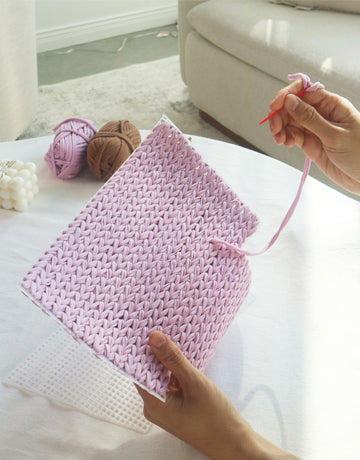

You’ve probably had this moment already. Your stitches are neat, your edges are getting straighter, and you can make a perfectly respectable rectangle. But your crochet still looks a bit flat, and the projects you admire have that extra something. Little ridges, deep lines, and a fabric-like texture that makes a simple hat brim or bag panel look polished.
That extra something is often back post double crochet.
It sounds technical at first, but it’s really just a different way of placing your hook. Once your hands understand the motion, you can use it to create ribbing, shape, and texture that instantly makes handmade work look more refined.
What is Back Post Double Crochet and Why You Need It
Back post double crochet, often written as BPdc, is a variation of the standard double crochet. Instead of putting your hook into the top loops of the stitch, you wrap your hook around the post of the stitch from the row below. That one change is what creates the texture.

Why it looks so different
A normal double crochet sits fairly flat. A back post double crochet pushes the stitch backward, which creates a recessed line on the front of your fabric. When you pair that with front post stitches, the surface starts to look ridged and sculpted rather than plain.
That’s why BPdc shows up so often in projects like:
- Hat brims that need a ribbed finish
- Cuffs and collars that look tidy and intentional
- Bag panels that need more body
- Decorative borders that stand out without complicated stitch counts
If you’ve ever wondered why some crochet looks more like fabric, it often comes down to how the stitches sit forward and back. If you’d like a broader design perspective on the texture of fabrics, that’s a useful companion read because crochet texture follows the same visual logic.
Why beginners end up loving it
BPdc gives you a big visual payoff for a small skill jump. You’re still making a double crochet. You’re just changing where the hook travels.
It also turns practice time into something satisfying. The repetitive motion of textured crochet can feel grounding, and 65% of crocheters report a reduction in anxiety after a crafting session, while raised stitches add visual and tactile interest to the work, as noted in this back post double crochet tutorial.
Practical rule: If you can make a regular double crochet, you’re already close to making a back post double crochet.
The simple definition
Think of BPdc like this:
| Term | What you do | What it creates |
|---|---|---|
| Double crochet | Work into the top loops | Smooth, flatter fabric |
| Back post double crochet | Work around the post from the back | Recessed ridges and structured texture |
The stitch isn’t hard. It’s unfamiliar. There’s a difference, and that matters when you’re learning.
Gathering Your Supplies and Finding Your Tension
The easiest way to learn BPdc is to make the stitch as visible as possible. That starts with your materials.
Pick yarn that helps you see the posts
Choose a smooth, light-coloured yarn in a medium weight. Cream, pale grey, soft blue, or oatmeal are all easier to read than black, navy, or anything fuzzy.
Avoid these for your first practice:
- Dark yarns because the post shadows disappear
- Fluffy yarns because the stitch shape gets hidden
- Splitty yarns because your hook can catch individual strands
A plain yarn lets you spot the difference between the top loops and the post, which is the whole key to this stitch.
Use a hook that feels comfortable, not cramped
Use the hook size suggested on the yarn label as a starting point. If your stitches usually run tight, try going up slightly so you have room to get around the post without wrestling the fabric.
Your hook should move smoothly around the stitch post. If it feels like you’re forcing it through a tiny gap, the issue often isn’t the stitch. It’s your tension.
If your hand starts gripping harder as you learn, pause and reset. Beginners often tighten up when concentrating.
What tension means for BPdc
Tension is how tightly or loosely you hold the yarn and form each stitch. With post stitches, tension matters even more because you’re pulling yarn around the body of a stitch instead of working neatly into the top.
That can make the fabric feel firmer. For practice, aim for stitches that are even and soft enough to enter on the next row.
A few habits help:
- Relax your yarn hand and let the yarn feed instead of tugging it
- Make your yarn over a bit taller so the stitch has space
- Slide loops up the hook shaft before pulling through
- Check your grip if your shoulders or fingers feel tense
If your yarn hold feels awkward, this guide on how to hold yarn when crocheting can help you find a method that gives you more control without tightening everything up.
A simple beginner setup
Try this first-practice combination:
| Item | Good beginner choice | Why it helps |
|---|---|---|
| Yarn | Smooth, medium-weight yarn | Easy to see stitch posts |
| Colour | Light or mid-tone shade | Better visibility |
| Hook | Comfortable hook matched to yarn | Easier motion around the post |
| Project | Small swatch | Low pressure, easy to redo |
You don’t need special tools. You need visibility, control, and enough patience to let your hands learn a new path.
How to Make a Back Post Double Crochet Stitch
You finish a simple hat or cuff, hold it up, and it still looks a little flat. Then you add a row of back post double crochet, and suddenly the fabric has ridges, depth, and that polished texture you notice on stylish accessories that look neatly handmade rather than homemade. That change comes from one small shift in where your hook goes.
The stitch itself is still a double crochet. The difference is that your hook wraps around the post of the stitch below instead of going under the top two loops. That change pushes the stitch backward on the front side of the fabric, which is what creates the tucked-in line and raised texture around it.

Prepare the stitch
Start with a row of regular double crochet already made. BPdc is usually worked around those posts on the next row, because the post needs to be easy to see and reach.
Set yourself up like this:
- Yarn over once, the same way you do for a regular double crochet.
- Tip the work slightly so the vertical post of the next stitch is easy to spot.
- Leave the top loops alone. For this stitch, they are not the entry point.
If the basic motion of double crochet still feels shaky, keep this double crochet stitch tutorial nearby while you practice. BPdc makes much more sense once the regular version feels familiar.
Insert the hook around the post
This is the part beginners usually need to slow down for.
Bring your hook from the back of the fabric to the front, slide it across the front of the post, then take it back to the rear on the other side of that same post. Your hook is wrapping around the body of the stitch from behind, almost like looping a ribbon around a table leg.
A few visual checks help:
- The post sits on your hook
- The top loops stay untouched
- The post shifts to the back of the fabric
Keep the motion wide and gentle. If you poke through the middle of the stitch, you will get a different result and the texture will not stand out as clearly.
Pull up the loop and finish the stitch
Once the hook is sitting around the post:
- Yarn over.
- Pull up a loop to the back of the work. You should now have three loops on your hook.
- Yarn over and pull through two loops.
- Yarn over and pull through the last two loops.
That completes one back post double crochet.
The last half should feel comfortingly familiar because it is the same finish as a regular double crochet. The new part is only the path your hook takes at the start.
Watch the motion in real time
Some crocheters understand BPdc as soon as they hear "go around the post." Others need to see the hook travel once before their hands believe it. This video is useful for that.
What your first stitches should look like
Early BPdc stitches can look bulky, stretched, or slightly uneven. That is normal. You are asking your hands to travel on a new route, and post stitches use a little more yarn than top-loop stitches.
You are on the right track if:
- The front of the fabric shows a recessed line or groove
- Your stitch count stays the same across the row
- The top edge still looks usable for the next row
- Each stitch clearly wraps around a post
This is the reason BPdc shows up so often in ribbing, basketweave textures, and refined accessories. It adds structure and shadow with a very small change in technique, which is part of what gives beginner-friendly projects that clean, store-bought look.
A quick memory phrase
Use this if your hands freeze halfway through:
Back, front, back. Then finish like double crochet.
It is short, easy to repeat, and helps you remember the path without overthinking every stitch.
Your First Back Post Double Crochet Practice Swatch
A small swatch is the best place to learn because it lets you see the texture build row by row without the pressure of a full project. You don’t need anything fancy. A simple rectangle is enough.

A beginner-friendly swatch pattern
Try this practice piece:
Chain 14
Row 1
Double crochet in the fourth chain from hook and in each chain across. Turn.
Row 2
Chain 2. Double crochet in each stitch across. Turn.
Row 3
Chain 2. Double crochet in the first stitch. Back post double crochet in each stitch across until the last stitch. Double crochet in the last stitch. Turn.
Row 4
Chain 2. Double crochet in each stitch across. Turn.
Repeat Rows 3 and 4 a few times.
This pattern gives you flat rows between textured rows, so the ridges are easier to spot. It also helps you compare how a regular double crochet row sits next to a post-stitch row.
Why the first and last stitches stay regular
Keep the first and last stitch of the BPdc row as standard double crochet. That gives your swatch cleaner edges and makes it easier to count.
If you try to work post stitches right to the edge immediately, the sides can look messy and the rectangle can start leaning.
Straight edges matter more than fancy edges when you’re learning a new stitch.
How to count stitches without getting lost
Post stitches can make the row look busy, especially once texture builds up. The safest method is to count the tops of the stitches at the upper edge, not the ridges on the fabric.
A few reminders:
- Count before and after each row if you’re prone to dropping stitches
- Don’t count the turning chain as a stitch unless your chosen style always does
- Check the final stitch carefully because that’s the easiest one to miss
What success looks like
Your swatch doesn’t need to be perfect. It just needs to show that you understand the path of the hook and can repeat it with reasonable consistency.
You’re aiming for:
- a rectangle that stays roughly straight
- visible ridges on the BPdc rows
- stitches that are loose enough to work into again
- a fabric you can touch and clearly feel changing
Once you can make this swatch without stopping every stitch to think, you’re ready to use BPdc in real projects.
Common Mistakes and How to Fix Them
Most BPdc problems come from one of three things. Hook placement, tight tension, or losing track of where the row begins and ends. The good news is that each one has a clear fix.
BPdc Troubleshooting Guide
| Problem | Likely Cause | Solution |
|---|---|---|
| My stitch doesn’t look textured | You worked into the top loops instead of around the post | Slow down and identify the vertical post before inserting the hook |
| I can’t get my hook around the stitch | Your tension is too tight | Relax your grip, make a slightly taller yarn over, or try a larger hook |
| My fabric is stiff and hard | You’re pulling the loops too snugly during each step | Let the loops sit on the wider part of the hook shaft before pulling through |
| There are awkward holes around the stitch | The stitch may be too loose, or the hook path is too wide around the post | Keep the hook close to the post and maintain even yarn tension |
| My swatch is turning into a triangle | You’re missing the first or last stitch of the row | Mark the first and last stitch with stitch markers and count at the end of each row |
| I keep forgetting where the hook goes | The top loops still feel like the “default” place to work | Pause before each stitch and say “around the post” out loud until the motion feels natural |
| The edge looks messy | You used BPdc on edge stitches too early in practice | Keep edge stitches as regular double crochet until you’re confident |
What usually matters most
If you’re not sure what went wrong, check hook placement first. Beginners often assume a bad-looking stitch means a bad tension problem, but BPdc only looks right when the hook wraps around the post correctly.
After that, check your hands. If they feel tense, your stitches probably do too.
A neat BPdc usually comes from calmer hands, not faster hands.
When to frog and when to keep going
If one stitch looks odd but the rest of the row makes sense, keep going. You’ll learn a lot by finishing the row and reading the fabric afterwards.
If every stitch in the row looks flat or scrambled, pull it back and redo just that row. That’s often faster than trying to force your way forward with a mistake repeated ten times.
Creative Ideas for Using the Back Post Double Crochet
You finish a simple headband, pouch, or hat, hold it up, and feel like it still needs something. The shape is fine. The stitches are correct. It just does not have that crisp, polished look you see in boutique accessories. BPdc often solves that problem.

BPdc changes the surface of your fabric in a very specific way. Because the stitch wraps around the post instead of going into the top loops, it pushes some stitches backward and lets others stand out more clearly. That small shift creates shadows, ridges, and definition. Those details are often what make a beginner project look neat, intentional, and surprisingly close to store-bought.
Pair it with front post double crochet for ribbing
Alternating front post and back post double crochet creates one of the most useful textures in crochet. The front post stitches sit forward. The back post stitches sit behind them. Together, they form tidy vertical columns that resemble knitted ribbing.
This is why hat brims, cuffs, and bag bands look so sharp in post stitches. You are not adding complicated shaping. You are creating contrast in height and direction, and your eye reads that as structure.
Use it where you want cleaner shape
BPdc also gives fabric more body than plain double crochet. If regular double crochet feels a bit open or floppy for your project, a section of BPdc can make it feel firmer and more defined.
That is especially helpful in accessories. A pouch flap can look flatter and more finished. A headband can hold its shape better. A bag panel can feel more substantial. This is part of the reason textured crochet often looks more professional. The fabric has clearer lines.
Try these project directions
| Look you want | Stitch idea | Why BPdc helps |
|---|---|---|
| Classic ribbed trim | Alternate FPdc and BPdc | Creates clear vertical texture |
| Basketweave effect | Work blocks of front and back post stitches | Produces a woven-looking surface |
| Simple faux cables | Cross groups visually with post stitches | Adds depth without advanced shaping |
| Structured accessory panel | Use repeated BPdc rows | Gives the fabric more body |
Small projects are the perfect place to use it
BPdc shines in accessories because a little texture goes a long way. On a large blanket, one textured section can be subtle. On a headband, cup cosy, wrist warmer, or pouch, that same texture becomes the feature.
It works like adding a custom cuff to a simple shirt. The project can still be beginner-friendly, but the finish looks more considered.
If you want more stitch options that create this kind of texture, this crochet stitches guide for textured and decorative stitches is a helpful next read.
Where BPdc really looks stylish
If you love the polished, modern feel of handmade accessories from brands like Stitch Mingle, pay attention to edges, bands, and panels. Those are the places where BPdc can make the biggest visual difference. A plain rectangle becomes a refined headband. A simple pouch gets a flap with definition. A basic beanie gains a brim that looks deliberate instead of accidental.
That is the true value of this stitch. BPdc is not just another technique to practice. It is one of the clearest ways to give beginner crochet texture, structure, and a finish you will feel proud to wear or gift.
Continue Your Textured Crochet Journey
Back post double crochet is one of those stitches that opens a lot of doors. Once you’ve got the hook path in your hands, you can add ribbing, depth, and a more refined finish to all kinds of crochet.
Its magic is that it doesn’t require complicated shaping or advanced pattern reading. It’s still a double crochet at heart. You’re just placing it with more intention.
For your next creative steps, try learning the front-post partner stitch, explore a yarn guide that helps you choose fibres for texture, or browse beginner-friendly DIY kits that pair beautifully with handmade details like textured crochet panels.
If you’re ready for a polished project after practising your stitches, Stitch Mingle is a lovely next stop. Their beginner-friendly DIY kits and accessories are designed to help you make stylish, giftable pieces without hunting down extra supplies, so you can keep the fun part of crafting front and centre.