
You want a hobby that feels calming, useful, and a little bit magical. You also don't want to spend your first evening Googling which hook to buy, whether the yarn is right, or why the kit you ordered still needs three extra tools before you can begin.
That’s why so many beginners search for crochet kit canada instead of trying to piece everything together on their own. A good kit removes friction. A poor one creates it.
Your New Favourite Hobby Awaits
A lot of first-time crocheters start the same way. They want something screen-free to do in the evening, they like the idea of making something by hand, but they feel lost the second they see terms like “hook size”, “gauge”, or “worsted weight”.
Crochet is a gentle place to start because the tool list is short and the learning curve is manageable when the project is organised well. You can make something practical, decorative, or giftable without needing a whole craft room.

Crochet is also far from niche in Canada. Canada has 3.2 million active crocheters, and 40% of Gen Z Canadians have tried crocheting, according to a 2023 survey highlighted by Gitnux’s crochet statistics roundup. That tells you two useful things. First, plenty of Canadians are starting from scratch just like you. Second, this hobby appeals across generations, from teens trying a new creative outlet to adults looking for a slower evening routine.
If you enjoy discovering new offline hobbies in general, it’s worth taking a look at resources that explore diverse hobby topics. Sometimes crochet is the perfect fit. Sometimes it’s the doorway into a broader creative habit.
Why beginners stick with crochet
The appeal isn’t only the finished item. It’s the rhythm.
You repeat a motion, watch the fabric grow, and get a small sense of progress every few minutes. That’s very different from hobbies where you work for hours before seeing a result.
A first project might be:
- A small plush if you like cute, giftable makes
- A scarf or cowl if you want something simple and repetitive
- A pouch or coaster if you want a quick finish
A good beginner project should be small enough to finish, clear enough to follow, and interesting enough that you want to pick it up again tomorrow.
If you’re still learning the vocabulary, this beginner guide can help before you buy your first kit: https://www.stitchmingle.com/blogs/blog/how-to-crochet-for-beginners
Decoding Your First Crochet Kit
Opening a crochet kit should feel like opening a recipe box. Every piece has a job, and each part affects how the finished project looks and feels.

Yarn
Yarn is your main material. The fibre changes the feel. The weight changes the thickness. Beginners often confuse those two.
Think of it this way:
- Fibre type tells you what the yarn is made from, such as acrylic, cotton, or wool
- Weight tells you how thick the strand is
- Colour and texture affect how easy it is to see your stitches
Smooth yarn is usually easier for beginners than fuzzy, fluffy, or highly textured yarn. If the yarn has lots of halo or fluff, it becomes harder to spot where your hook should go.
Crochet hooks
The hook creates the stitch. Its size matters more than many beginners realise.
A smaller hook gives you tighter stitches. A larger hook gives you looser stitches. Neither is “better” in every case. It depends on the project.
For example, intermediate amigurumi kits often use a 2.5 mm crochet hook with fine-gauge yarn to create tight stitches that keep stuffing from showing. Using a larger hook can create gaps up to 20% wider, which is a common point of failure for beginners making 3D objects, as noted in this amigurumi hook-size explanation.
That’s why a hook that seems tiny isn’t a mistake. It’s part of the project design.
Notions and accessories
“Notions” is the catch-all term for the little extras in a kit.
A beginner crochet kit may include:
- Stitch markers to mark the start of a round or a tricky point in the pattern
- A tapestry needle for weaving in yarn ends
- Safety eyes for plush projects
- Stuffing for amigurumi
- Scissors sometimes, but not always
Many shoppers are caught unaware. A kit may include the yarn and pattern but leave out one small item that stops you from starting right away.
What each part actually does
| Kit component | What it does | Why beginners should care |
|---|---|---|
| Yarn | Forms the project | Smooth, visible stitches are easier to learn on |
| Hook | Pulls loops through loops | The wrong size changes tension and shape |
| Pattern | Gives the sequence of stitches | Clear wording prevents frustration |
| Stitch markers | Mark your place | Very helpful when counting rounds |
| Tapestry needle | Finishes the project | Needed to weave in ends neatly |
| Stuffing or safety eyes | Adds structure or detail | Required for many plush projects |
If the box photo shows a stuffed animal but the materials list is vague, check whether stuffing, eyes, and the hook are actually included.
How to Choose the Right Materials
When two kits look equally cute, the materials usually tell you which one will be easier to learn on.
A beginner doesn’t need the most luxurious yarn. A beginner needs yarn that behaves well, a hook that feels comfortable, and instructions that don’t assume prior knowledge.
Beginner's Yarn Fibre Comparison
| Fibre Type | Best For... | Beginner Friendliness |
|---|---|---|
| Acrylic | Plushies, scarves, practice projects | Very beginner-friendly because it’s usually smooth, durable, and easy to find |
| Cotton | Dishcloths, bags, home items | Good for clear stitch definition, but less forgiving because it has less stretch |
| Wool | Garments, warm accessories, premium projects | Comfortable and beautiful, but can feel pricier and may not be the simplest first yarn |
Acrylic is often the easiest first choice because the stitches are visible and the yarn tends to glide well. Cotton is crisp and clear, which some learners love, but it can feel firmer in the hands. Wool feels lovely, though some beginners prefer to save it for their second or third project.
Why hook comfort matters
The hook is the one tool you’ll hold the whole time, so shape and grip matter.
Basic aluminium hooks work well. They’re common, straightforward, and often included in starter kits. But if you notice hand fatigue quickly, an ergonomic hook may feel much better.
Premium kits available in Canada, such as some from We Are Knitters, often include ergonomic hooks and merino wool fibres. The natural elasticity of wool can reduce row rippling by up to 25% compared with standard acrylics in blanket-style projects, according to the product information on We Are Knitters Canada.
That doesn’t mean you need merino wool for your first project. It means material choices affect results. If a blanket kit promises clean rows and a softer feel, the fibre may be helping.
Pattern format can make or break the experience
Some beginners learn well from written steps. Others need to watch a pair of hands do it.
Look for:
- Clear stitch names written consistently
- Photo support for steps that confuse beginners
- Video access if you’re learning from zero
- Project pacing that feels realistic for your attention span
A short coaster project with strong visuals often works better than a large wearable with dense written abbreviations.
Practical rule: If you can’t tell whether the pattern is written, visual, or video-based, assume you may need extra help elsewhere.
A simple matching guide
Choose your first kit based on the experience you want:
- If you want quick wins, choose a small flat project.
- If you want something adorable, choose a plush kit but be ready for tighter stitches.
- If you want relaxed repetition, choose a scarf or blanket-style pattern with a larger hook.
The True Cost of a Crochet Kit in Canada
The biggest beginner mistake isn’t choosing the wrong colour. It’s assuming “kit” always means “everything you need”.

That assumption is reasonable. If you’re new, you expect the box to contain the project materials, the required tools, and the instructions. But some listings are complete, and some are only partial.
A particularly frustrating example in the Canadian market is when a retailer clearly sells a project kit but notes that an essential item, such as the crochet hook, is excluded. That hidden gap matters for first-time buyers. The issue is noted on this Front and Company product page for the Annelies Angel DIY crochet kit.
What hidden costs usually look like
The missing item might be small, but the interruption is big.
You order a kit. It arrives. Then you realise you still need:
- A crochet hook in the correct millimetre size
- A yarn needle for finishing
- Scissors
- Stuffing or safety eyes for a plush project
- A separate tool purchase because the listing said “materials included” but not “tools included”
That turns a simple evening craft into another shopping trip.
What Canadian buyers should check before ordering
If you’re buying online, read the contents list carefully. Not the product title. The actual contents list.
Check for:
- Hook included or excluded
- Written instructions or QR video access
- Any note about tools needed but not supplied
- Where the item ships from
- Whether the seller is Canadian-based or international
Shipping and import surprises also matter when you order across borders. Even when the kit price looks reasonable, the final checkout experience may not be as simple as expected.
This short video is a helpful reminder that beginner kits can vary a lot in what they include:
A better way to compare kits
Use a “ready tonight” test.
Ask one question: If this box arrived at 7 p.m., could I start immediately with no extra shopping?
If the answer is unclear, the listing isn’t clear enough for a true beginner.
Some retailers sell a project. Beginners need a starting experience.
Where to Find Your Perfect Kit in Canada
Canadian shoppers have more choices than ever, and demand keeps growing. Crochet kit sales are showing an 80% annual growth rate, and online retailers and subscription boxes in Canada sold over 500,000 crochet kits in 2023, according to Technavio’s knitting and crochet market analysis.
That growth explains why the market now feels crowded. The challenge isn’t finding a kit. It’s finding the right type of seller.
Big-box stores
Large craft chains are convenient. You can browse in person, compare colours, and sometimes catch a sale.
The trade-off is consistency. Some kits are approachable, while others assume more knowledge than their packaging suggests. Tool completeness can also vary.
Local yarn shops
A local yarn shop is often the best place for fibre quality and human advice. If you’re unsure about hook feel, yarn texture, or whether a pattern is too advanced, staff can help.
The downside for a beginner is that many local shops focus on yarn and patterns rather than boxed all-in-one kits. You may leave with beautiful supplies, but still need to assemble your own starter set.
Online marketplaces
Marketplaces offer variety. You’ll see unusual plushies, modern accessories, and kits from independent designers.
But variety adds research work. You need to confirm:
- Shipping origin
- Instruction quality
- Tool inclusion
- Delivery timing
- Whether the project language is clear for your level
Specialised online kit shops
These shops appeal to beginners because they remove decision fatigue. The best listings explain what’s inside, who the project is for, and whether any extra tools are required.
If you want to browse a curated collection built around that kit-first experience, this page is a useful starting point: https://www.stitchmingle.com/pages/crochet-kit
Which option fits which shopper
| Shopping option | Best for | Watch out for |
|---|---|---|
| Big-box craft store | Convenience and in-person browsing | Uneven kit quality |
| Local yarn shop | Better fibre advice and materials | May require buying pieces separately |
| Online marketplace | Unique designs | Shipping delays and vague listings |
| Specialised online shop | Beginner-friendly curation | Check exact contents and project style |
Creative Alternatives to Traditional Crochet
Once you’ve learned the basic rhythm of working with your hands, you may realise you don’t just want crochet. You want more making.
That’s a good sign. It means the hobby is doing what a good hobby should do. It’s opening up your creative range.

If you like structure, try plastic canvas
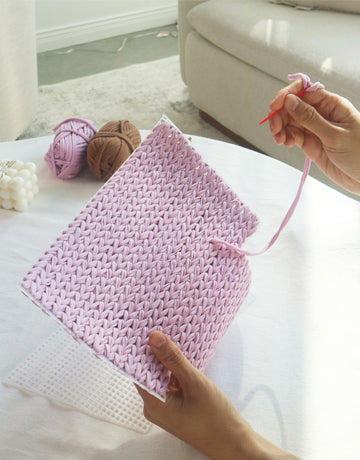
Plastic canvas gives you a grid, which many beginners find reassuring. Instead of building stitches in soft fabric, you work through a clear structure and create useful items like coasters, holders, or decorative pieces.
It still gives you that satisfying “made it myself” feeling, but with firmer edges and less worry about stitch tension.
If you like polished accessories, try leather craft
Leather kits suit people who enjoy tactile, stylish projects and want a result that looks finished quickly. Pre-cut pieces and included hardware make the process feel organised in the same way a well-packed crochet kit does.
Projects like bags and keychains also make strong gifts because they look refined and practical.
If you want to personalise your work
Crochet often leads people toward embellishment. Once you’ve made something by hand, adding a name tag, patch, or decorative detail feels like the natural next step.
If that interests you, this guide on https://www.stitchmingle.com/blogs/blog/embroider-on-crochet shows one approachable way to add personality to a finished piece.
You don’t need to become “a crochet person” forever. You can become a person who enjoys making things.
That shift matters. It makes it easier to try a crochet kit canada search today, a canvas project next month, and maybe a leather accessory after that.
Start Your Canadian Crafting Journey Today
Your first crochet purchase doesn’t need to be complicated. It just needs to be honest.
Look for a kit with clear contents, beginner-suitable materials, and instructions that match how you learn. If the listing is vague about tools, assume you may need extra purchases. If the project looks advanced but the label says “easy”, trust the materials list and instruction style more than the marketing photo.
The best first project is the one you’re excited to finish. That might be a tiny plush, a simple scarf, or a practical home item. The finished object matters, but the bigger win is learning that you can pick up a new skill without making it stressful.
If you’re shopping from within Canada, clarity matters even more. Shipping origin, tool completeness, and beginner support can shape whether your first evening feels smooth or frustrating.
Choose the kit that lets you begin with confidence, not the one that leaves you guessing.
If you're ready for a beginner-friendly project that arrives with the essentials and clear guidance, browse Stitch Mingle. You can explore their Best-Selling Craft Kits, check New Arrivals, try the Kainy Leather Bag Kit, or review their Shipping and FAQ details before ordering.