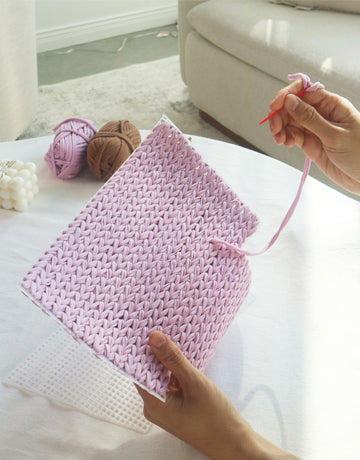

You're probably here because the holiday season is getting closer, you'd love something handmade on the tree, and you're wondering whether cross stitch christmas ornaments are charmingly simple or secretly fiddly. That's a fair question. A tiny stitched ornament looks manageable, but beginners often get stuck on two things: choosing supplies and figuring out how to turn a stitched square into something that hangs well.
The good news is that this craft is far more approachable than it first appears. Cross stitch uses one repeated X-shaped stitch on an easy-to-count fabric grid, so once your hands understand the rhythm, the whole process starts to feel calm, tidy, and surprisingly satisfying.
Create Your Own Handmade Holiday Heirlooms
A tree filled with handmade ornaments feels different. The colours may be softer, the shapes a little more personal, and each piece carries the memory of the evening you stitched it. That's the appeal of cross stitch christmas ornaments. They don't just decorate a branch. They hold a story.

These ornaments also have real craft history behind them. Cross-stitch Christmas ornaments are part of a long tradition dating to the early twentieth century, when printed charts made it easy for stitchers to create small, seasonal motifs like stars and bells that could be finished in a day or two, as noted in The Victoria Sampler's history of handmade Christmas ornaments. That matters because it means you're not picking up a passing trend. You're joining a practical, decorative tradition built around small projects that fit naturally into busy lives.
Why ornaments make such a good first project
A full sampler can feel intimidating. An ornament usually doesn't.
Small seasonal designs work well for beginners because they give you a clear finish line. You can choose a star, bell, holly sprig, snowflake, angel, or tiny tree and focus on a compact stitched area instead of a large wall hanging. That smaller scale helps you learn without feeling buried under a huge pattern.
A small stitched ornament teaches the whole craft in miniature. You learn counting, thread control, colour changes, and finishing, all on one manageable project.
There's also a style advantage. Handmade ornaments blend beautifully with modern, rustic, traditional, and Scandinavian holiday décor. A stitched snowflake on natural Aida cloth looks crisp and understated. A bright candy cane with ribbon edging feels playful. A stitched monogram can turn into a keepsake gift.
Handmade charm and modern practicality
If you like the idea of making gifts or even turning a creative hobby into a side project, it's helpful to look at how other makers think about niche products and seasonal selling. This overview of discover online store opportunities is a useful read because it shows how handmade categories can find a home online without losing their personal feel.
The nicest part, though, isn't commercial at all. It's the moment you hang something you made yourself and realise it looks lovely, finished, and entirely gift-worthy.
Choosing Your Cross Stitch Ornament Supplies
The first real decision isn't colour. It's kit or individual supplies. Most beginners assume buying separate materials is the “proper” way, but that's not always the easiest way to start.
For beginners, the decision between buying supplies individually or choosing a kit is key; existing guides often list materials but fail to help newcomers evaluate the trade-offs in time, finishing difficulty, and the assurance of having everything needed for a weekend project, which is exactly the gap noted on this ornament pattern product page.

What each supply actually does
Here's the plain-language version of the shopping list.
| Supply | What it does | Beginner note |
|---|---|---|
| Aida cloth | Provides a visible grid for counting stitches | Easiest place to start |
| Linen | Gives a softer, finer look | Better once you're confident counting |
| Embroidery floss | Creates the stitched design | Cotton floss is the usual choice |
| Tapestry needle | Slides through fabric holes without splitting threads | More forgiving than a sharp needle |
| Hoop or frame | Keeps fabric taut while you stitch | Helpful, though not always essential for tiny pieces |
| Backing and hanger | Turns stitching into an ornament | Often the part beginners forget to budget for |
If you want a wider orientation to the tools themselves, this beginner overview of cross stitch supplies is a handy place to compare the basics.
Buying supplies individually
This route gives you flexibility. You can choose your own fabric, your own floss shades, and your preferred finishing materials. If you already sew or embroider, you may have some of the tools at home.
The catch is that beginners often miss one small but important item. Maybe it's the right needle size. Maybe it's backing board, felt, or ribbon for hanging. Maybe it's enough floss for edging. Small gaps in the supply pile can stop a project cold.
Individual supplies are a good fit if you want:
- Freedom with colour to match your tree, wrapping, or home décor
- A reusable stash that can support several ornaments later
- More control over finishing if you enjoy experimenting
Choosing a beginner-friendly kit
A kit removes decision fatigue. That's its real value.
When everything is chosen for you, you spend less energy wondering whether the fabric count matches the chart or whether the floss colours are right. For a first ornament, that can make the difference between “I'm enjoying this” and “Why am I searching for one missing item at 9 pm?”
Practical rule: If your goal is to finish your first ornament in a weekend, a kit is often the smoother choice.
A kit is especially helpful when you want a stylish result without learning every supply category at once. You still learn the craft. You just don't have to become your own purchasing department before you start.
A simple way to decide
Choose individual supplies if you enjoy planning and want to build a stash.
Choose a kit if you want fewer choices, lower friction, and a stronger chance of finishing your first ornament cleanly.
That's not “cheating”. It's smart project design.
Mastering the Basic Cross Stitch
The stitch itself is simple. The trick is consistency. Once your stitches all slant the same way and sit neatly on the fabric, even a very basic pattern starts to look polished.

Cross stitch has deep roots as a pattern-led needlework method. Simple Simon and Company says the first cross-stitch patterns are recorded in the late 1500s, and printed patterns later made the craft easier to standardise and teach, which helps explain why it remains so beginner-friendly today in their history of cross stitch.
How to make a neat X
Each cross stitch is made from two diagonal stitches.
- Bring the needle up through one hole.
- Take it down diagonally to make the first slash.
- Bring the needle up again at the lower opposite hole.
- Take it down diagonally to complete the X.
The part beginners often miss is direction. If your bottom leg goes from bottom left to top right, keep doing that throughout the piece. Then cross back in the same opposite direction. When the top legs all lean the same way, the ornament looks tidy and even.
How to read a chart without panic
A cross stitch chart is a grid. Each square usually represents one stitch. Symbols or colours tell you which floss to use in each square.
To avoid drifting off-centre, find the middle of the fabric first. Fold it gently in half one way, then the other way, and mark the centre point lightly. Then find the centre of the chart and begin there, or very near it. That gives you room on all sides for finishing later.
Here's where beginners get confused:
- They count too quickly, then place a stitch one square off
- They forget where they left off after a thread change
- They assume the pattern edge equals the cut edge, which causes finishing problems later
That last point matters a lot for ornaments. Leave enough fabric around the stitched design so you can back, lace, or mount it properly.
A visual refresher can help when the written instructions feel abstract:
If you want a fuller walkthrough with beginner terminology explained more slowly, this guide to cross stitch for beginners is useful to keep open in another tab.
How to start and end thread cleanly
Many newcomers reach for a knot. Try not to.
Knots create bumps, especially on small ornaments where the back gets pressed against card, felt, or another stitched panel. A cleaner method is to secure the thread under existing stitches on the back. When starting near the beginning of a design, leave a short tail and trap it under the first few stitches. When ending, run the needle under several completed stitches on the reverse side and trim close.
Keep the back neat, not perfect. It doesn't need to look framed. It just shouldn't feel bulky.
Common beginner habits to fix early
| Habit | What happens | Better approach |
|---|---|---|
| Mixing stitch directions | The surface looks uneven | Keep all top stitches facing the same way |
| Pulling thread too tightly | Fabric puckers | Let the stitch sit flat |
| Using long thread lengths | Tangles increase | Work with a comfortable, shorter length |
| Counting from the edge only | Design placement drifts | Start from the centre when possible |
Neat cross stitch isn't about speed. It's about rhythm. Once you settle into that rhythm, these ornaments stop feeling technical and start feeling restful.
Your First Three Festive Patterns
Your first ornament should feel achievable, not heroic. That's why the best starter designs are small, symmetrical, and light on colour changes.

Three designs that make sense for beginners
Simple star
A star teaches counting and symmetry. If one side looks odd, you can usually spot the mistake quickly. It also looks lovely in metallic thread or a single classic holiday shade.
Geometric tree
This is one of the easiest shapes to read on a chart because the rows often step out in a predictable pattern. It suits modern décor particularly well.
Delicate snowflake
A snowflake introduces spacing and balance. It's a good pattern for practising even tension because gaps are part of the design.
Where to begin on the fabric
Fold your fabric lightly to find the centre. Then identify the centre of the chart. Starting near the middle helps keep the motif balanced and leaves room around the edges for whatever finishing style you choose later.
If you're sketching your own mini motifs on graph paper, keep them compact and avoid too many isolated stitches. Floating details can look cute on paper but fussy in thread.
Small patterns win because they give you a finished object quickly. That early success builds confidence far better than an ambitious first project.
For your first attempt, choose one colour family, one simple shape, and one evening where you can stitch without rushing.
Professional Finishing for Your Ornaments
Finishing is the part that intimidates almost everyone. The stitching feels calm and orderly, then suddenly you're cutting board, choosing backing, and wondering how a soft fabric square becomes a clean ornament. The solution is to work from the stitched piece outward, not the other way round.
For a clean finish on a flat ornament, experts advise measuring the stitched motif first, then cutting the backing board and adding a 3/4-inch fabric margin on all sides for gluing or lacing. This prevents uneven edges and exposed backing, a common beginner mistake, as shown in this ornament finishing tutorial.
The easiest finish for a first ornament
A small hoop finish is the least stressful option. You place the stitched fabric in the hoop, tighten it, trim the excess, and cover the back with felt if you want a neater look. Add ribbon or cord at the top and it's ready to hang.
This works nicely for rustic or casual décor. It's also forgiving because the hoop itself frames the piece and hides some minor unevenness.
Flat board finish for a polished look
If you want that crisp, gift-shop style ornament, use backing board.
Basic flat finishing steps
-
Measure the stitched motif first
Don't estimate from the chart. Measure the actual stitched area on fabric. -
Cut the front and backing pieces
The stitched motif determines the size. Then allow the needed fabric margin for wrapping or lacing. -
Wrap or lace the fabric
You can use double-sided tape for a faster finish or lace the fabric to the back with strong polyester thread for more control. -
Set the hanger before closing
Centre the ribbon loop at the top before the final backing goes on. -
Join the layers carefully
Press the edges smooth so the shape stays even.
The biggest beginner error is poor sizing. If the board is cut before the fabric is measured, one side often wraps more tightly than the other. That causes distortion, exposed board, or a lopsided finished ornament.
Measure the stitched design, not the paper pattern. Fabric tension and stitch coverage can change the final footprint.
Padded ornament finishing
A padded ornament gives you a softer, fuller shape. This style is lovely for hearts, circles, stars, and medallion designs.
According to a detailed padded-finishing method from Thread-Bare, makers commonly use a two-layer fabric structure with a stiff insert, cutting two circles of thick cardstock or thin cardboard, adding cotton batting or felt for loft, and then joining the layers with the hanger centred between them.
That same tutorial includes a smart edging tip. To avoid running short while making a dense corded edge, one expert method measures the ornament perimeter with embroidery floss, multiplies that length by 4, and prepares 8 equal floss lengths total, 4 of each colour.
Finishing methods compared
| Finish type | Look | Difficulty | Best for | |---|---|---| | Hoop finish | Casual, cosy, visible frame | Easiest | First ornament | | Flat board ornament | Crisp and tailored | Moderate | Gifts and tidy tree décor | | Padded ornament | Soft, dimensional | Moderate to advanced | Traditional heirloom style |
If corners look messy, a ladder stitch can help close edges more neatly. If the shape is circular, go slowly when trimming and wrapping. If you're gluing, use a light hand. Too much adhesive can show through fabric or make the edges stiff.
Personalize and Perfect Your Creation
Once you've made one ornament, you'll probably want to tweak the next one. That's where the fun really begins. Personal touches make a simple design feel specific to your home, your family, or the person receiving it.
A tiny backstitched initial, a year stitched along the bottom edge, or a metallic accent thread can completely change the mood of a design. If you're choosing colours from scratch, ColorBestie's palette generator is a handy way to build a holiday palette that feels coordinated before you start pulling floss.
Small upgrades that make a big difference
- Add initials or a date so the ornament marks a memory, not just a season
- Swap one thread for metallic floss if you want sparkle without redesigning the whole chart
- Use ribbon that matches your wrapping paper when ornaments are meant as gift toppers
- Choose washable and sturdy materials if the ornament will be handled often
Durability matters more than many beginners expect. A key concern for thoughtful crafters is durability and sustainability; guidance on using washable materials, proper storage to prevent fraying, and making ornaments child-safe ensures handmade items can be reused for many holiday seasons, reducing waste, as highlighted on this ornament category page.
Quick troubleshooting
If your floss tangles, your working length is probably too long or twisting too much as you stitch. Let the needle dangle occasionally so the thread can unwind.
If the fabric puckers, loosen your tension. Cross stitches should sit on the surface of the fabric, not pull it inward.
If you spot a small counting error, decide whether it affects the outline or symmetry. In a tiny ornament, a mistake near the edge often matters more than one tucked inside the motif.
For more holiday-ready project inspiration, browse these Christmas embroidery kits if you'd like another beginner-friendly craft after your first ornament set.
Store finished ornaments flat or in tissue-lined boxes, keep them dry, and avoid crushing hangers or trims. A little care turns a simple seasonal make into something you'll be happy to unwrap again next year.
If you're ready for a creative project that feels polished without being overwhelming, Stitch Mingle is a lovely next stop. Their beginner-friendly DIY kits, clear instructions, and giftable project style make it easier to enjoy the making part instead of getting stuck on setup.