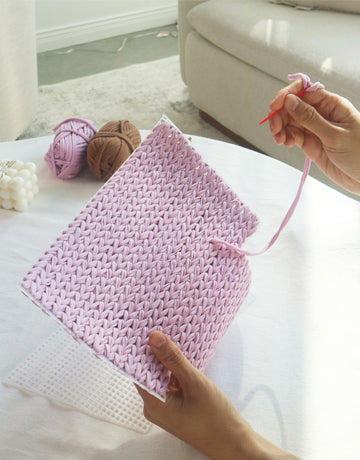

You've probably had this feeling lately. You want something real to do with your hands, not another hour of scrolling, not another half-finished project from the back of a cupboard. You want one satisfying weekend make. Something useful, something attractive, and something that doesn't leave you hunting for ten extra supplies halfway through.
That's why weaving a bag is such a good first project. It has rhythm, texture, and a clear finish line. You start with separate strands and end with an object you can carry, gift, or display. It feels calm while you're making it, and surprisingly clever when the flat woven piece becomes a proper pouch or small bag.
Bag weaving also sits inside a much older tradition. In California, weaving has deep Indigenous roots that predate statehood by centuries, and early woven goods included functional items such as “bags, sandals and burden straps,” as noted in Mesa Verde National Park's account of Pueblo weaving. That history matters. It reminds us that woven bags weren't invented as a hobby trend. They began as practical objects made with care and skill.
If you love the idea of a handmade bag that still feels polished enough for daily use, it can also help to browse examples of stylish, durable sustainable bags. Not to copy them exactly, but to train your eye for shape, texture, and what makes a bag feel wearable rather than merely decorative.
A beginner kit can remove the hardest part for most new makers, which isn't the weaving itself. It's the setup, the measuring, and the uncertainty over whether you've chosen the right materials. If you're curious about other ready-to-make projects in the same spirit, these DIY craft kits for beginners show how much easier a project feels when the planning has already been done for you.
Your Creative Weekend Project Awaits
A woven bag suits the kind of weekend when you want steady progress. You can set everything out on the table, make a cup of tea, and work row by row without rushing. There's enough repetition to feel relaxing, but enough decision-making to keep it interesting.
Why this project feels so satisfying
Some crafts hide the result until the final stages. Weaving doesn't. You see the surface build in front of you, and that makes it especially encouraging for beginners. Every pass of the weft changes the piece.
Three things make a first woven bag especially rewarding:
- You can see structure forming early. After only a short time, the loose strands begin to read as fabric.
- Mistakes are usually fixable. If a row looks wrong, you can often undo just that section and continue.
- The final object is useful. Even a small pouch teaches skills that carry into bigger projects later.
Woven work teaches patience in a very tangible way. One careful row always supports the next.
A bag is more than a flat weave
Many first-time makers often get pleasantly surprised at this stage. You're not just making a sample square. You're thinking like a designer, even in simple ways. Where will the opening sit? How firm should the fabric feel? Will the edges fold neatly?
Those questions don't make the process harder. They make it more meaningful. You stop acting like someone following random instructions and start understanding how woven structure becomes a real object.
Unboxing Your All-In-One Weaving Kit
Opening a weaving kit can feel a bit mysterious at first. There may be yarn, pre-cut pieces, thread, a needle, and hardware sitting together in one box, and it's not always obvious why each part matters. Once you know the job of each item, the whole project becomes easier to understand.

What each piece is doing
A beginner-friendly bag kit usually helps by removing the fiddliest prep work. That matters because measuring, punching, and cutting are often where confidence drops.
Here's how to think about the common components:
- Pre-cut bag panels. These give you consistent shapes, which helps your finished bag line up properly during assembly.
- Pre-punched holes. These guide your stitching path so you don't have to guess spacing or force a needle through tough material.
- Weaving material or yarn. This becomes the visible fabric or decorative surface. Its texture affects how soft or structured the bag feels.
- Thread for assembly. This is often sturdier than the weaving yarn because seams need to hold shape under use.
- Needle. A proper hand-sewing needle helps you pass through holes cleanly without fraying thread.
- Hardware such as straps or closures. These turn the finished piece from a sample into a functional accessory.
A realistic plan for your first session
Many beginners worry they'll need a whole free day. You probably won't, but it helps to break the work into stages so you're not rushing the enjoyable parts.
| Phase | Estimated Time | Pro Tip |
|---|---|---|
| Prep | Short setup session | Lay out every component before you begin so you can identify the body pieces, thread, needle, and any hardware. |
| Weaving | The longest and calmest part | Stop every few rows to check your edge shape instead of waiting until the end. |
| Assembly | A focused finishing session | Pre-plan your fold lines and seam order before threading the needle. |
Good prep feels almost boring. That's a sign you're setting yourself up well.
Why kits help beginners so much
A kit doesn't remove creativity. It removes avoidable friction. You still choose how firmly to weave, how neatly to pack the rows, and how carefully to finish. The difference is that you're learning the craft principles without being derailed by material prep.
That's why a polished result is possible even on a first attempt. The hard geometry has already been organised. Your job is to bring patience, attention, and a willingness to learn the feel of the materials.
Setting Up Your Warp for Success
The warp is the set of strands that forms the foundation of your weaving. Think of it as the skeleton of the bag body. If the warp is uneven, twisted, or too loose, every row after that becomes harder than it needs to be.
This is the stage where beginners often want to speed ahead. Don't. A careful setup makes the actual weaving calmer, straighter, and much more enjoyable.
What even warp spacing really does
When warp strands are evenly spaced, the weft can travel across them in a steady pattern. That helps the woven surface look balanced, and it makes the bag body easier to fold and stitch later.
If spacing varies, you'll usually notice one of these problems:
- Crowded areas where the weft bunches instead of sitting flat
- Gaps that make the fabric look loose or patchy
- Uneven edges that are harder to align during assembly
Try looking across the warp from top to bottom before you begin weaving. You want parallel lines, not a fan shape.
Why traditional loom planning can frustrate beginners
On traditional looms, experienced weavers often add about 2 inches of “waste” width to allow for edge control and fabric take-up, as explained in this pouch weaving guide from Fibers and Design. That extra margin helps account for the way woven fabric narrows a bit as the rows build.
For a beginner, that can be one of the hardest concepts to judge. Add too little and the piece may finish too narrow. Add too much and your proportions shift.
That's why pre-cut kits feel so friendly. The sizing work is already handled for you, so you can focus on technique rather than math.
The warp doesn't need to look dramatic. It needs to look calm and orderly.
A simple setup check before the first row
Before you start weaving, pause for one short inspection.
- Check tension by touch. The strands should feel firm, not slack.
- Check spacing by sight. The gaps between strands should look consistent.
- Check alignment at the edges. The outermost strands matter most because they shape your finished sides.
- Check your materials nearby. Keep your weft yarn, needle, and finishing pieces within reach so you won't tug the loom around later.
If something feels off now, this is the easiest moment to fix it. Once weaving begins, every row locks the setup in a bit more.
Mastering the Plain Weave Technique
The core of weaving a bag is the plain weave. This is the classic over-one, under-one pattern. It sounds simple because it is simple, but it rewards attention. A tidy plain weave looks balanced, feels strong, and gives your bag body that handmade texture people notice straight away.

The over-under rhythm
Your first pass goes over one warp strand, then under the next, all the way across. The next pass reverses that path. If you went over a strand in the first row, you go under it in the second.
That alternating pattern is what locks the cloth together.
A good way to keep yourself steady is to murmur the rhythm as you work. Over, under, over, under. It sounds small, but it helps your hands learn the pattern before your eyes have to do all the checking.
Tension without pulling too hard
New weavers usually make one of two mistakes. They either leave the weft too loose and get open, floppy rows, or they pull too tightly and pinch the sides inward.
You want firm contact, not strain.
Practical rule: Keep your weave tight enough to hold shape, but not so tight that the edges start creeping inward.
After each row, press or pack it down neatly. Don't crush it. You're aiming for consistency more than force.
A short visual can help if you like seeing the motion before trying it yourself:
Joining new yarn neatly
At some point, your weft yarn may run out. That's normal. The important part is how you add the next length without creating a bulky lump.
Try this approach:
- Leave a tail rather than trimming too close.
- Start the new length calmly in the next available section instead of knotting a thick join in the middle.
- Weave in the tails during finishing so the surface stays smoother.
This is one of those moments where patience improves the look a lot. Rushed joins tend to show.
Planning the opening so it stays a bag
One beginner error is surprisingly common. You make a lovely woven piece, fold it up, and realise you've effectively closed the top so it can't function as a bag. A tutorial on bag weaving points out that a common mistake is weaving a beautiful flat piece that's accidentally sealed shut, and that the fix is planning the opening from the start by managing how the top and bottom are woven, as shown in this bag-opening demonstration.
That means you shouldn't think only about the decorative surface. You also need to think about where the bag mouth will remain open once the piece is folded and stitched.
A helpful mental check is this: before adding more rows, ask yourself where the contents of the bag will go in and out. If you can't picture that opening clearly, pause and review your layout before continuing.
A bag isn't just woven fabric. It's woven fabric with a planned entry point.
From Flat to Fabulous Constructing Your Bag
This is the part many beginners love most. The woven panel stops looking like a craft exercise and starts looking like a real object. Folding, stitching, and attaching the final pieces gives shape to all the careful work you've already done.

Folding and checking before you stitch
Place the woven piece flat and identify the front, back, base, and sides. If your kit includes separate panels, lay them together in final order before threading the needle. This small pause can prevent the most annoying kind of beginner mistake, which is sewing the correct pieces in the wrong sequence.
Look for three things:
- Edge alignment so the sides will meet cleanly
- Opening placement so the bag mouth remains usable
- Surface direction if your weave has a visible pattern or preferred front side
Estimating thread so you don't run short
For strong seams, one practical rule from a leather-bag weaving tutorial is to estimate thread length by measuring the seam perimeter and multiplying it by 4, then finishing with two backstitches in the same hole to lock the work securely, as demonstrated in this hand-stitching tutorial.
That thread estimate matters more than people expect. Running out halfway through a seam often leads to awkward joins and uneven tension. Cutting enough thread at the start helps you stitch in one smooth rhythm.
Cut more seam thread than you think you need, but not so much that it tangles constantly in your hands.
Stitching for strength, not just appearance
When you sew the edges, aim for even tension from hole to hole. If one stitch is pulled much tighter than the others, the seam can ripple or distort the bag shape.
Two habits improve results fast:
- Pull each stitch snugly, not sharply. You're closing the seam, not yanking the material.
- Lock the finish properly. Two backstitches in the same hole give the seam a secure ending.
If you care about the long-term look of handmade accessories, it's also useful to study how woven details support identity and durability in finished products. This discussion of lasting brand assets gives helpful context for why woven texture and careful construction leave such a strong impression.
Adding the final functional details
Once the main body is secure, attach any strap, closure, or decorative element included in your kit. Work slowly here. Hardware draws the eye, so neat placement makes a big difference.
If you're curious how different bag structures compare once a project is complete, this guide to a canvas plastic bag project approach offers a useful contrast in materials and finish.
Small finishing touches matter:
- Smooth thread tails so they don't poke out at the edges
- Check seam corners for gaps before calling it done
- Handle the bag gently at first while assessing whether any area needs reinforcement
Your Weaving Journey Continues
Your first bag doesn't need to be flawless to be a success. It needs to teach you something. Most beginners finish with one or two uneven spots, then realise the bag still looks charming, usable, and very much worth making.

Quick fixes for common beginner problems
A few issues show up often. None of them mean you're bad at weaving.
| Problem | What it usually means | What to try next time |
|---|---|---|
| Edges pull inward | Your weft tension was too tight | Ease the yarn across more gently before packing the row down |
| Fabric looks loose | Rows weren't packed evenly | Press each row into place with steady, repeated pressure |
| Bag mouth feels awkward | The opening wasn't planned clearly | Sketch the fold and opening path before weaving the full body |
| Seams look lumpy | Thread tension varied during assembly | Pull each stitch to the same snug finish and lock the seam carefully |
How to build on this first project
Once you've made one small woven bag, you've already learned a surprising amount. You understand warp, weft, edge control, opening placement, and seam finishing. That's a strong base for other textured projects.
You might enjoy:
- Trying a different bag shape with a wider opening or firmer sides
- Exploring other materials that create a more structured or softer finish
- Making gifts where the handmade texture becomes part of the meaning
If you like the understated look of woven accessories in everyday wardrobes, these insights into quiet luxury fashion can help you think about styling a handmade bag in a simple, elegant way.
Where to go next
A first project often reveals what you enjoy most. Some people love the weaving itself. Others realise they're especially drawn to leather assembly, hardware, and finishing details. If the bag-making side appeals to you, this DIY leather bag kit guide is a useful next step.
Keep your first bag, even if you notice every tiny imperfection. It's proof that you can take loose materials, understand the structure, and turn them into something real.
If you're ready for another beginner-friendly project, Stitch Mingle offers DIY kits with pre-cut materials, hardware, and guided steps that make it easier to enjoy the making instead of worrying about setup. It's a good place to start if you want your next handmade bag, keychain, or accessory to feel approachable and polished from the very first session.