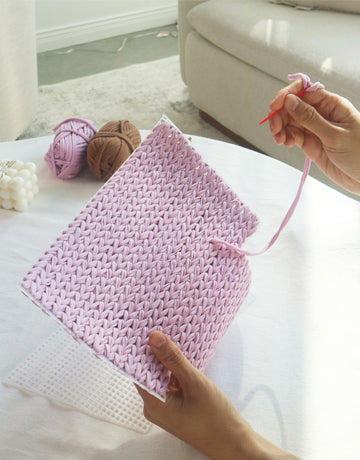

Foundation Single Crochet (FSC) is a game-changing technique that combines a starting chain and the first row of single crochet into one step. This method creates a stretchy, neat, and perfectly even foundation, eliminating common issues like tight, twisted, or puckered starting edges that often occur with a traditional chain. FSC is ideal for projects requiring elasticity, such as necklines, cuffs, and hat brims, providing a professional finish from the very first stitch.
Why Foundation Single Crochet is a Game-Changer
What you get with FSC is a starting edge that’s stretchy, neat, and perfectly even—something a traditional chain struggles to deliver. Think of FSC as your secret for giving your projects that polished, professional look right from the get-go. By combining two steps into one fluid motion, foundation single crochet solves so many common crochet headaches. No more squinting to find the right loop in a long chain, no more discovering your chain has twisted halfway through, and no more rigid starting edges that make your blanket pucker.
Here’s a quick rundown of why it’s so great:
- Superior Elasticity: The foundation has natural stretch, making it ideal for sweater necklines, hat brims, and cuffs. No more rigid edges!
- Twist-Proof Foundation: Because you build the stitch and the chain together, there's zero chance for a long chain to get twisted.
- Accurate Stitch Count: It is significantly easier to count full stitches than it is to count individual chains, reducing errors.
- Professional Finish: The bottom edge of your work will mirror the top edge of a single crochet row, creating a symmetrical and polished look.
Honestly, the real magic of FSC is that it just makes crocheting more fun. It gets rid of one of the most tedious parts of starting a project, letting you dive right into the good stuff.
It's no surprise that most of us learned the basic chain and single crochet stitch first; it's the foundation for so much. In fact, some estimates suggest 90% of beginners start there. Mastering the foundation single crochet takes that fundamental skill and elevates it, giving you a better result and more control over your finished work. You can read more about how stitches like this are influencing modern crafters over at wifitalents.com.
Soon, you’ll see exactly how this technique stops that dreaded bottom-edge curl and provides the perfect, flexible base for everything you make.

How-To: Your Step-by-Step Guide to Foundation Single Crochet
Alright, let's grab our hooks and get this stitch figured out! This section provides a detailed, step-by-step walkthrough for creating your first foundation single crochet row.
H3: Step 1: The Setup
Nailing the setup is everything. Once you get these first few motions down, the rest will click into place and feel completely natural.
- Make a Slip Knot: Start by making a slip knot on your hook.
- Chain Two (ch 2): This initial chain of two does not count as a stitch but serves as the starting point for your first FSC.
Your hook is now in the perfect spot to begin.
H3: Step 2: Creating the First FSC Stitch
The first stitch can feel fiddly, but it establishes the pattern for the entire row. Pay close attention to hook placement.
- Insert Hook: Insert your hook into the second chain from the hook (the very first chain you made).
- Pull Up a Loop: Yarn over and pull up a loop. You will have two loops on your hook.
- Create the Chain Base: Yarn over and pull through only the first loop on your hook. This action creates the "chain" at the bottom of your stitch. You will still have two loops on your hook.
- Complete the Single Crochet: Yarn over again and pull through both loops on your hook. This completes your first foundation single crochet stitch.
The real magic happens when you "chain 1" in the middle of the stitch by pulling through just that first loop. That single motion creates the base for your next stitch, which is exactly why FSC is such a game-changer.
H3: Step 3: Building the Row
With the first stitch complete, the rest of the row follows a steady rhythm. You will now work into the "chain" you created at the bottom of the previous stitch.
- Identify the 'V': Turn your work slightly to see the bottom edge. Find the 'V' or chain you made in the last step of the previous stitch.
- Insert Hook: Insert your hook under both strands of that 'V'. This ensures a strong, neat edge.
- Pull Up a Loop: Yarn over and pull up a loop (2 loops on the hook).
- Create the Next Chain Base: Yarn over and pull through the first loop only (still 2 loops on the hook).
- Complete the Stitch: Yarn over and pull through both loops to finish the single crochet.
Repeat these movements for the desired number of stitches. Each repetition creates the stitch and its foundation simultaneously. While it may feel slower than a simple chain initially, the time saved by avoiding twists, miscounts, and difficult first rows is significant. Many crocheters find their error rate drops by up to 40%, meaning less time "frogging" (ripping out your work).
If you’re used to the old way, taking a peek at our guide on the basic chain stitch can really help you appreciate just how much better this technique is.
Best Practices and Technical Tips for Flawless FSC
As you get the hang of it, keep these little pointers in mind. They'll help you build muscle memory and get a beautiful, even row every time.
| Tip | Why It Matters |
|---|---|
| Keep Tension Consistent | This is the big one. If the chain bases are too tight, you'll struggle to get your hook in for the next stitch. Too loose, and your starting edge will look wavy and uneven. Find a nice, relaxed flow. |
| Use a Stitch Marker | Especially when you're new to FSC, pop a stitch marker into the chain part of your very first stitch. It makes it so much easier to find where to start your second stitch. |
| Count as You Go | It's infinitely easier to count these full, beautiful FSC stitches than it is to count tiny little chains. I like to count every 10 or 20 stitches to make sure I'm on track. |
| Make a Practice Swatch | Before you jump into a big project, just make a small swatch of 15-20 stitches. It's a no-pressure way to find your rhythm and nail your tension. |
Alright, now that you've got the hang of the basic steps, let's talk about why foundation single crochet (FSC) is such a game-changer. This isn't just some neat party trick; it's a genuine problem-solver that I turn to all the time to make my projects look and feel so much better. It tackles some of the most common headaches we all face as crocheters.
Think about the last scarf or blanket you started. Did the bottom edge immediately curl up, refusing to lie flat no matter how much you pleaded with it? That's almost always because your starting chain was way tighter than your first row of stitches. FSC completely fixes this. Since you're building the chain and the stitch at the same time, the tension is perfectly matched, giving you a beautiful, flat edge right from the get-go.
Say Goodbye to Tight Openings
One of the best things about foundation single crochet is the amazing stretch it adds. A traditional starting chain has almost zero give, which can be a total disaster for anything you need to wear.
I’ve been there—you finish a gorgeous pullover, go to try it on, and you can barely get the neckline over your head. Or you make a pair of wrist warmers that feel like they're cutting off your circulation. FSC is the simple fix for these all-too-common issues.
- Sweater Necklines: Starting with FSC gives you a flexible, comfy neckline that sits perfectly without feeling like a choker.
- Hat Brims: It creates a wonderfully stretchy brim that fits snugly but won't give you a headache.
- Cuffs and Socks: That built-in elasticity is perfect for sock and sleeve cuffs, letting them stretch easily over your foot or hand and then snap right back into shape.
Honestly, this little bit of magic means your finished pieces won't just look amazing—they'll actually be a joy to wear.
That Professional, Polished Look
Beyond being super practical, the FSC method just looks cleaner. The bottom edge of a foundation row looks almost identical to the top edge of your final row of single crochet. This creates a beautifully symmetrical and tidy finish that instantly makes your work look more professional.
Here’s what I really love about it: FSC sets your project up for success from the very first stitch. You’re building in a stable, even, and flexible base that stops problems before they even start.
Take a tote bag, for example. Nothing ruins the look more than a saggy, stretched-out opening. By starting a bag like the Stitch Mingle Kainy bag kit with FSC, you create a sturdy opening that holds its shape beautifully. The even tension keeps the top from drooping, even when it's full, giving you a bag that’s built to last.
The Perfect Start for Projects in the Round
And then there’s the ultimate frustration-saver: using FSC for projects worked in the round. We've all experienced the horror of finishing the first round of a cowl, only to see that our long starting chain has twisted on itself. It’s a total nightmare.
This is where foundation single crochet is your best friend for making cowls, infinity scarves, baskets, or amigurumi.
| Problem with a Traditional Chain | How Foundation Single Crochet Solves It |
|---|---|
| The chain twists so easily, especially on long projects. | You make a straight, flat row of stitches first, so it’s impossible for it to twist when you join. |
| Joining often leaves a weird bump or gap. | The join is incredibly smooth and almost invisible since you just slip stitch the ends together. |
| The starting ring can feel tight and inflexible. | Your foundation row creates a stretchy ring, which is ideal for cowls or bottom-up bags. |
By working a flat row of FSC and then joining it into a ring, you completely eliminate any chance of a twist. It’s a simple change that saves you time, frustration, and guarantees a perfect start every single time. Trust me, your projects will thank you for it.
Troubleshooting Common FSC Issues
Even the most experienced crocheter hits a snag when trying a new technique. If your first attempts at foundation single crochet feel a bit wobbly or look a little wonky, please know you’re in good company!

Unravelling Tension Troubles
Tension is, without a doubt, the biggest hurdle with FSC. The sweet spot is a calm, even rhythm. The little "chain" you form at the bottom of each stitch needs to be just loose enough to work into comfortably, but snug enough that it doesn’t create a gap. It's totally normal for the first 5-10 stitches to be a bit uneven while you find your groove.
Here are a few things I’ve found helpful:
- Focus on that first loop. The "chain 1" part of the stitch (where you yarn over and pull through just one loop) creates the base for your next stitch. Try to make that loop the same size every single time.
- Relax your hands! A death grip on your hook and yarn is the fastest way to get stitches so tight they squeak. Take a moment, shake out your hands, and loosen your hold.
- Go up a hook size for practice. Grab a hook that's a size larger than your yarn calls for. This little trick gives you more room to manoeuvre and helps you nail the motion without fighting the yarn.
Finding Where To Insert Your Hook
The next big question is, "Where on earth does the hook go?!" After you finish an FSC stitch, tilt your work toward you just a little bit. You’re hunting for the "chain" part you just made. It looks like a small 'V' tucked away at the very bottom edge. Your goal is to insert your hook under both strands of that 'V'. If you only go through one loop, you'll end up with a foundation that’s weak and tends to twist.
Here’s how I like to think about it: Every FSC stitch is a two-part system—a single crochet on top and a chain on the bottom. To make the next stitch, you build it into the chain part of the one you just made. It's a brilliant little cycle.
Keeping an Accurate Stitch Count
One of the absolute best things about FSC is how easy it makes counting stitches compared to a fiddly starting chain. But when you're in the zone, it's still easy to lose track. Use stitch markers as your best friend. Instead of just one at the start, place a marker every 20 or 25 stitches. This breaks up a huge counting job into small, manageable chunks. If you're consistently struggling with tension, it might be worth exploring different ways of holding your yarn and hook, as a different grip can dramatically improve your control.
Advanced Techniques: Beyond the FSC
So, you’ve mastered the foundation single crochet. Give yourself a pat on the back! The logic is the same no matter how tall the stitch is. Once you understand how to build the chain and the stitch at the same time for an FSC, you've already done 90% of the mental work for all the others.

Same Moves, Different Heights
The only real difference between a foundation single crochet (FSC), a foundation half double crochet (FHDC), and a foundation double crochet (FDC) is the stitch you build on top of that little chain you create at the base.
The rhythm feels almost identical once you get going.
-
With a Foundation Half Double Crochet (FHDC), you’ll yarn over before you start, just like a regular HDC. You still make that chain at the bottom, but then you pull through all three loops to finish it.
-
For a Foundation Double Crochet (FDC), it’s the same deal. Yarn over, make your chain base, and then complete the two "pull through two" steps of a normal double crochet.
See the pattern? You’re always making the chain first, then finishing the stitch.
If you can remember to create the chain at the bottom before completing the stitch on top, you've cracked the code. This is the key that unlocks the entire family of foundation stitches.
Choosing Your Foundation Stitch
The rule of thumb is wonderfully simple: match the foundation stitch to the first row of your pattern. If your pattern kicks off with a row of double crochet, starting with an FDC row will give you a beautifully consistent and stretchy edge.
| Stitch Type | Best Used When... | Resulting Fabric |
|---|---|---|
| FSC | The first row is single crochet. Great for sturdy projects like amigurumi, bags, and dishcloths. | Creates a dense, firm, and stretchy edge. |
| FHDC | The first row is half double crochet. A fantastic all-rounder for blankets, garments, and scarves. | Offers a balanced fabric with good drape and moderate stretch. |
| FDC | The first row is double crochet. Perfect for when you need height and drape, like in shawls or airy curtains. | Produces a very flexible, airy, and drapey foundation. |
Learning these variations truly gives you control over your work. You can look at a pattern that starts with a long, fussy chain and confidently decide to swap it out for a better foundation.
Final Tips and FAQs
Once you get the hang of foundation single crochet, you’ll probably start wondering where else you can use it. Let's tackle some of the most common questions that pop up.
Is It Really Faster, Though?
I get this question all the time. If you were to time yourself stitch-for-stitch, a traditional chain is probably quicker. But here’s the thing: that’s not the whole story. The real speed with FSC comes from getting it right the first time. Think about how many times you’ve had to frog an entire starting row because the chain was twisted, you miscounted, or the tension was so tight you could barely work your hook into it. FSC helps you sidestep all that drama.
Can I Swap FSC into Any Pattern?
You can substitute foundation single crochet in about 90% of patterns that start with a simple row of single crochet. The trick is to look for a first row that's a straightforward, one-to-one count. For instance, if a pattern tells you to "Chain 101, sc in 2nd ch from hook and each ch across," you’ve got the green light! You can confidently replace that with "FSC 100." You’ll end up with the exact same stitch count and a beautiful, stretchy edge.
Joining FSC for Working in the Round
Using FSC for projects in the round is a game-changer. The secret to a perfect, twist-free ring is to work your foundation single crochet row flat first, and then join. Once you’ve crocheted the number of stitches you need, just lay the row flat to make sure there are no twists. Then, bring the two ends together, insert your hook into the top of the very first FSC stitch you made, and finish with a slip stitch to join them into a ring.
Time to Put Those New Skills to Work!
Alright, you’ve got the hang of foundation single crochet. Now for the fun part: actually making something with it! At Stitch Mingle, we're big believers in learning by doing. This stitch isn't just a neat little trick—it's a game-changer for giving your projects a truly professional look and feel.
Where Should You Use FSC?
Think about any project that’s ever been ruined by that dreaded tight, twisted starting chain. We absolutely love it for the openings of bags, like our Kainy and Peak bag kits. Using foundation single crochet gives the top of the bag a sturdy, polished edge that won’t sag or lose its shape, no matter how many times you use it.
Learning foundation single crochet isn't just about knowing another stitch. It's about gaining the confidence to make better choices for your projects, starting from the ground up. You’re in control now!
Go ahead, dive into our collection and find your next creative challenge. Grab a kit, your favourite hook, and see for yourself how incredible this technique really is. Happy crafting!
Explore More from Stitch Mingle:
- Find your next weekend project in our collection of DIY Kits for All Skill Levels.
- Check out the latest yarn, tools, and accessories in our New Arrivals.
- See what other crafters are making with our Best-Selling Patterns.
- Expand your skills with our comprehensive crochet stitches guide.