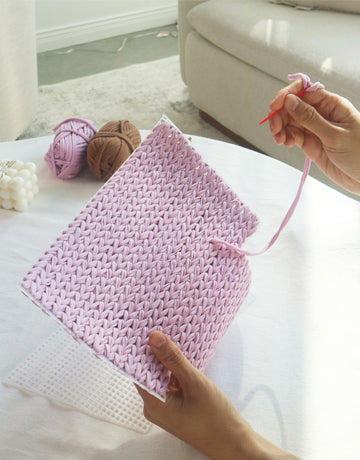

You’ve finished the last stitch. The scarf is the right length, the little bear finally has both ears, or the bag panels are stacked beside you ready for joining. Then the doubt hits. How do you fasten off crochet without ruining the whole thing at the very end?
That anxiety is common, especially for beginners. Fastening off looks small, but it decides whether your project stays neat, strong, and wearable. The good news is that this skill is much simpler than it seems once you know what to do with the final loop and yarn tail.
That Amazing Feeling of the Final Stitch
Finishing a crochet project brings a strange mix of pride and panic. You’re pleased because the hard part is done, but the final step can feel high stakes. A loose ending can spoil a clean edge. A bulky finish can stand out on a hat cuff or toy. And if you’ve ever cut the yarn too soon, you already know how quickly confidence can disappear.
Most crafters reach this point with the same thought: “I don’t want it to unravel now.”
That’s why learning how to fasten off crochet matters so much. It isn’t just a tidy ending. It’s the move that secures all the work that came before it. The reassuring part is that the basic methods are widely shared across crochet teaching, and the core finishing techniques are treated as universal craft skills in crochet instruction worldwide, even if stitch terms vary by region, as noted in this discussion of whether crochet techniques are universal.
If you’re still building your basics, this pairs nicely with a beginner walkthrough on how to crochet for beginners.
Fastening off feels intimidating until you do it once on purpose, slowly, and see that the fabric holds exactly as it should.
Gathering Your Finishing Tools
A neat finish starts before you cut the yarn. You don’t need a special setup, but you do need the right few items within reach so you don’t fumble the last step.

What to keep beside you
- Sharp scissors help you make a clean cut instead of crushing or fraying the yarn.
- A yarn needle (also called a tapestry needle) lets you weave in the tail without splitting the stitches.
- Your crochet hook stays in the final loop until you’ve pulled the yarn through.
- Your finished project should be laid flat so you can see exactly where the last stitch sits.
The yarn needle matters more than many beginners realise. A blunt tip slides through the fabric more safely than a sewing needle, and the larger eye makes it much easier to thread thicker yarns.
The tail length that gives you room to work
The biggest beginner mistake at this stage is cutting the yarn too short. It feels thrifty in the moment, but it makes secure finishing much harder.
Across crochet tutorials, the standard recommendation is to leave a 4 to 8 inch (10 to 20 cm) yarn tail for fastening off and weaving in, which gives enough length for a secure finish in standard projects according to this crochet fasten-off guide.
Practical rule: If you’re unsure, leave a slightly longer tail. Extra yarn is easier to trim than a tail that’s too short to weave in.
Here’s a quick tool check before you move on:
| Tool | What it does | Why it helps |
|---|---|---|
| Scissors | Cuts working yarn cleanly | Prevents fuzzy, uneven ends |
| Yarn needle | Weaves tail into stitches | Hides and secures the finish |
| Crochet hook | Holds final loop | Keeps the last stitch controlled |
Mastering the Standard Fasten-Off Knot
This is the method most crocheters use first. It’s dependable, easy to remember, and ideal for flat projects such as scarves, blankets, washcloths, and simple squares.
To make the motions easier to picture, use this visual first.

The basic steps
- Finish your last stitch and leave the hook in the loop.
- Cut the working yarn, leaving your chosen tail.
- Yarn over with the cut tail or catch that tail with the hook.
- Pull the tail all the way through the loop on your hook.
- Remove the hook and gently tighten the loop by tugging the tail.
That final pull creates the fasten-off. It locks the last loop so your stitches don’t start unpicking from the edge.
What your hands should feel
Beginners often ask how tight to pull. The answer is firm, but not harsh. If you yank the tail hard, the last stitch can shrink and distort the edge. If you barely tighten it, the finish may look loose.
Aim for a loop that closes neatly and matches the surrounding stitch tension. On a flat swatch, the edge should look calm and even, not pinched.
A common point of confusion is whether this is “the knot” or whether another knot is needed after. Usually, this pulled-through loop is the securing action you need before weaving in. For most everyday crochet, true long-term security comes from weaving the tail through the fabric well, not from stacking extra knots.
When this method works best
The standard fasten-off is a strong choice when:
- Your edge won’t be highly visible such as the end of a dishcloth
- You’re working in rows rather than finishing a smooth round
- You want speed and simplicity without a decorative finish
- The fabric is flat and won’t show a small end bump
If you want to see the hand motion in action, this tutorial video is a helpful companion:
What not to do
- Don’t cut before checking tail length. That’s the fastest way to create stress.
- Don’t pull so tightly that the corner curls. Your final stitch should still look like a stitch.
- Don’t stop after the pull-through if the project needs durability. You still need to weave in the end.
A fasten-off secures the last live loop. Weaving in secures the tail inside the fabric. You need both for a polished result.
Choosing the Right Finish for Your Project
The biggest upgrade you can make isn’t learning a fancier knot. It’s learning to match the finish to the project. A method that looks perfect on a blanket edge may look bulky on amigurumi. A finish that’s fine for a coaster may not be the best choice for a structured bag made from separate panels.

Which finish suits which project
Use this comparison when you’re deciding how to fasten off crochet for different builds.
| Method | Best For | Appearance |
|---|---|---|
| Standard knot | Flat projects like scarves, blankets, squares | Visible but tidy edge finish |
| Invisible weave-in | Amigurumi, hats, cuffs, visible round endings | Smooth and less noticeable |
| Seamless join | Multi-piece items, garments, panelled bags | Cleaner join with less bulk |
Flat projects need security more than disguise
If you’re ending a blanket square, scarf, or dishcloth, the standard fasten-off usually does the job well. These shapes already have obvious corners or edges, so a tiny secured end rarely looks out of place.
For these pieces, focus on:
- Consistent tension on the final stitch
- A long enough tail to weave in calmly
- Weaving through the back of nearby stitches so the end stays hidden
This is the practical, everyday finish most beginners should master first.
In-the-round projects need a smoother ending
Projects worked in the round often reveal every little bump. Hats, sleeves, baskets, and amigurumi especially benefit from a more discreet finish. If you use the standard pull-through and stop there, the end can leave a noticeable nub where the round finishes.
An invisible weave-in helps soften that ending. Instead of relying on the fasten-off point to look pretty, you use the tail to mimic the shape of the surrounding stitch from the back or along the top loops. The result is a round that looks less interrupted.
This matters most when:
- the final round stays visible,
- the yarn is smooth and shows structure clearly,
- or the project will be handled closely, like a toy or wearable.
If the finish sits where people will look directly, choose the method that hides itself best.
Multi-panel bags need strength and less bulk
Finishing choices matter more than many tutorials admit. Bags, especially ones made from separate crochet panels, put stress on seams. If the join is bulky or weak, the whole project can look homemade in the wrong way.
For panelled projects, an invisible join can give a cleaner result than a simple knotted finish. One cited crochet finishing resource notes that for multi-panel projects like bags, a back-loop invisible join can increase seam strength by up to 25% with certain yarn blends, and the same source reports that 52% of hobbyists in one Canadian city abandoned projects because visible, weak seams were disappointing in finished items, according to this discussion of invisible crochet finishing.
That doesn’t mean every bag needs an advanced technique. It means bags reward careful finishing more than many soft flat projects do.
If you also enjoy adding decorative detail after construction, this guide on embroidering on crochet is useful once your seams and ends are secure.
A simple decision guide
Choose your finish by asking three questions:
-
Will this ending be visible?
If yes, lean towards an invisible finish. -
Will this area carry stress or weight?
If yes, avoid a quick bulky knot and give the seam a stronger join. -
Is the project flat, round, or assembled from pieces?
The project shape usually tells you which finishing method will look best.
The weave-in still matters every time
No matter which finish you choose, weaving in the tail is the part that turns “done” into “finished”. Run the tail through nearby stitches, change direction once or twice, and keep the path inside the structure of the fabric so it doesn’t peek through the front.
A good weave-in should do two things at once:
- hold the tail securely,
- and disappear into the stitch pattern.
That’s the difference between a project that merely survives and one that looks professionally made.
Solving Common Fastening-Off Problems
Even when you know the steps, the ending can still misbehave. Most finishing problems come from one of three things: short tails, loose final stitches, or using the wrong finish for the project shape.

When the tail keeps slipping out
If the end starts working loose later, the problem usually isn’t the pull-through itself. It’s that the tail wasn’t woven in securely enough.
Try this fix:
- Thread the tail onto a smaller yarn needle if the area is tight.
- Weave through several nearby stitches on the wrong side of the fabric.
- Change direction instead of travelling in one straight line.
- Trim only after checking the tail stays put when you flex the fabric gently.
When the finish looks bulky
A bulky end often shows up at the end of a round or on ribbed edges. That’s a clue that the standard method wasn’t the best visual choice there.
Use the tail to mimic the top of a stitch instead of leaving the final knot sitting on the surface. This creates a cleaner line and helps the finish blend in with the surrounding fabric.
If tension is giving you trouble throughout the row or round, better yarn control helps before you even reach the final stitch. This practical guide on how to hold yarn when crocheting can make those last stitches easier to manage.
When a little hole appears at the end
This is especially common if the final stitch loosened while you were cutting the yarn. The fix is simple. Use the tail from the back of the work to close the gap gently before weaving it in.
Small gaps near the fasten-off usually come from tension, not failure. You can often repair them neatly with the same tail you already have.
A quick troubleshooting checklist helps:
| Problem | Likely cause | Fix |
|---|---|---|
| Tail comes out | Tail too short or poorly woven | Reweave in more than one direction |
| Bulky ending | Wrong finish for project shape | Use an invisible finish on visible rounds |
| Hole at final stitch | Last stitch too loose | Close gap with tail before weaving |
Your Beautifully Finished Project Awaits
Fastening off stops feeling scary once you know what each finish is meant to do. A flat scarf doesn’t need the same ending as a toy, and a panelled bag deserves more seam care than a quick swatch. When you match the method to the project, your work looks cleaner and lasts longer.
That’s the key skill. Not just pulling the yarn through, but recognising whether your piece needs a standard finish, a smoother round ending, or a stronger join with less bulk.
A well-finished project feels better in your hands too. The edge sits properly. The seam doesn’t distract. The tail stays hidden. Those small details are what make handmade work feel polished instead of unfinished.
If you’re ready to practise on something satisfying, beginner-friendly kits with structured shapes are a great next step. Bag builds help you think about joins and finishing. Small accessories help you repeat the process until it feels natural. Either way, the last stitch won’t feel like a gamble anymore. It’ll feel like the final part of the craft.
If you’d like an easy next project to practise your finishing skills, explore Stitch Mingle. Their beginner-friendly kits, including bag and keychain projects, make it simple to go from first stitch to polished final fasten-off with clear instructions and guided tutorials.