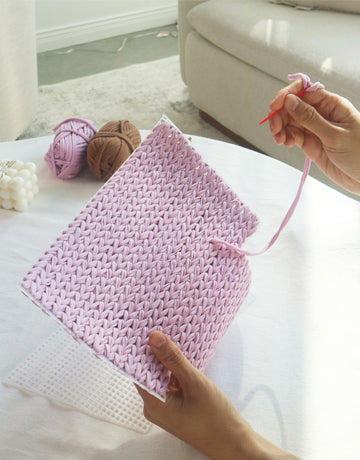

Starting a new hobby like knitting is exciting, but the wall of yarn and needles at a craft store can be overwhelming. This guide simplifies the process by explaining everything you need to know about choosing and using a knitting start kit. A kit provides all the essential tools—yarn, needles, and instructions—in one box, eliminating guesswork and ensuring a successful first project. You'll learn what to look for in a quality kit, master the fundamental stitches, and get tips for troubleshooting common beginner mistakes.
Why a Knitting Start Kit is the Secret to a Great Start
There’s a reason so many seasoned knitters recommend a kit for your first go. It cuts through the confusion and lets you get straight to the fun part—actually knitting!
Think about it. Instead of spending hours trying to figure out if you need 4.5mm (a US 7) needles for a certain yarn, a kit has everything perfectly paired for you. It’s all designed to work together to create a specific, beautiful project.
Benefits of an All-in-One Knitting Kit
Choosing a curated kit gives you a real confidence boost and makes the learning process feel so much more enjoyable. Here’s what makes it such a game-changer:
- No More Guesswork: You can skip the frustrating part of buying the wrong supplies and just start creating.
- Cost-Effective: Buying everything bundled together is often more affordable than picking up each item on its own.
- A Guaranteed Finish: Kits are built around a single, achievable project, like a cosy scarf or a cute set of dishcloths, so you know you’ll end up with something you can be proud of.
A great kit isn’t just a box of supplies—it’s a guided experience. It's like having a friendly teacher sitting right there with you, showing you the way.
With handmade crafts making a huge comeback (a recent survey found 52 million Americans have picked up knitting!), a little guidance goes a long way. For newcomers, a kit with clear instructions and video tutorials, like the ones we offer at Stitch Mingle, turns what could be a confusing hobby into a simple, calming one. You get to focus on the meditative rhythm of making something with your own two hands, one stitch at a time.
What's Inside a Knitting Start Kit?
So you’ve got your first knitting kit in hand—that’s so exciting! Popping open that box for the first time feels like the real beginning of your creative journey. But it can also be a little overwhelming when you see all the new tools and bits and bobs inside.
Don't worry. We'll walk through exactly what you can expect to find, so you know what everything is for. A good kit is designed to give you everything you need right from the get-go, saving you a confusing trip to the craft store and letting you jump straight into the fun part: knitting!

Core Components: Yarn and Needles
Right at the heart of your kit, you’ll find your yarn and knitting needles. These are your two most important tools, and in a quality knitting start kit, they're chosen to work perfectly together.
The yarn will usually be a soft, squishy fibre like merino wool or a smooth acrylic. These are fantastic for beginners because they don’t split easily. You’ll also notice it’s probably a worsted or chunky weight yarn, which is great because you can see your stitches clearly and your project grows surprisingly fast!
The needles in your kit have been picked specifically for that yarn. Most beginner kits come with needles in the 4.5mm to 6.0mm range. This is the sweet spot—they're big enough to feel comfortable in your hands but not so huge that your stitches get all loose and sloppy. Many kits, like ours at Stitch Mingle, use wooden or bamboo needles because they have a little bit of grip. This is a game-changer for new knitters, as it helps prevent your stitches from sliding right off the end, which is a common (and super annoying!) beginner snag.
Essential Accessories
Beyond the yarn and needles, you'll find a few small items that make a huge difference. Think of them as your trusty sidekicks.
- Darning Needle: This isn't for sewing fabric, but for weaving in your yarn ends when you’re done. It’s a big needle with a blunt tip, and it’s the secret to making your finished projects look tidy and professional.
- Stitch Markers: These little rings are absolute lifesavers. You'll pop them onto your needle to mark your spot, like the beginning of a row or where a pattern changes. They help you keep track without having to constantly count stitches.
- Yarn Snips or Scissors: You'll need a sharp little pair of scissors to get a clean cut when you finish a ball of yarn or complete your project.
Honestly, while the yarn and needles get all the glory, these little accessories are the unsung heroes of knitting. They handle the small but crucial jobs that make the whole process go smoothly.
Essential Tools in a Beginner Knitting Kit
| Tool | Technical Name/Metric | Primary Function | Why It's Essential for Beginners |
|---|---|---|---|
| Knitting Needles | Straight Needles (4.5mm - 6.0mm) | To create stitches and form the fabric. | Sized to match the yarn, making stitch formation easier and more consistent. |
| Yarn | Worsted or Chunky Weight (4 or 5) | The fibre used to create the knitted item. | Chosen for its smoothness and thickness, helping you see your stitches clearly. |
| Darning Needle | Tapestry Needle | To weave in loose yarn ends neatly. | Essential for giving your finished project a professional, unravel-proof finish. |
| Stitch Markers | Ring or Locking Markers | To mark specific points in your knitting. | Helps you keep track of your progress and avoid losing your place in a pattern. |
Once you understand what's in your box and why it’s there, you're all set. With these tools ready, you’re not just unboxing supplies—you're gearing up for a wonderful, creative adventure.
How to Choose the Right Knitting Start Kit
Alright, let's talk about picking your very first knitting kit. Walking into the world of knitting can feel a little overwhelming with all the choices out there, but I'll let you in on a little secret I tell every new knitter: pick the kit that makes you the most excited.
Seriously, that's the magic ingredient. Your motivation to get through those first fumbly stitches will come from wanting to create something you’ll genuinely love. So, what project gets you fired up? A super cozy scarf you can’t wait to wear? A set of chic, rustic-looking dishcloths for your kitchen? Maybe a quick and cute headband? The best kit for you is the one with a project you’re dying to start.
Evaluate Kit Quality and Instructions
While you definitely want to love the final product, the learning experience itself is what really matters. The quality of your materials—and especially the instructions—can be the difference between a fun new hobby and a frustrating mess.
First, check out the yarn. You want something smooth and easy to work with, not a yarn that splits and snags on your needles. Then, look at the instructions. Is it just a single printed sheet? Or is there more support built in?
For brand-new knitters, video tutorials are an absolute game-changer. There's nothing clearer than watching an expert’s hands guide you through every single motion, from casting on your first stitch to finishing the project. Trying to follow a confusing diagram is a classic beginner's trap. This is where premium kits, like ours at Stitch Mingle, really make all the difference.
The Importance of Good Support
The best knitting start kit is built to anticipate your stumbles and questions. It gives you clear, visual answers right when you need them, turning a simple box of supplies into a proper learning experience. It sets you up for success and, hopefully, a hobby you’ll enjoy for a lifetime.
This focus on making crafting easy to learn is a huge reason knitting is so popular again. Just look at creative hotbeds like California, where the Apparel Knitting Mills industry is set to become a $107.2 million market by 2026, according to ibisworld.com. That growth isn’t just factories; it’s powered by a massive community of hobbyists. In fact, 80% of knitters are women aged 30-50, and they finish an average of 12 projects a year! These amazing starter kits are a direct response to that passion, making it easier than ever to pick up some needles and join in.
Think of your starter kit as your ticket into this amazing world. When you choose one that matches your style and gives you fantastic guidance, you’re not just buying some yarn and sticks. You're kicking off a wonderful creative adventure.
How-To: Your First Knitting Stitches
Alright, you’ve got your knitting start kit unpacked, your materials are ready to go, and you can practically feel the creative buzz in the air. This is where the magic happens! Let's get ready to turn that lovely ball of yarn into actual, squishy fabric.
The most important thing to remember? Don't aim for perfection right now. Just focus on getting a feel for the rhythm and enjoy the simple process of making something with your own two hands.

We're about to tackle the "big three" skills that every knitter learns first. Think of them as your foundation—once you get these down, you'll be able to make countless projects. With a little bit of practice, these movements will feel as natural as breathing.
Step 1: The Slip Knot
Every single knitting project, no matter how big or small, starts with one adjustable loop: the slip knot. It's the anchor for everything that comes after.
- Start by leaving a tail of about 15 centimetres (6 inches). Drape the yarn over your index and middle fingers.
- Wrap the working yarn (the part connected to the ball) behind those fingers and cross it over the front, making an 'X' shape.
- Slide your knitting needle under the front strand of that 'X', grab the back strand, and pull it through to create a loop.
- Gently tug on both ends of the yarn to tighten the knot onto the needle. You want it snug, but loose enough that it can still slide back and forth.
And that's it! You've officially taken the first step. That little knot is the gateway to your whole project.
Step 2: Casting On
Next up is casting on. This is the technical term for creating the first row of stitches on your needle, which forms the base of your knitted piece. There are many methods, but most beginner kits will show you the simple and sturdy long-tail cast-on.
This technique uses both the tail and the working yarn to make an edge that’s strong with a little bit of stretch. Honestly, it can feel like trying to pat your head and rub your tummy at the same time at first! That's why visual guides are so helpful. Our Stitch Mingle kits come with video tutorials for this very reason—watching someone’s hands actually do it makes it click way faster than a drawing ever could.
Remember, the goal isn't a flawless first attempt. It's about building muscle memory. Your first few rows might look a bit wonky, and that is completely normal! Every single knitter started exactly where you are now.
Step 3: The Knit Stitch
With your stitches cast on, you’re ready for the most fundamental move of all: the knit stitch. This one simple motion, when you repeat it over and over, creates a beautiful, bouncy fabric called garter stitch. It's perfect for a first project like a simple scarf or dishcloth.
Here’s the basic movement in a nutshell:
- Take your right needle and insert it into the front of the very first stitch on your left needle, from left to right.
- Wrap the working yarn counter-clockwise around the tip of that right needle.
- Carefully pull that wrapped yarn back through the stitch.
- And finally, slide the original stitch right off the left needle.
You did it! You’ve just made a knit stitch. Now, you just keep doing that for every stitch in the row. It’s this very hands-on process that’s drawing so many people back to crafting. While the global knitting machine market is projected to hit $6.50 billion by 2026, manual machines still hold a surprising 39% market share.
This just shows how much people value creating things by hand. You're joining a huge community—an estimated 52 million Americans tried knitting during the recent hobbyist boom! You can read more about the growing knitting market and its impact to see just how popular your new hobby is.
Keep practicing, and before you know it, you'll have a cozy, handmade piece you can be incredibly proud of.
Troubleshooting Common Beginner Knitting Mistakes
Let's be honest, every knitter—and I mean every knitter—has been there. You're in the zone, things are going great, and then you look down. A dropped stitch. Wonky edges. A mysterious new loop that appeared out of nowhere. These little hiccups aren't just common; they're practically a rite of passage!

That initial jolt of panic is totally normal, but try to see every mistake as a secret lesson. Figuring out how to spot and fix these common snags is what truly builds your confidence. Your knitting start kit gives you the tools, and this guide will give you the know-how to untangle yourself when things go wrong.
Issue: Inconsistent Tension (Stitches Too Tight or Too Loose)
This is, without a doubt, the number one hurdle for new knitters. It all boils down to a little thing called tension. If your stitches are so tight you can barely shove your needle through them, your final piece will feel stiff as a board. On the flip side, if they're loose and gappy, the fabric will be floppy and lack structure.
-
For Tight Knitters: First, take a deep breath and consciously relax your hands, arms, and shoulders. You might be surprised how much tension you're holding! Also, try not to knit only on the very tips of your needles. After you form a new stitch, slide it onto the main, wider barrel of the needle before starting the next one.
-
For Loose Knitters: It's tempting to yank the yarn after each stitch, but that just creates more inconsistency. The real trick is to focus on how you hold the working yarn. Try to keep it gently but consistently taut over your index finger, wrapping the needle the same way every single time.
Finding your personal tension is a bit like learning to ride a bike—it feels wobbly at first, but with a bit of practice, your muscle memory kicks in. Soon enough, you won't even have to think about it.
Issue: Dropped Stitches
It happens to the best of us. You glance down and spot a lonely little loop dangling below the needle, threatening to unravel your beautiful work. Don't worry, it's an easy fix!
All you need is a crochet hook (seriously, this is a lifesaver to have in your bag). Just slip the hook into the front of the dropped stitch, grab the horizontal bar of yarn floating directly above it, and pull that bar right through the loop. Keep repeating this for each "rung" of the ladder until you've worked your way back up and can pop the stitch safely back onto your knitting needle.
Issue: Incorrect Stitch Count
This can feel like some strange knitting magic, but there's always a logical, and simple, explanation. You'll soon realise it's usually one of two things.
-
Gaining a Stitch (Accidental Yarn Over): This often happens when your yarn accidentally drapes over the needle between stitches. This creates what's called a yarn over. When you knit into that extra loop on the next row, you've just created a brand-new stitch.
-
Losing a Stitch: The culprit is usually one of two things: you either knitted two stitches together by mistake, or a stitch simply slipped off the end of your needle when you weren't looking.
Learning to troubleshoot is all about adapting. It’s a skill that applies to any creative endeavour, big or small. Think about it: California's entire textile mills industry, valued at an incredible $1.4 billion, has to constantly adapt to new trends and challenges. Knowing that an industry with 7,801 workers and 1,472 businesses faces its own hurdles can make your first dropped stitch feel a lot less scary. You can read more about the resilience of the textile industry to see how learning and adapting are central to any creative process.
Nurturing Your New Hobby Beyond the Kit
You did it! That final cast-off stitch is a huge milestone, and that feeling of creating something with your own two hands is just incredible. Now that you've conquered your first project with the knitting start kit, the real adventure is just beginning. This isn't the finish line; it’s the starting point for a lifelong passion.

The big question now is: what’s next? If you enjoyed making something flat and simple like a scarf, why not try another one? You could experiment with a different yarn or even learn the purl stitch. Just adding that one new stitch to your repertoire opens up a whole new world of textures.
Expanding Your Skills and Supplies
Once you get the hang of the basic knit and purl, you can start exploring all the amazing tools and materials out there. Wandering through a yarn shop (or browsing online) becomes a totally different experience. You'll start noticing the difference between buttery-soft merino wool and earthy, rustic cotton blends, and you'll realise every fibre has its own unique personality.
As you get more confident, think about adding a few new things to your knitting bag:
- Different Needle Sizes: Your first kit had the perfect needles for starting out, but branching out to a smaller 3.75mm or a chunkier 8.00mm set lets you play with different yarn weights for more delicate or bulky projects.
- Circular Needles: Don't let the name fool you—these aren't just for knitting in circles! They are incredibly versatile needles joined by a flexible cable, making them perfect for big projects like blankets (they hold more stitches!) or for knitting things like hats and cowls seamlessly.
- New Stitch Patterns: Simply combining your knit and purl stitches in new ways can create stunning patterns like classic ribbing or the beautifully textured seed stitch.
I truly believe that knitting is one of the best ways to create something deeply personal and meaningful. It’s a chance to make gifts filled with your time and love, whether it's a cozy blanket for a friend or a simple shrug for a family member.
There's something special about a handmade gift. When you create a colourful cardigan or a simple toy for someone, you're giving them more than just an object; you're giving a piece of yourself. That’s a warmth you just can’t buy in a store.
Frequently Asked Questions
It's totally normal to have a few lingering questions before you dive into your first knitting start kit. Let's tackle some of the most common ones I hear from new knitters, so you can feel excited and ready to begin.
What's the easiest thing I can make first?
My advice is always to start flat and simple. Think about projects that don't require any shaping, like a classic scarf, a set of square dishcloths, or some chunky coasters.
These projects are brilliant because they let you get the hang of the basic knit stitch. You can really focus on getting your tension even and building that all-important muscle memory without juggling complicated instructions. Any good starter kit will set you up with a project just like this.
How long will it really take to learn?
Honestly? You can get the hang of the fundamentals—casting on, the knit stitch itself, and casting off—in just an afternoon. Many new knitters proudly finish their first little project, like a coaster, in a single weekend!
The real secret is that progress comes from practice, not from trying to be perfect right away. A great kit, especially one with video tutorials, can make a huge difference. It helps those tricky first movements finally "click" into place.
Are these kits good for making gifts?
Oh, absolutely! A knitting start kit is a wonderful way to create a genuinely thoughtful, handmade gift. There's really nothing that says you care quite like something you’ve made yourself.
You could also give the entire kit as a present to a friend who's been wanting to learn a new skill. It’s a gift that keeps on giving!
Explore More from Stitch Mingle:
- Find Your Next Project: Explore our full collection of beginner-friendly craft kits.
- Get Crafty Ideas: Read our popular guide on how to start a DIY craft.
- Try a New Fiber Art: Check out our exciting needle felting kits.
- What Makes a Great Kit? Dive deep into our article on the best adult craft kits for creative exploration.
- Get Started Today: Start your creative journey today with Stitch Mingle