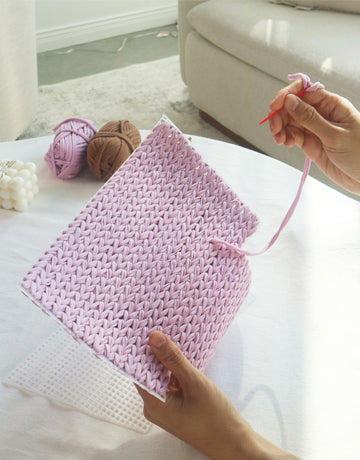

You're probably here because you want a hobby that feels calm, satisfying, and possible to finish. Not a giant craft haul. Not another half-started project stuffed in a cupboard. Just something you can pick up after work, do with your hands, and slowly turn into something soft, colourful, and display-worthy.
That's where latch hook kits for adults shine. They're structured enough to feel approachable, repetitive enough to feel soothing, and creative enough to feel rewarding. If you've dismissed latch hooking as a children's craft from years ago, it may be time to look again. Modern kits can feel much more like home décor projects than novelty crafts.
Rediscovering the Joy of a Mindful Hobby
Some hobbies ask a lot from you at the start. You need ten tools, three tutorials, a free afternoon, and the patience to make mistakes in public. Latch hooking is gentler than that. You sit down, pick up a strand of yarn, make one knot, then another. Very quickly, your hands understand the rhythm.

For many adults, that rhythm is the point. A hobby doesn't have to become a side business or a perfect masterpiece. Sometimes it only needs to quiet your mind for an hour. In California, the demand for accessible, relaxing activities is easy to understand when 1 in 5 California adults experienced a mental illness in a given year, according to the California Health Care Foundation. That makes simple, screen-free hobbies more than a trend. They fill a real need.
Why latch hooking feels so calming
Latch hooking uses a repeated hand motion. You fold the yarn, pull it through the canvas, tighten the knot, and repeat. It has the same kind of steady comfort people often look for in knitting, colouring, or hand sewing, but with less setup and less technical learning at the start.
A good craft for tired adults is one you can restart easily, even if you only have twenty quiet minutes.
That's one reason people return to it. You don't need to remember a long sequence each time you sit down. The pattern is there. The yarn is there. The next step is almost always obvious.
A hobby that pairs well with real life
Latch hooking also works well for adults because the project feels self-contained. Many kits are designed to be finishable at home without extra shopping or advanced tools, which makes them easier to fit into everyday life. If you're also building a more intentional wind-down routine, these 10 life-changing mindfulness tips offer helpful ideas for creating calmer moments around hobbies and daily rituals.
A lot of people don't need a hobby that is impressive. They need one that is welcoming. Latch hooking is both.
What Elevates a Latch Hook Kit for Adults
Not every latch hook kit feels adult. That's the truth many beginners sense right away when they start browsing. Some kits look playful in a charming way. Others look like they belong in a child's activity aisle. If you want a project you'll proudly hang in your home or turn into a cushion, the difference matters.
A stronger adult kit usually starts with the design itself. Buyers want something stylish, not childish, especially in design-conscious markets. That's why guidance around colour palettes, room styling, and backing options matters so much, as noted in this discussion of décor-ready latch hook aesthetics.
The design should suit your space
Think about the end result before you think about the craft time. Does the pattern look like something you'd want in your living room, bedroom, or office?
Adult-friendly kits often lean toward:
- Abstract shapes that feel modern rather than themed
- Botanical motifs that soften a room without looking overly sweet
- Geometric layouts that suit minimal or contemporary interiors
- Muted or earthy colours that pair well with existing décor
A simple test helps. If the finished piece were already made and sitting in a shop, would you buy it for your home?
Materials change the whole experience
Design draws you in, but materials shape how the project feels while you make it. Softer yarn is usually more pleasant in the hand. Better printing on the canvas makes the pattern easier to follow. A comfortable handle on the hook matters more than people expect, especially if you plan to craft in longer sessions.
Here's what often separates a more grown-up kit from a basic one:
| Feature | Feels less refined | Feels more adult-oriented |
|---|---|---|
| Pattern style | Cartoonish or novelty-led | Décor-led and room-friendly |
| Colour choices | Very bright and busy | Curated, balanced, intentional |
| Finish purpose | Mainly just a practice piece | Wall art, cushion front, accent décor |
| Buying mindset | Activity first | Finished object first |
Practical rule: If you can clearly imagine where the finished piece will live in your home, the kit is probably a better fit for adult crafting.
The final piece should have a purpose
Adults often stay motivated when a project has a destination. A wall hanging for a reading nook feels different from “just making a rug.” A cushion front for the sofa feels more concrete than “trying a craft.” Purpose helps you finish.
That's what sets latch hook kits for adults apart. They are more than easy. They feel considered.
Unboxing Your First Kit Tools and Materials
The first time you open a latch hook kit, it can look slightly odd. There's a grid canvas, piles of short yarn, a hook with a moving latch, and a pattern sheet that may look like a tiny coded map. Once you know what each part does, the whole thing becomes much less mysterious.
A good way to think about it is this. Your kit is a recipe box. The ingredients are already measured, the tool is included, and the pattern shows you where everything goes.

A complete adult latch hook kit should include pre-cut yarn, a latch hook tool, a printed or colour-coded canvas, and instructions, with some beginner kits adding templates or storage extras, as shown in this retail latch hook kit example.
What each item does
Here's the simple version of the anatomy of a kit:
-
Canvas
This is the foundation. It's the open grid you'll knot the yarn onto. Think of it as the fabric skeleton of the project. -
Pre-cut yarn
These short strands are your colour supply. Because they're already cut to length, you don't have to guess or measure before starting. -
Latch hook tool
This is the special tool that makes the knot possible. It has a little hinged latch that opens and closes as you pull yarn through the canvas. -
Pattern or printed design
This acts like your map. It tells you which colour belongs in which section. -
Instructions
These walk you through the first knots and help you avoid beginner mistakes.
Why all-in-one kits help beginners
Beginners often assume the challenge is “being crafty enough.” Usually the actual problem is setup confusion. If you have to buy yarn separately, cut every strand yourself, and figure out whether your canvas matches your pattern, it's much easier to lose confidence early.
An all-in-one kit reduces that friction. Everything is already chosen to work together.
The fewer decisions you have to make before your first knot, the easier it is to relax into the process.
Some kits also include small extras like cutting templates, a tapestry needle, or ways to keep the yarn organised. Those additions don't make latch hooking more advanced. They make it more forgiving.
How to Choose Your Perfect Latch Hook Kit
Choosing your first kit is a bit like choosing your first recipe from a new cookbook. You don't start with the most elaborate dish just because it looks beautiful in the photo. You pick something appealing that also fits your energy, your time, and your confidence level.
With latch hook kits for adults, three things matter most. Project size, pattern style, and your intended use.
Start smaller than your ambition
Project size changes more than the finished dimensions. It changes how much yarn you'll handle, how long the project sits on your table, and how likely you are to finish it with enthusiasm still intact.
A useful yarn benchmark comes from this beginner latch hook sizing guide. A 40 x 40 cm cushion may use around 188 metres of yarn, while a 200 x 150 cm rug could require over 3,600 metres. That's why smaller projects such as wall hangings or mug rugs are often the wiser first choice.
Match the kit to your real crafting life
Ask yourself these questions before you buy:
-
Do I want a quick win or a long project?
If you want momentum, choose a compact design. -
Will this live on a wall, chair, or table?
The final use affects the look you should choose. -
Do I like clear blocks of colour or detailed imagery?
Broad shapes are easier to read than fussy patterns. -
Will I enjoy repetition at this scale?
Repetition is soothing until the project is so large that it starts to feel endless.
Here's a practical comparison.
Choosing Your First Latch Hook Kit
| Factor | Best for Beginners | Best for Ambitious Crafters | Things to Consider |
|---|---|---|---|
| Size | Small wall hanging, mug rug, mini cushion panel | Large cushion front, statement rug, oversized panel | Bigger pieces require much more yarn and patience |
| Pattern complexity | Bold shapes, fewer colour changes | Detailed florals, layered textures, intricate layouts | Frequent colour switching slows the process |
| End use | Decorative accent, sampler, wall piece | Functional home décor item | Finishing steps may differ depending on use |
| Learning curve | Straightforward, repetitive sections | Mixed textures or more nuanced designs | Some complexity is exciting, too much can stall you |
| Motivation style | Finish fast and build confidence | Settle into a longer-term making rhythm | Be honest about what you actually finish |
If rugs are the format you're most curious about, this guide to a beginner-friendly latch hook rug kit can help you think through that choice with a more specific end goal in mind.
A good first kit feels inviting
The best beginner purchase doesn't impress strangers. It makes you want to sit down and begin. Look for a design that feels calm to you, a size that won't dominate your week, and an outcome you'd be happy to keep in your home.
That's usually the kit you'll finish.
Your First Stitches A Quick How-To Guide
The first knot always looks more complicated than it is. Once your hands do it a few times, latch hooking starts to feel natural. The movement is repetitive in the best way. You don't need perfect tension or artist-level precision. You just need to learn the path of the yarn.
This visual guide helps make the motion easier to follow.

The basic latch hook motion
Use one pre-cut strand at a time.
-
Fold the yarn in half
Hold the strand so there's a loop at one end and two loose tails at the other. -
Slide the hook under the canvas space
Insert the latch hook through one section of the canvas grid from front to back. -
Catch the folded loop on the hook
Place the looped end of the yarn over the hook. -
Pull the hook back slightly
As the hook moves, the latch closes and helps draw the loop through the canvas opening. -
Pass the loose ends through the loop
Keep the loop open with your fingers and pull the two yarn tails through it. -
Tighten the knot
Pull gently but firmly until the knot sits snugly on the canvas.
If a knot looks wrong, stop and check the path of the yarn before tightening harder. Force rarely fixes a latch hook mistake.
A short demonstration can make that motion click faster than words alone. This walkthrough on how to latch hook is useful if you want to compare the written steps with a visual explanation.
A video can also help if you're a learn-by-watching person:
Common beginner snags
Most first-session problems are very normal:
-
The hook feels awkward
That passes quickly once you repeat the motion. -
You lose your place on the pattern
Work in small sections instead of jumping around. -
Knots look uneven at first
Keep going. A grouped surface always looks more polished than a tiny test patch. -
You accidentally use the wrong colour
Don't panic. Individual knots can usually be removed and redone.
Make the process easier on yourself
Set up your space before you begin. Good lighting helps. Grouping yarn by colour helps. A flat table helps. So does giving yourself permission to be a beginner.
Latch hooking is not a race. It's one small knot repeated many times until a picture appears.
Finishing and Displaying Your Creation
The last knot isn't quite the end. Finishing is what turns a worked canvas into something neat, durable, and ready to enjoy. This part matters because even a beautiful latch hooked surface can look unfinished if the edges are loose or the back is exposed.
The appeal is obvious. Many people are drawn to DIY because they want to make something that becomes part of daily life. That pull toward functional home goods is especially strong in places with a big maker culture and a strong interest in personalised décor, as described in this overview of latch hook kits as home décor projects.
First tidy the surface
Before you add backing or hang anything, inspect the front.
- Trim obvious uneven strands so the pile looks more consistent
- Check for missed spaces in the pattern
- Gently shake out loose fluff from handling and cutting
- Look at the piece from a distance because that's how it will be seen in a room
Don't over-trim. A latch hooked piece should still look soft and textured, not shaved flat.
Then choose a finishing style
The right finish depends on what you want the piece to become.
Wall hanging
Fold or secure the edges neatly at the back, then attach the top to a dowel or hanging support. This works well for abstract pieces and smaller statement designs.
Cushion front
Secure the canvas edges, then add a fabric backing or sew the finished panel onto a cushion cover front. This is a lovely choice for geometric or botanical patterns.
Small accent mat or decorative panel
If the piece will sit on a bench, shelf, or table, focus on clean edge finishing and a stable back so it holds its shape.
The finish should serve the life of the object, not just the making of it.
Don't treat finishing as an afterthought
A lot of beginners rush this stage because they're excited to be done. Slow down here. Neat edges and a practical backing are what make a handmade piece feel intentional rather than improvised.
That final bit of care is often what turns “I made a craft” into “I made something for my home.”
Get Inspired Modern Project Ideas for Adults
Once you understand the technique, your mind starts leaping ahead to possibilities. That's part of the fun. Latch hooking may be built on one repeated knot, but the finished look can move in many directions depending on colour, scale, and where the piece will live.

Three adult-friendly directions to try
Monochrome wall hanging
Choose cream, charcoal, rust, or sage and work a simple abstract form. This suits a hallway, reading corner, or home office. It feels calm and contemporary.
Geometric cushion panel
A cushion is a satisfying middle ground. It's decorative, practical, and easier to place in your home than a large floor piece. Clean lines and repeating shapes work especially well here.
Botanical accent piece
Leaves, petals, and soft organic forms translate beautifully into latch hook texture. A botanical design can feel lively without becoming fussy.
Small projects can still feel polished
You don't have to make a large rug to create something stylish. Smaller projects often look more intentional because they're easier to finish neatly and display well.
Try ideas like:
- A textured panel for a gallery wall
- A front panel for a cushion
- A small decorative accent for a shelf or bench
- A fuzzy embellishment for a bag or pouch
Let the room guide the project
A useful trick is to start with the room, not the craft. Look at the colours already in your space. Notice whether your home leans soft and neutral, bright and playful, or earthy and layered. Then choose a design that belongs there.
That approach makes latch hooking feel less like an isolated hobby and more like a creative way to shape your surroundings.
Your Crafting Journey with Stitch Mingle and FAQs
A good latch hook project gives you more than a finished object. It gives you a gentler pace for an evening, a tactile break from screens, and the satisfaction of watching something build row by row under your hands. That's why latch hook kits for adults continue to appeal to people who want creativity without chaos.
If you're still deciding whether this hobby fits you, keep the adult version of the craft in mind. You're not looking for a childish novelty. You're looking for a guided, attractive project with a clear outcome. That could be wall art, a cushion front, or another décor piece you'll use.
For readers who want more beginner guidance, this article on latch hooking kits in Canada offers extra context around choosing approachable kits and getting started with confidence.
Quick FAQs
How do I clean a finished latch hook piece
Treat it gently. Start with light surface care, such as shaking out dust or spot cleaning carefully if needed. The safest method depends on the yarn and backing.
What can I do with leftover yarn
Keep it for repairs, mix it into a small abstract sampler, or use it for embellishment on another textile project. Small leftover bundles are surprisingly useful.
What if my first project isn't perfect
That's normal. Handmade doesn't mean flawless. It means learned by doing.
Your first finished piece teaches you more than an unfinished “perfect” plan ever will.
Is latch hooking suitable for absolute beginners
Yes, especially if the kit is complete and the pattern is clear. It's one of the more approachable yarn crafts because the core knot repeats throughout the project.
If you're ready to try a creative hobby that feels calm, guided, and finishable, explore Stitch Mingle for beginner-friendly DIY kits designed to make crafting feel easy, stylish, and enjoyable from the first step.