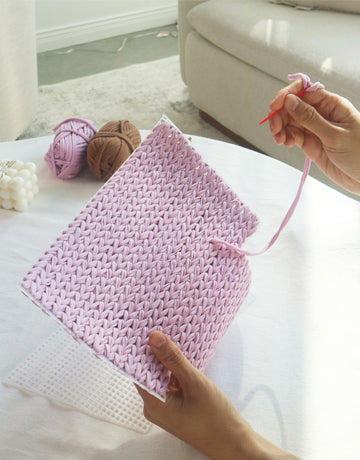

Your crochet circle was meant to be flat, but it's curling into a little bowl. Or your hat is getting taller instead of wider. Most beginners hit that moment and assume they've done something terribly complicated wrong.
Usually, you haven't. You just need to understand increasing stitches in crochet.
Once that clicks, shaping starts to make sense. Flat circles, rounded toys, fitted hats, roomy bag bases, curved flaps, tidy corners. They all rely on the same simple idea, used with a bit of planning.
Why Increasing Stitches Is Your Shaping Superpower
A project can go sideways fast. Your circle starts cupping. Your hat keeps growing upward instead of outward. Your bag base looks narrow and pinched when you wanted a firm, roomy bottom.
Those moments usually come back to one decision. Where the fabric is allowed to grow.

In crochet, an increase means adding stitches by putting more than one stitch into the same base stitch. For beginners, that usually means making 2 single crochet stitches in 1 stitch, often written as inc. If pattern abbreviations still feel unfamiliar, this crochet stitches guide helps you read them with less guesswork.
The movement itself is simple. The effect is powerful.
Every increase adds a little extra fabric in one spot. That extra fabric is what lets a piece spread wider, turn a corner, form a curve, or support a shape without pulling tight. Once you understand that, increases stop feeling random. They start feeling like instructions for where your project should expand.
What increases actually do
Crochet fabric behaves a lot like a growing ring. If each round gets longer but you do not add enough stitches, the fabric runs out of room and begins to curl. Add stitches in the right places, and the fabric can lie flat or widen in a controlled way.
That matters for more than circles.
- For flat pieces, increases keep circles and ovals from buckling, which matters for coasters, rugs, and bag bottoms.
- For curved shapes, increases create gentle volume for hats, sleeves, and rounded forms.
- For structured accessories, increases control where width is added so a pouch, basket, or handbag grows where you need space, not where the fabric happens to stretch.
A soft amigurumi ball can hide a small increase mistake. A structured bag usually cannot. If increases are uneven in a bag base or side panel, you may see ripples, corners that drift, or a shape that slants instead of sitting square. That is why understanding when to increase matters just as much as knowing how.
Why beginners often get stuck
Many beginners learn the hand motion first and the reason later. They can follow "inc in next stitch," but they are not yet sure why one pattern spaces increases evenly while another groups them at corners or along a curve.
That confusion makes sense.
An increase is your way of directing growth. Spread increases evenly, and the fabric widens smoothly. Place them at the ends or corners, and you create a shape with edges and structure. Use fewer increases, and the fabric begins to cup. Use more, and it starts to ruffle.
Once that clicks, shaping feels much less mysterious. You are no longer hoping the project turns out right. You are telling it where to go.
The Core Techniques for Increasing Stitches
An increase is two or more stitches worked into one base stitch. If a regular stitch is one person sitting in one chair, an increase is two people sharing that same spot so the row or round has room to spread. Once that idea clicks, the hand motion feels much less mysterious.
The standard method is to complete one stitch, then go back into the very same stitch and complete another. Stitch and Story shows that clearly in this increase stitch tutorial from Stitch and Story.

If you can make one neat stitch, you already know most of what an increase requires.
Standard single crochet increase
Single crochet increases are the clearest place to learn the logic because the stitch is short and easy to see.
- Insert your hook into the next stitch.
- Complete one single crochet.
- Insert your hook back into that same stitch.
- Complete a second single crochet.
Now one stitch from the previous round has become two stitches in the current round.
That extra stitch is what creates growth. In a flat circle, it helps the fabric spread. In a bag base or basket bottom, it adds width in controlled places. For beginners, that second use matters a lot, because structured projects show every uneven increase line more clearly than a soft toy does.
Finish the first stitch completely before making the second one. That makes it easier to see that both stitches belong to the same base stitch.
Patterns usually write this as inc or 2 sc in same stitch. If pattern shorthand still feels like a foreign language, this crochet stitch abbreviations and basics guide can help you read increase instructions with less guesswork.
The same idea with taller stitches
The stitch height changes. The increase logic does not.
| Stitch type | What you do |
|---|---|
| sc inc | Make 2 single crochets in the same stitch |
| dc inc | Make 2 double crochets in the same stitch |
| tr inc | Make 2 treble crochets in the same stitch |
Taller stitches bring more drape and a little more openness to the fabric. That affects how the finished piece behaves. A double crochet increase can be useful in a lighter shawl or garment section where flexibility matters. A single crochet increase often makes more sense for firmer accessories, such as pouches, baskets, and handbags, where you want the shape to hold.
That is the part beginners often miss. You are not only choosing how to add stitches. You are choosing what kind of fabric those added stitches will create.
A useful variation for half double crochet
An increase does not always mean exactly two stitches in one place. Some patterns ask for three stitches in one stitch, which increases by two instead of one.
You might see that in half double crochet when a pattern needs faster shaping through a curve or extra width in a short span. Bag gussets, oval bases, and rounded edges sometimes use this kind of instruction because it changes the shape more quickly than a standard increase does.
If that sounds like a big jump, focus on the counting rule: one stitch below, three stitches above. The principle stays the same. You are placing multiple finished stitches into one base stitch to create more room.
A quick video can make the motion easier to spot in real time:
Invisible increase
Standard increases are easy to learn and easy to count, but they can leave a small gap. That gap may not matter much in a textured piece or a sturdy tote base. It shows more on smooth amigurumi and other projects where the surface is meant to look clean.
An invisible increase reduces that opening by changing where you place the first stitch.
How to do it
- First stitch. Insert the hook under the front loop only and complete the stitch.
- Second stitch. Go back into the same stitch under both loops and complete the stitch.
The result usually looks tidier because the first stitch does not pull the base stitch open as much. This method is popular for stuffed shapes, but it is also useful anywhere you want shaping to blend in rather than stand out.
If your increases look holey, the issue is often placement rather than tension.
Choosing the Right Increase for Your Project
Most crochet advice stops at the movement. It tells you how to increase, but not how to choose the right increase for the fabric you want. That gap shows up fast when you move beyond plush toys and start making accessories, especially firmer pieces with visible edges or mixed materials. A crochet discussion of that beginner gap appears in this video about clean increases for shape and material.

A quick comparison
| Increase type | Best for | Look on fabric | Why you might choose it |
|---|---|---|---|
| Standard increase | Everyday crochet, flat bases, baskets, many bags | More visible | Fast, simple, easy to count |
| Invisible increase | Amigurumi, smooth surfaces, polished shaping | More blended | Reduces the visible gap |
| Front loop increase | Texture effects, fold lines, design details | More defined ridge | Useful when you want a visible structural line |
| Back loop increase | Ribbed effects, softer texture changes | Slightly recessed | Handy when texture matters as much as shape |
When standard increases make more sense
If you're making a tote base, a pouch bottom, or a circular panel that won't be examined up close like a toy face, a standard increase is often completely fine.
It's also easier to spot. That's a good thing when you're learning. Visible increases help you check your placement and count your repeats without squinting at every stitch.
For structured accessories, speed and clarity matter. A standard increase gives you both.
When invisible increases are worth the extra effort
If the fabric will sit on the outside of a stuffed object, little gaps can stand out. That's where invisible increases earn their place. They create a smoother surface, which helps when you want shaping to disappear into the fabric rather than announce itself.
Keychains, mini plushes, rounded ornaments, and small decorative pieces all benefit from that cleaner finish.
Choose the increase that suits the project, not the one that seems most advanced.
For bags and firmer accessories
Beginners often require more nuanced advice. A bag base doesn't behave like a plush sphere. Thick yarn, tight tension, and sturdier fibres can make increases look more pronounced. Sometimes that's useful. Sometimes it creates a bump you don't want.
A few practical guidelines help:
- For a sturdy round base use standard increases first. They're easier to distribute evenly.
- For a visible outer panel test one sample with standard increases and one with invisible increases. Compare the surface, not just the instructions.
- For decorative structure try placing increases in front loop only or back loop only if your pattern and fabric can support that texture.
- For mixed-media projects pay attention to edge neatness. If a crocheted section joins hardware, lining, or another material, smoother shaping often looks more polished.
That last point matters more than many tutorials admit. In accessories, the increase isn't only about size. It affects the final silhouette.
Keeping Count and Placing Your Increases Perfectly
You finish a round, lay the piece flat, and one side starts to flare while the other stays tight. That usually is not a mystery with your tension. It is a placement problem.
An increase adds fabric in a specific spot. If those extra stitches are spaced well, the fabric grows evenly, like adding identical slices around a pie. If they collect in one area, that section expands faster and pulls the shape off balance. In a soft toy, that can shift the curve. In a bag base or structured accessory, it can change the whole silhouette and make the finished piece look lopsided.

Why even spacing matters
Each increase raises your stitch count by one. That sounds small, but a single missed increase or one accidental extra stitch can change how the round sits.
Patterns usually handle the spacing for you through repeats. Once you know how to read those repeats, the logic becomes much easier to trust.
For example:
- inc around means increase in every stitch
- [sc, inc] repeat means one single crochet, then one increase, repeated
- [2 sc, inc] repeat means two plain stitches, then one increase, repeated
Those repeats distribute the added width around the round. That is what keeps a circle flat, a bowl shape intentional, or a bag base symmetrical enough to stand and carry weight well. For firmer projects, placement matters even more because stiff fabric does not hide uneven growth the way a soft plush fabric sometimes can.
A simple way to stay organised
Counting gets harder when your hands speed up. That happens to every crocheter.
Use a system you can follow even when you are distracted:
- Mark the first stitch of the round.
- Mark the first increase in the repeat if the sequence is easy to lose.
- Count after each repeat or small section, not only at the end.
- Confirm the total stitch count before you start the next round.
If you are still guessing where the round begins, a marker will help immediately. These crochet stitch markers and how to use them make it much easier to track rounds and spot an increase before it goes missing.
A helpful beginner habit is saying the repeat out loud for one full round. "Two single crochet, increase. Two single crochet, increase." It feels simple because it is. Simple systems prevent a lot of frogging.
Placement in rows works differently
Rows need the same care, but the shaping goal changes. In rounds, you are spreading growth in all directions. In rows, you are deciding exactly where the width should appear.
A few common choices:
- Edge increases widen the piece at the sides
- Centred increases build a point or peak, useful for triangle shapes or flap shaping
- Spread-out increases add width gently across the row
The "why" of increasing stitches holds as much significance as the "how." A shawl may need a clear centre line. A tote panel may look better with increases kept away from the edges so the sides stay neater for seaming. A flap for a bag or pouch often needs centred shaping because the increase line becomes part of the design.
When a project starts looking wrong, count first, then study where the increases sit. The stitch total tells you how much fabric you added. The placement tells you why the shape changed.
Troubleshooting Common Increase Mistakes
A misshapen piece usually means your crochet is giving you a clue. The shape tells you what happened. Once you learn how to read that clue, fixing increases feels much less mysterious.
Your circle is ruffling
Ruffles happen when the fabric gains width faster than the stitches can settle flat. In plain terms, you added more growth than the round needed.
Check your last round slowly. Look for an accidental extra increase, a skipped stitch in the repeat, or an increase placed too close to another one. Structured projects such as bag bases show this problem quickly because firmer yarn and tighter tension do not hide extra fabric well. A soft amigurumi piece may forgive it for a while. A sturdy tote bottom usually will not.
If the ruffling is slight, one round with fewer increases can sometimes calm it down. If the waves are strong, it is usually better to frog back and correct the round that caused them.
Your piece is cupping
Cupping is the opposite signal. The fabric is trying to turn upward because it does not have enough width to spread out.
Beginners often mistake this for a tension problem alone, but placement and frequency matter just as much. If you are making a flat circle for a coaster, bag base, or basket bottom, cupping usually means you need more increases or more even spacing between them. For a shaped project, though, cupping is not always wrong. Hat crowns, bowls, and rounded amigurumi forms are supposed to curve. The question, then, is whether the shape matches your goal.
Set the piece on a table. If it should lie flat and it rocks like a shallow bowl, revisit the increase round.
Your increases leave holes
Small holes at increase points are common, especially in single crochet. They happen because two stitches are sharing one base stitch, which stretches that spot open a bit.
The first fix is practical. Check your hook size and tension before changing technique. If those are already working well, try an invisible increase for areas where you want a smoother surface. That method is especially useful in stuffed pieces, but it can also help on structured accessories when the outside of the fabric will stay visible, such as a neat pouch or the side of a bag.
If you want a low-stakes way to compare standard and invisible increases, a small sphere is perfect practice. This step-by-step crochet ball tutorial makes the gaps, or lack of them, easy to spot.
You put the increase in the wrong place
This mistake changes the shape more than many beginners expect. An increase is not just extra stitch count. It is a decision about where the fabric should grow.
On a toy, one misplaced increase may disappear into the curve. On a bag panel, flap, or fitted accessory, the same mistake can pull a line sideways, throw off symmetry, or make one edge look heavier than the other. Structured crochet behaves a bit like building with blocks instead of stuffing a pillow. Placement shows.
Use a simple test:
- Fix it now if the project needs symmetry, clean edges, or matching sides.
- Leave it alone if the mistake is tiny and the fabric texture hides it.
- Recheck the next round if you are unsure whether the shape has changed.
Catching and correcting small errors is part of skilled crochet. It means you are learning to shape with intention, not just follow instructions.
Practice Projects and Your Next Creative Step
The fastest way to understand increasing stitches in crochet is to use them in small projects where the shape is easy to see.
Good practice choices include:
- A flat coaster so you can learn even spacing
- A simple hat crown so you can see how width affects fit
- A small sphere so you can practise smooth shaping
- A circular bag base or pouch base so you can test how increases behave in firmer fabric
If you want one especially helpful exercise, try learning how to crochet a ball. A ball teaches you both sides of shaping. You increase to build width, then later reverse the logic to close the form.
Keep your first few practice pieces small. That gives you quick feedback. You'll spot what ruffling, cupping, and clean placement look like without investing days into a project that needs correcting.
Once increases stop feeling like random instructions and start feeling predictable, your crochet gets much more enjoyable. You're no longer copying shape. You're building it on purpose.
If you're ready to turn those shaping skills into a polished weekend project, explore the beginner-friendly kits at Stitch Mingle. You'll find creative DIY projects with clear instructions, helpful materials, and a finish that feels giftable from the start. For more inspiration, browse the blog for guides, tutorials, and easy next-step ideas.