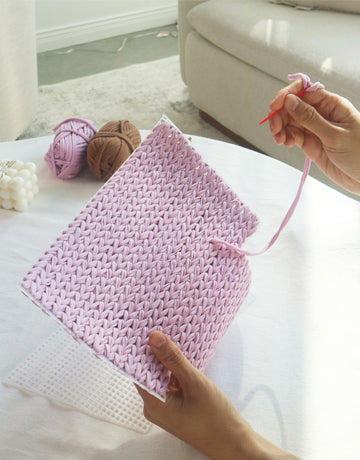

You've finished the last stitch, held up your project, and felt that little burst of pride. Then you flip it over and there they are. Loose tails everywhere, hanging from colour changes, joins, and the beginning and end of the yarn.
That's the moment when a lot of beginners pause. You might wonder if weaving in ends is just tidy-up work, or if it really matters. It matters. A well-finished piece looks cleaner, feels more polished, and is far less likely to work loose later.
If you've been searching for how to weave in ends crochet techniques that make sense, the big idea is simple. We aren't just hiding yarn. We're anchoring it so your stitches stay secure through use, handling, and washing. That's especially important for the kinds of projects people carry, squeeze, gift, or use every day, like bags, key fobs, pouches, and soft accessories.
That Beautiful Finished Project (With All Those Ends)
You can usually tell when someone has just finished a crochet project. They're proud of the front, slightly worried about the back, and hoping the tails will somehow sort themselves out. They won't. But the good news is that weaving in ends is much easier once you know what you're aiming for.
The first shift is mental. Weaving in ends isn't a decorative extra. It's a structural finishing step. Good crochet educators consistently teach that you work on the wrong side, move back and forth through the fabric, and lock the tail by changing direction or splitting strands. One tutorial describes weaving through straight rows for about 1 to 2 inches, then turning and weaving back in the opposite direction, repeating that 2 to 4 times before trimming close, as explained in this crochet end-weaving tutorial.
That advice is useful because it tells us what “secure” looks like. It isn't one quick pass. It's friction, direction changes, and a path that follows the fabric rather than fighting it.
Practical rule: If a tail only travels in one direction, it's easier for wear and movement to pull it free.
Think about the projects that get handled most. A decorative wall hanging doesn't face the same stress as a bag strap edge, a keychain accent, or a pouch that's opened and closed all week. In those pieces, a neat finish has to do two jobs at once. It has to stay hidden, and it has to stay put.
Here's the reassuring part. You don't need advanced skills to do this well. You only need a reliable method, enough tail to work with, and a habit of matching the method to the project.
What a secure finish usually includes
- A wrong-side path so the tail stays less visible
- A weaving length of about 1 to 2 inches through the fabric, based on the Just B Crafty method
- At least 2 direction changes to help lock the yarn in place
- A final trim close to the work only after the tail feels anchored
Once you see weaving in as part of the build, not the clean-up, it stops feeling like punishment and starts feeling like the last smart move.
Gathering Your Essential Finishing Tools
The right tools make this job smoother fast. You don't need a drawer full of gadgets, but you do want a few basics that help you thread, guide, and trim yarn cleanly.

The needle matters more than most beginners expect
A tapestry needle or yarn needle is the main tool here. The eye needs to be large enough for your yarn to pass through without shredding it, but not so bulky that it stretches your stitches while you weave.
A straight-tip needle is great when you want precision. A bent-tip needle can feel easier when you're dipping through stitches in thicker or textured fabric because the angle helps you catch loops without forcing the needle through.
Small scissors give you a cleaner finish
Use small, sharp embroidery scissors if you can. They let you trim close to the fabric without accidentally snipping a stitch. Blunter scissors often mash the yarn before cutting it, which can leave a fuzzy little end sticking out.
A simple measuring tape is useful too, especially while you're learning. Several instructional sources recommend leaving at least 6 inches of tail, with some suggesting 6 to 8 inches as a safer length. One method also recommends weaving through roughly 4 to 6 stitches before turning and weaving back, as outlined in this guide to weaving in ends securely.
When beginners struggle, it's often because the tail is too short, not because the technique is too hard.
A simple finishing kit
You can keep this very basic:
- Tapestry needle: Best for carrying yarn through stitches without splitting them by accident
- Embroidery scissors: Easier to control when trimming close
- Measuring tape: Helps you leave a workable tail instead of guessing
- Project bag or tin: Keeps loose needles and snips from disappearing
If you're still building your crochet basics, this guide to supplies for crocheting is a helpful place to compare the tools you'll use.
The Go-To Method for Weaving In Ends Securely
When people ask how to weave in ends crochet projects neatly, this is the method I teach first. It works for most flat pieces, wearable items, and everyday projects because it relies on friction rather than knots.
To follow along visually, this infographic gives a clear overview of the motion.

Working on the wrong side
Start by turning your project so the wrong side faces you. Thread the yarn tail onto your tapestry needle, then look for a path that follows the natural direction of the stitches. You want the tail to blend into the structure of the fabric, not cut sharply across it.
Weaving with the grain of the fabric helps keep the front looking smooth. It also reduces the chance that the end will show through on lighter or more open stitch patterns.
Using enough tail to anchor properly
Leave yourself enough yarn before you begin. A practical benchmark is a 6 to 8 inch tail, then a first pass through 4 to 6 stitches, followed by at least one return pass, based on Creative Crochet Corner's secure weaving guidance.
If your tail is shorter than that, you'll feel rushed. You may still get it hidden, but it's harder to lock it in well.
Changing direction to lock the yarn
This is the part that makes the method secure. A secure finish typically involves working on the wrong side, weaving a tail through 1 to 2 inches of fabric, then turning and weaving back in the opposite direction. Repeating that with 2 to 4 direction changes is a standard technique because it locks the yarn tail while preserving the fabric's natural stretch and drape, according to Just B Crafty's weaving method.
So instead of going in one long line and cutting, do this:
- Weave through the fabric in one direction
- Turn and go back through nearby stitches
- Change direction again if the yarn feels slippery or the item will get heavy use
- Trim only when the fabric lies flat and the tail doesn't tug free
Don't pull the tail tight as you weave. Let it sit inside the fabric so the stitches keep their natural shape.
A gentle hand makes a big difference. If you pull too firmly, the area puckers. If you leave the path too loose, the tail can worm its way out later.
Here's a video demonstration if you prefer to see the motion in real time.
What a good woven end should feel like
After trimming, stretch the fabric lightly with your fingers. The area shouldn't go stiff, and you shouldn't see a bump or a visible line from the front. On the back, the woven path should look tucked into the stitches rather than laid on top of them.
That's the balance we want. Secure, flexible, and hard to spot.
Specialty Weaving for Colour Changes and Amigurumi
Not every tail needs the same treatment. A striped scarf, a granny square join, and an amigurumi toy each ask for something slightly different. Choosing the right method saves time and gives you a cleaner result.
Trapping tails while you crochet
If you change colours often, weaving every tail with a needle at the end can feel endless. A useful shortcut is to lay the tails parallel to your work and crochet your new stitches directly over them. This trapping technique hides the ends within the stitches as you go, which removes a separate finishing step, but the tails need to be fully covered so they don't peek through, as described in this guide to weaving in ends as you go.
This works well for stripes, simple colour blocks, and pieces where the wrong side won't be closely inspected. It's also friendly for classes and beginner workshops because it reduces the pile of finishing at the end.
If you'd like more help with cleaner joins, this article on changing colours in crochet pairs well with trapping because the two skills often show up together.
The invisible weave for cleaner colour joins
Sometimes you don't want to trap the tail because the stitches are open, the yarn is light-coloured, or the fabric will show every little bump. In that case, use a needle after the colour change and weave the tail along the back of stitches in the same colour field.
The trick is to follow the structure already there. If the stitches run vertically, weave vertically. If the row is dense and even, trace that path instead of crossing over in a way that creates a shadow on the front.
Hiding ends in amigurumi
Amigurumi gives you one big advantage. Many tails can disappear inside the stuffed shape. That doesn't mean you should poke the end into the middle and hope for the best. First anchor it near the fabric edge, then pass it into the body so it stays buried.
For toys and plush pieces, I like to weave the tail through the inside of a few stitches, reverse direction once, and only then carry it into the stuffing area. That way the tail isn't relying on stuffing alone to stay hidden.
Choosing Your Weaving Method
| Method | Best For | Security Level | Visibility |
|---|---|---|---|
| Standard back-and-forth weave | Garments, accessories, flat crochet | High | Low when worked on the wrong side |
| Trapping ends as you go | Frequent colour changes, striped pieces | Moderate to high when fully covered | Very low if tails stay flat |
| Invisible same-colour weave | Colour joins in visible areas | High | Lowest for neat joins |
| Anchor then hide inside | Amigurumi and stuffed shapes | High | Very low once buried |
The best method isn't the fanciest one. It's the one that suits the fabric, fibre, and how the piece will be used.
Mistakes to Avoid When Weaving In Crochet Ends
Most weaving problems don't show up right away. The project looks fine when you finish it, then a tail appears after handling, stretching, or washing. That's why durability matters just as much as neatness.
Many tutorials focus on the movement of weaving but overlook what happens after wear and laundering. A secure finish matters for active-use items, and choosing a method based on how the item will be used is a stronger practice than choosing only for invisibility, as discussed in this article on weaving in ends and durability.

Pulling the tail too tight
This is one of the easiest mistakes to make. You want the end to feel secure, so you tug a little harder than needed. The result is a pucker, a dent in the fabric, or a section that won't stretch like the rest.
Pro tip: After each pass, smooth the fabric with your fingers. If the stitches draw in, ease the tail slightly before changing direction.
Cutting the tail too soon
A short tail limits your options. You might manage one pass, but you won't have enough yarn left to reverse direction and lock it properly.
A better habit is to leave a generous tail at the start, then trim only after the woven path feels stable. That's especially important for accessories, bags, and anything that gets picked up often.
Weaving on the right side
Sometimes the back of the work is awkward to access, so beginners weave wherever the needle fits. The trouble is that the tail can become visible from the front, especially in lighter yarns or smooth stitch patterns.
If you're joining sections before finishing, a clean seam can help give you better access to the wrong side. This guide to whip stitch crochet is useful if you're assembling pieces and want the finishing side to stay organised.
Using the same approach for every project
A soft cardigan, a market bag, and a decorative cover don't need the same finish. The more a piece bends, rubs, or carries weight, the more carefully the tail should be anchored.
A quick check before trimming helps:
- Will this item stretch often? Use more direction changes.
- Will it be handled daily? Choose a more secure lock-in path.
- Is the yarn slippery or smooth? Split a ply on the final pass if you can do it neatly.
- Is the area visible from both sides? Plan the path more carefully and avoid bulky crossovers.
When a woven end fails, it usually isn't because weaving doesn't work. It's because the method didn't match the job.
Your Weaving-In Questions Answered
Should I use a knot?
Usually, no. Knots can create lumps, show through the fabric, and work loose in ways that are harder to fix cleanly. A woven path that changes direction is usually a better finish for crochet fabric.
What if my yarn is slippery?
Use a longer woven path and add an extra direction change. Smooth fibres tend to need more friction, so don't rely on one pass alone.
Should I weave in ends before or after blocking?
If the area may shift a lot with blocking, many crafters prefer to think ahead about visibility and placement before the final trim. The key is consistency. Don't leave tails loose and assume blocking will solve them.
How do I handle ends near leather, felt, or plastic canvas?
Generic crochet tutorials often stop short of explaining how to finish ends when yarn meets another material like leather or plastic canvas. For mixed-media pieces, a good approach is to use a needle-and-backtrack lock on the crochet edge or split yarn plies to reduce visibility when attaching the crochet to a different material, as noted in this mixed-material finishing guide.
What if I can still see the tail shadowing through light yarn?
Try a shorter, more strategic path within dense stitches, and avoid laying the tail directly behind open spaces. Sometimes changing the route matters more than adding more weaving.
What's the best beginner mindset?
Think “secure first, tidy second”. Once you understand that, your finishing gets much easier.
If you'd like an easy way to practise polished finishing on fun, beginner-friendly projects, have a look at Stitch Mingle. Their DIY kits for bags, keychains, patches, and other accessories make it easier to build confidence with neat, durable finishing while creating something giftable and useful.