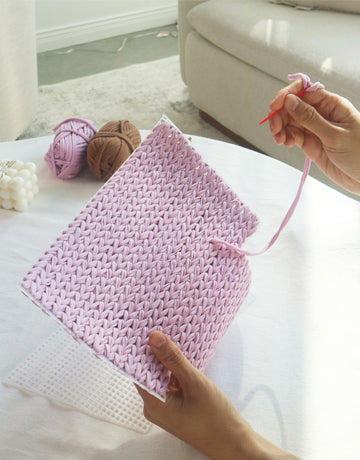

You sit down to make something fun. A keychain, a patch, a plastic canvas project, maybe a small leather bag. Then the hunt begins. Where are the needles? Which pouch has the hardware? Why is the good pair of scissors always missing?
Most craft mess isn't a motivation problem. It's a retrieval problem. When supplies are hard to find, starting feels heavier than it should.
That's why smart storage for craft supplies matters so much. It doesn't just make a room look tidy. It makes projects easier to begin and easier to finish.
From Creative Chaos to Calm Control
A craft space can get cluttered in a very innocent way. One finished kit leads to leftover thread. Leftover thread needs a small tin. Then you buy beads, needles, snaps, labels, floss, glue, and suddenly one drawer turns into seven half-organised piles.
I learned this the hard way. I didn't need more enthusiasm. I needed a home for each item, the same way a kitchen needs one place for spices, one place for knives, and one place for baking trays. Once I stopped treating storage like a boring extra task, crafting became calmer.
That shift matters because organised crafters finish more than twice as many projects annually, and 58% say finding supplies easily is the biggest factor in their creative momentum, according to Create Room's craft storage research.
Practical rule: If you can find your tools in seconds, you're far more likely to start a project today instead of “sometime this weekend”.
What calm storage actually looks like
A calm setup doesn't have to mean a perfect craft room. It can be:
- A rolling cart beside the dining table
- A labelled shelf in a wardrobe
- A few clear boxes under the bed
- A project bag that holds one kit from start to finish
The goal is simple. Reduce friction.
If you want another practical take on getting started, the guide on Endless Storage tips for crafters is useful because it focuses on making supplies easy to see and easy to return, which is exactly what beginners need.
The mindset that helps most
Think of organisation as support for your hobby, not punishment for your mess. You're not trying to become “the sort of person who loves labels”. You're building a system that helps your hands get to work faster.
That's the difference between a space that drains you and one that offers, “Sit down. Everything's ready.”
First Steps to Taming Your Craft Collection
Before you buy bins, baskets, or drawer units, stop and do the prep work. Otherwise, you're just putting clutter into prettier containers.
I tell beginners to treat this like cooking. You don't start by plating the meal. You first gather ingredients, sort them, and clear the counter. Craft storage works the same way.
Step one with everything in sight
Pull out all your supplies. Yes, all of them.
That means the tote in the hall cupboard, the packet under the sofa, the little zip bag in your handbag, and the half-used adhesive tucked behind books. Seeing everything at once is the fastest way to realise what you own.
Use broad categories at first:
- Tools like scissors, awls, rulers, hole punches, needles
- Materials like leather pieces, yarn, plastic canvas sheets, fabric, felt
- Small notions like snaps, beads, jump rings, clips, buttons
- Finishing items like glue, labels, backing pieces, packaging
Step two with sensible sorting
Once everything's visible, make smaller groups that match how you craft.
Some people sort by material. Others sort by project type. Beginners usually do best with a hybrid system:
-
Store by craft family
Keep leathercraft with leathercraft, stitching with stitching, and plastic canvas with plastic canvas. -
Separate tools from consumables
Your scissors and needles can serve many projects. Thread, hardware, and cut pieces often belong to one project or one craft type. -
Give works-in-progress their own zone
Don't mix active projects with spare materials. That's how pieces get lost.
When people say they're disorganised, they often mean their categories are too vague. “Craft stuff” is not a category. “Leather hardware” is.
Step three with honest decisions
Now make three piles:
- Keep for items you use, love, or know how to use
- Donate for duplicates or supplies that suit someone else better
- Discard for broken, dried-up, rusted, stained, or mystery items
Then measure your real storage area. Measure shelf width, drawer depth, under-bed height, and door clearance. Write it down.
A simple space map helps. Note where finished supplies will live, where tools will sit, and where projects-in-progress can rest safely. This step prevents a common mistake: buying a lovely storage system that doesn't fit your room or your habits.
Choosing the Right Containers and Systems
Once your collection is sorted, container choice gets much easier. The best option depends on what you're storing, how often you use it, and whether your supplies need protection from dust, bending, or moisture.

The everyday options that work
Beginners don't need a dramatic studio makeover. A few common storage types can handle most collections well.
Clear lidded boxes are excellent for visibility. You can stack them and spot supplies quickly.
Photo cases work well for tiny items like beads, clasps, stitch markers, patch labels, and embroidery floss bobbins.
Rolling carts are ideal if you craft in one room and store in another. They move easily and keep your most-used items nearby.
Drawer towers suit small notions that need separation. They're less useful for bulky kits unless the drawers are deep.
Pegboards keep tools visible and close to hand. They're especially useful above a desk or corner table.
Why modular systems help growing hobbies
Modular storage is different from a random pile of containers because the pieces are designed to work together. That matters when your hobby changes over time.
Research shows crafters who switch to modular storage systems increase their average crafting time by 160%, from 2.5 to 6.5 hours per week, by eliminating the 25% of time typically spent searching for materials, according to Create Room's modular storage research.
That improvement makes sense. A modular system usually gives you standardised dimensions, repeatable categories, and the option to rearrange drawers or shelves without rebuilding everything.
Good storage removes tiny decisions. If your thread always lives in one drawer family and your hardware always lives in another, your brain rests.
Craft Container Comparison
| Container Type | Best For | Pros | Cons |
|---|---|---|---|
| Transparent tubs | Bulky materials, spare yarn, fabric, extra kits | Easy to see, stackable, simple to clean | Small items can jumble together |
| Modular drawers | Beads, thread, hardware, labels, needles | Reconfigurable, tidy categories, grows with your collection | Needs planning so drawers don't become “miscellaneous” |
| Wall pegboards | Scissors, rulers, rotary tools, tapes | Keeps tools visible, frees desk space, great for frequent use | Not ideal for dust-sensitive materials |
| Photo or craft cases | Tiny embellishments and sorted notions | Portable, neat compartments, great for colour sorting | Too small for larger tools or thick materials |
| Rolling carts | Mobile crafting in shared spaces | Easy to move, keeps active supplies nearby | Can become cluttered if every tier is mixed-use |
| Shelving with baskets | Rooms with vertical wall space | Flexible, attractive, easy to access | Baskets need labels or things disappear |
If your projects often involve yarn, hooks, and small accessories, this guide to supplies for crocheting is a helpful reminder of just how many different item sizes a craft setup may need to hold.
A simple decision filter
Choose containers based on these questions:
- Do you need visibility? Pick clear boxes.
- Do you need separation? Pick divided trays or drawers.
- Do you need mobility? Pick carts, handled cases, or project bags.
- Do you need flexibility? Pick modular pieces that can be rearranged.
That's usually enough to avoid impulse-buying pretty storage that doesn't solve anything.
Smart Layouts for Small and Shared Spaces
Small homes force you to be clever, and that's not a bad thing. Some of the most efficient craft areas I've seen were built into corners, closets, and unused wall space.

Go vertical before you spread outward
When floor space is tight, the wall becomes your helper. Pegboards, floating shelves, narrow bookcases, and over-door organisers can hold tools and light supplies without crowding the room.
A wardrobe can also become a “craft armoire”. Put tools at eye level, active projects in the middle, and backup supplies higher or lower depending on weight. When you shut the doors, the room feels calm again.
Build zones, even in one room
You don't need a separate studio to create zones. You only need consistent placement.
Try these simple zones:
- Prep zone for cutting mats, rulers, clips, and measuring tools
- Making zone for the supplies in your current project
- Finishing zone for labels, hardware, glue, wrapping, or display items
This works especially well on a small desk. The left side can hold prep tools, the centre becomes your work area, and a caddy on the right holds finishing pieces.
A room feels bigger when each area has one clear job.
Here's a visual example of a compact craft setup in action:
Let storage move with you
If you craft at the kitchen table, portability matters more than aesthetics. Use a handled tote, a rolling cart, or slim boxes that slide into a cupboard after use.
Under-bed containers are useful for flat materials. A bedside cabinet drawer can hold a whole hand-stitching setup. A corner desk with wall-mounted storage can turn an awkward nook into a practical craft centre.
Shared spaces work best when supplies can appear quickly and disappear just as fast. That's less about owning less and more about storing with intention.
Organizing Specific Craft Kits and Materials
General advice breaks down when supplies have unusual shapes. Leather pieces curl. Hardware rolls away. Plastic canvas can bend. Patches seem tiny until you're trying to keep a set sorted.
Kit-specific storage for craft supplies really earns its place.

A leather crafter in a small flat
One beginner I picture often has a compact shelf in a city flat and a growing collection of leather bag and keychain kits. Standard craft advice often fails in this situation. Kit-specific solutions help more, such as stackable, airtight project boxes that protect leather from dust and humidity, as noted in this small-space craft storage guide.
For leather materials, I'd store like this:
- Flat envelope folders for pre-cut leather pieces so edges don't curl
- Small divided boxes for rivets, snaps, rings, and clasps
- A narrow tool wrap for needles, awls, burnishers, and thread snips
- Airtight boxes for complete kits that need protection between sessions
Keep heavy tools low and delicate pieces flat. Don't compress leather under bulky supplies.
A plastic canvas maker with lots of colour
Another crafter may have sheets, yarn, pattern notes, and blunt needles spread across different drawers. The fix is simple. Store canvas sheets upright in a magazine file or flat in a shallow under-bed box. Then place yarn by colour family in zip pouches or basket dividers.
This type of maker benefits from visual grouping:
- warm colours together
- cool colours together
- neutrals in one pouch
- metallic or novelty fibres in a separate pouch
That way, project planning gets easier because colour choices are visible at once instead of buried in one mixed bag.
If you enjoy counted work and thread-heavy projects, this overview of cross stitch supplies is useful for thinking through how many tiny components deserve their own storage categories.
A patch and name tag organiser who needs order fast
The third crafter makes or collects embroidered patches and personalised labels. These items are small, flat, and easy to shuffle into chaos.
My favourite method is almost like filing photos:
- Store finished patches in binder sleeves or photo album pockets.
- Keep backing materials in one labelled envelope.
- Reserve a small tray for scissors, tweezers, and placement tools.
- Use one pouch for “ready to gift” items and another for “not yet finished”.
Flat items stay safer when they're filed, not piled.
That tiny adjustment saves a surprising amount of time.
Your System for Labeling and Long-Term Maintenance
A tidy craft area can fall apart in a week if the system depends on memory. Labels are what turn “I think it's in that drawer” into “I know exactly where it goes.”
You don't need anything fancy. You need consistency.
Two maintenance styles that actually work
Some people are visual organisers. They want clear containers and big labels they can read from across the room. Others are hidden organisers. They prefer cupboards, drawers, and a cleaner look.
Both styles work.
The visual organiser might use:
- clear tubs
- front-facing labels
- open baskets for current tools
- colour-coded pouches for active projects
The hidden organiser might use:
- drawer inserts
- cupboard shelves
- lidded project boxes
- a simple written index taped inside a door
Neither approach is better. The right one is the one you'll keep using.
Label the category, not every object
A common mistake is over-labelling. You don't need one label for every single bead type unless you enjoy that level of detail.
Start with practical labels such as:
- Leather hardware
- Patch tools
- Plastic canvas yarn
- Adhesives
- Current project
- Needles and hand tools
For families, teachers, or anyone juggling lots of gear, some of the same principles used to organize daycare items with InchBug apply surprisingly well to craft storage. Durable labels, repeatable naming, and clear ownership all reduce mix-ups.
The habits that keep the system alive
You don't need a dramatic monthly reset. A few light habits are enough:
- Do a quick weekly reset by returning loose items to their homes.
- Close out one project before opening three more when possible.
- Use a one in, one out mindset for duplicate tools and overflow supplies.
- Keep an “odds and ends” tray small. If it grows, sort it immediately.
The best organisation system is the one you can restore in a few minutes after a busy week.
That's what makes it last.
Adapting Storage for Workshops and Gifting
Personal craft storage and group craft storage are cousins, not twins. A solo setup can rely on memory. A shared setup has to be obvious, portable, and fast to reset.
That matters because organisers of group sessions often run into a problem that home crafters don't. Solo hacks don't scale. As noted in this discussion of group craft storage needs, organisers need lockable, dividable, and portable trolleys when supplies are shared across participants.

Build go-kits instead of one giant supply pile
For workshops, pack by participant or by table. A go-kit might include tools, materials, wipes, and name labels in one handled pouch or divided tray.
This works better than a single communal box because people don't have to hunt or wait. Cleanup is easier too. You can spot what's missing at a glance.
Try these group-friendly formats:
- Trolley drawers for supplies sorted by activity
- Zip pouches for individual participant kits
- Lidded caddies for table tools
- Slim document boxes for flat instructions and templates
Let storage help with gifting too
Craft storage can also make handmade gifting smoother. Keep tissue, tags, ribbon, mailing supplies, and finished items in one “gift finish” box so the final step feels easy, not chaotic.
If you send crafted items to clients, collaborators, or event guests, ideas from best influencer gifting solutions can spark useful thinking about presentation, consistency, and packing flow, even if your gifts are handmade rather than commercial.
For classes, clubs, or social making nights, these ideas pair nicely with group craft activities for adults, especially when you want supplies pre-packed for smoother setup.
Your Craft Storage Questions Answered
How do I store works in progress without damaging them?
Keep each unfinished project in its own container or pouch. Use a zip bag, handled project case, or shallow box with the pattern, tools, and loose pieces together.
For delicate items, wrap the work lightly in tissue or soft cloth before storing it. Flat pieces should stay flat. Projects with hardware or tools should have a small inner pouch so metal parts don't scratch the main item.
What can I use if I don't want to buy new storage yet?
Start with what you already have. Clean takeaway tubs, shoe boxes, pencil cases, biscuit tins, document wallets, and old make-up bags can all work.
The trick is matching the container to the material:
- flat envelope for flat items
- small divided tin for tiny hardware
- sturdy tote for mobile tools
- box with a lid for dusty or delicate supplies
Budget storage works beautifully when the categories are clear.
How often should I declutter my craft supplies?
Do light resets often and deeper reviews occasionally. A quick tidy every week keeps surfaces clear. A deeper review makes sense when drawers stop closing well, categories start mixing, or you notice you're avoiding projects because setup feels annoying.
You don't need a rigid schedule. Let friction be your signal. When finding things starts to feel harder, your system is asking for a refresh.
If you're ready to turn tidy ideas into finished projects, Stitch Mingle offers beginner-friendly DIY kits, accessories, and inspiration that make it easier to create something polished without hunting down every supply yourself.