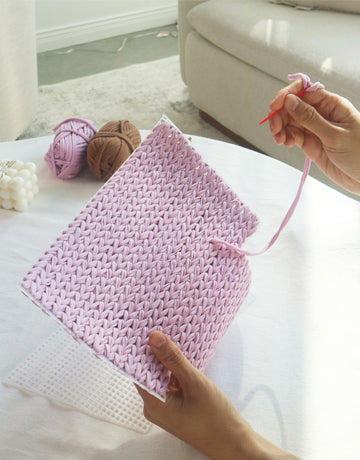

You know that feeling when you spot a tiny stitched keychain, a bright coaster, or a cheerful little ornament and think, “I'd love to make that,” then immediately assume it's more fiddly than fun? That's exactly where plastic canvas cross stitch shines. It gives you the look of counted stitching on a firm, easy-to-hold base, so your first project feels manageable instead of delicate and stressful.
It's also one of the nicest crafts for people who want a finished object, not just a practice sample. You can turn a few stitches into something useful, giftable, and sturdy enough to survive life in a bag, on a desk, or by the front door. If you enjoy other hands-on hobbies or even appreciate how careful finishing improves handmade work, the same mindset shows up in crafts like professional book binding and printing methods. Good materials and clean construction make the end result feel complete.
Welcome to the World of Plastic Canvas Cross Stitch
Plastic canvas cross stitch sits in a sweet spot between embroidery and simple construction. Instead of stitching on soft fabric in a hoop, you work on a rigid grid. That single difference removes a lot of beginner stress. The canvas doesn't flop around, the holes are easy to see, and your project already has structure built in.
That's why so many first projects are small objects rather than framed art. Think coasters, bag charms, magnets, bookmarks, and little decorative panels. You're not only learning stitches. You're making something with a purpose.
Why beginners often click with it
A lot of new stitchers struggle with three things at once on fabric: keeping the fabric taut, finding the right hole, and placing neat stitches. Plastic canvas simplifies that experience.
Here's what makes it approachable:
- Firm base: The canvas holds its shape in your hands, so you don't need to wrestle with loose fabric.
- Visible grid: You can count your pattern more confidently because the structure is clear.
- Practical projects: Small accessories feel satisfying because you can finish them without a huge time commitment.
- Clean edges and construction: You can shape the final piece into something flat or even three-dimensional.
Plastic canvas cross stitch is a great “I actually finished it” craft. That matters more than people realise when they're starting a new hobby.
What success looks like on your first try
Your first project doesn't need fancy stitches or a complicated chart. A simple shape with solid colour areas is enough to teach you the rhythm: thread the needle, follow the grid, keep your stitch direction consistent, and finish the edges neatly.
If you've ever abandoned a project because the setup felt confusing, this craft can be a refreshing change. Once your materials are right, the process becomes very learnable. That “materials are right” part matters a lot, though. Most beginner frustration starts there, not with the stitching itself.
Gathering Your Supplies for Stitching Success
Buying supplies for plastic canvas cross stitch can look simple at first. Then you get home, open the packet, and realise there are different hole shapes, different mesh sizes, and several thread options that all behave differently. A short supply list helps, but choosing the right version of each item is what saves you frustration.

The four basics you actually need
| Supply | What to choose | Why it matters |
|---|---|---|
| Plastic canvas | Cross stitch plastic canvas with circular holes | It behaves more like Aida and gives better stitch coverage |
| Needle | Blunt tapestry needle | It passes through holes cleanly without splitting thread |
| Thread | Embroidery floss or yarn suited to the canvas | The right thickness helps your stitches look full |
| Cutting tool | Small sharp scissors, cuticle nippers, or flush cutters | Clean cuts make finishing much easier |
The biggest trap is the canvas itself. Authentic cross stitch plastic canvas has circular holes, while much of the common retail version has square holes. According to Lord Libidan's guide to the different types of plastic canvas, circular-hole canvas can achieve 95% stitch coverage, compared with 70% on common square-hole canvas. That square-hole version is also a major cause of thread snagging and beginner misalignment.
How to spot the right canvas
If you're standing in a shop or opening an online order, check these details:
- Look at the holes closely: Cross stitch plastic canvas has circular holes, not square ones.
- Check the count: For many beginner cross stitch projects, 14-count is a comfortable place to start.
- Notice the stiffness: Some sheets are firmer and some are more flexible. Stiffer canvas is handy for structured shapes, while more flexible sheets can be easier for certain curved pieces.
- Read the label carefully: “Plastic canvas” and “cross stitch plastic canvas” are not always the same thing.
If you work on other making projects too, it helps to think of plastic canvas as a material choice problem first and a stitching problem second. The same care people use when selecting durable plastic materials for custom business projects applies here. The material affects the finish.
Needles and thread without the guesswork
For 14-count canvas, a #22 or #24 tapestry needle is a good fit. The blunt tip helps you move through the existing holes rather than piercing fibres, which is exactly what you want on plastic.
Thread is where many beginners overcomplicate things. Start simple:
- Embroidery floss: A strong choice for detailed cross stitch on finer canvas
- Yarn: Better suited to larger mesh plastic canvas projects
- Shorter lengths: If your thread keeps fraying, cut a shorter working length
You can browse a practical overview of tools and materials in this guide to cross stitch supplies for beginners.
Practical rule: If your stitches look gappy before you've even finished a small section, check the canvas type first. Don't assume your technique is the problem.
Mastering the Essential Stitches
The lovely thing about plastic canvas cross stitch is that you don't need a huge stitch library. A few core stitches can carry an entire project. Once your hands learn the motion, the process starts to feel rhythmic.
A useful place to start is understanding how directional stitches sit on the canvas.

The cross stitch that builds most designs
A classic cross stitch is just two diagonal stitches crossing each other to form an X. The trick is consistency. If your first diagonal always goes one way and your top diagonal always goes the other, the finished surface looks tidy and even.
Try this sequence on a scrap piece:
- Bring the needle up from the back at the lower left hole.
- Go down at the upper right hole.
- Come back up at the lower right hole.
- Go down at the upper left hole.
That's one full cross stitch. Repeat it slowly until the movement feels natural.
The half stitch and tent stitch
A half stitch is one diagonal leg of the X. It creates a slanted look and can be useful when you want a lighter texture or when you're working rows before crossing them.
A tent stitch is also a single diagonal stitch, but it's commonly used as a complete stitch in its own right. Many plastic canvas makers like it for areas that need sturdy coverage or a slightly different surface look.
Here's a quick comparison:
| Stitch | Look | Good for |
|---|---|---|
| Cross stitch | Full X | Most charts and decorative motifs |
| Half stitch | Single slant | Building rows or creating texture |
| Tent stitch | Single diagonal | Durable stitched surfaces and accents |
Keeping your stitches neat
Most uneven stitching comes from one of three habits:
- Changing stitch direction: Your top legs end up facing different ways.
- Pulling too tight: The canvas may feel stiff, but tight thread still makes stitches look strained.
- Using too long a thread: It twists more and frays faster.
Work with a gentle, steady pull. You want the stitch to sit flat, not drag the plastic.
This video gives a helpful visual reference while you practise:
A simple practice routine
Before starting a real design, stitch a tiny sample block:
- A row of cross stitches
- A row of half stitches
- A small square in tent stitch
That little scrap teaches you more than reading ten paragraphs ever could. You'll quickly notice which stitch feels natural in your hand and how your chosen thread sits on the canvas.
Reading Patterns and Cutting Your Canvas
Pattern reading is where beginners often freeze, even though the basic idea is simple. A chart is just a map. Each square stands for one stitch, and each symbol or colour tells you which thread to use there. Once you stop seeing it as a mysterious code, it becomes much easier.
The second skill is cutting. This part matters because plastic canvas doesn't forgive sloppy measuring very well. One wrong count can throw off the shape, edging, or assembly later.

How to read the chart without getting lost
Start from the centre whenever possible. Many charts mark the centre with arrows or a clear midpoint. Find that spot on your canvas by measuring, then begin there so the design has room on every side.
Keep these pattern habits in mind:
- Read one small area at a time: Don't scan the whole chart and overwhelm yourself.
- Mark your progress: A pencil copy or removable marker can help you track completed stitches.
- Check for full stitches only: Plastic canvas works best with full cross stitches in beginner projects.
Count slowly at the beginning. Ripping out stitches on plastic canvas is possible, but it's much nicer to avoid the tangle in the first place.
The cutting rule that prevents the biggest mistake
When you cut plastic canvas, count the bars, not the holes. That sounds tiny, but it changes everything. According to the Notorious Needle plastic canvas guide, counting bars yields 98% dimensional accuracy. The same source notes that hole-counting has a 25% incidence rate among novices and often leaves pieces one bar too short.
That's the kind of mistake that shows up late, when your edging doesn't fit or two pieces won't line up.
A clean cutting routine
Use this sequence before you make the first snip:
- Read the pattern size carefully so you know the stitched area.
- Add your border if the piece needs edging or joining later.
- Mark the outline with a washable pen if that helps you see the shape.
- Double-check by counting bars across and down.
- Cut with control using cuticle nippers or flush-cut pliers for precise corners.
If you're making a shape that will be whipstitched later, leave an outer margin so the edge has something to hold onto. Beginners often cut too close because they're eager to match the final outline immediately. Give yourself room.
Tools that make cutting easier
Regular scissors can work for simple shapes, but they're not always ideal for tight corners. Many crafters prefer:
- Cuticle nippers for small notches and close trimming
- Flush-cut pliers for clean, controlled cuts
- A washable marker for outlining before cutting
Small tools give you accuracy. Accuracy gives you calm. That's a good trade.
The Professional Finish Construction and Edging
A stitched design can be cute on its own, but finishing is what makes it look intentional. If you've ever seen a plastic canvas piece that looked polished and sturdy, the difference was probably in the edge work.
The most useful finishing stitch here is the whipstitch, sometimes called edge overstitching. It wraps thread over the raw edge so the plastic disappears and the shape looks complete.
How edging changes the whole project
When your design is stitched, the outside edge can still look unfinished if the plastic bars remain visible. Overstitching covers that structure and gives the piece a smooth outline.

A strong edge also helps with practical use. If the piece will be handled, hung, or attached to hardware, that wrapped finish makes it feel much more durable.
A simple whipstitch method
Use thread that matches your border or choose a contrast colour if you want the edge to stand out.
Basic method:
- Bring the needle from back to front near the edge.
- Wrap the thread over the outer bar.
- Insert through the next edge hole.
- Repeat so each wrap sits snugly beside the last one.
If you're turning the corner, place extra wraps as needed so the edge stays covered and rounded instead of sparse.
Joining pieces for 3D shapes
Plastic canvas becomes especially fun when you start assembling it into objects. Small boxes, pockets, tags, or dimensional accessories all use the same principle: line up matching holes on two finished pieces and whipstitch through both layers.
A few habits help:
| Situation | What to do |
|---|---|
| Joining two flat pieces | Hold wrong sides together and stitch through corresponding holes |
| Working around corners | Slow down and check that both layers stay aligned |
| Attaching hardware | Secure it before the final edge is fully closed if that gives you better access |
If you'd like to see how a ready-made project is structured, this plastic canvas bag craft kit is a useful example of how stitching and assembly come together in one finished item.
A neat edge can make a beginner project look far more advanced than it is. That's not cheating. That's good finishing.
Small details that make it look polished
Professional-looking results usually come from restraint, not complexity. Keep these details in mind:
- Hide thread tails under existing stitches on the back where possible.
- Keep edge tension even so the border doesn't ripple.
- Trim rough plastic points carefully if a cut edge feels sharp.
- Match the finish to the project. A coaster edge can be simple, while a keychain may need extra reinforcement near hardware.
This is the moment when your stitched panel stops looking like a work in progress and starts looking like an object.
Starter Projects and Common Mistakes to Avoid
For your first plastic canvas cross stitch project, go small and useful. You want enough stitching to learn the rhythm, but not so much that you get bored halfway through.
Flat projects are usually the easiest starting point. Coasters, bookmarks, magnets, gift tags, and keychains all let you practise stitching, cutting, and edging without complicated assembly.
Good first projects
These tend to feel achievable:
- Coasters: Great for practising full coverage and clean square edges
- Bookmarks: Nice for learning even tension on a long shape
- Magnets: Small, quick, and satisfying
- Keychains: Fun because you get a finished object you can carry
If keychains are your goal, this tutorial on how to make keychains can help you think through finishing and hardware placement.
Mistakes that trip up beginners
The first one is usually thread-related. In Canada, craft supply inconsistency adds another layer to that problem. According to Gathered's guidance on using plastic canvas, 62% of stitchers in Canada report challenges with material mismatches. The same source notes that perle cotton isn't advised for plastic canvas because it tends to slip, while waxed embroidery floss can improve grip and reduce waste, especially in humid conditions.
That's useful if you're substituting materials because your usual brand isn't available.
Here are a few other common issues and what usually fixes them:
- Fraying thread: Cut a shorter length and check whether your thread is suited to the mesh size.
- Uneven stitches: Focus on consistent pull, not speed.
- Visible gaps: Revisit your material choice before blaming your hands.
- Awkward finishing: Leave enough edge margin when cutting.
- Overambitious first pattern: Choose a simpler chart with clear blocks of colour.
A better way to think about beginner progress
A lot of new crafters assume the goal is perfection on the first attempt. It isn't. The win is finishing a project that teaches you something. Maybe your first coaster has one slightly lumpy corner. Maybe your first keychain edge is a bit tighter on one side. That's normal.
What matters is that each stage teaches a separate skill:
- Choosing the right canvas
- Keeping stitch direction consistent
- Counting accurately
- Finishing the edge cleanly
Once those click, your projects start improving fast. Plastic canvas cross stitch rewards repetition in a very friendly way. The more little things you finish, the more confident your hands become.
If you'd like a simpler start with fewer supply decisions, Stitch Mingle is a good place to look for beginner-friendly kits that bundle the essentials together. That can be especially helpful when you want the fun part of crafting without the trial-and-error of buying materials separately.