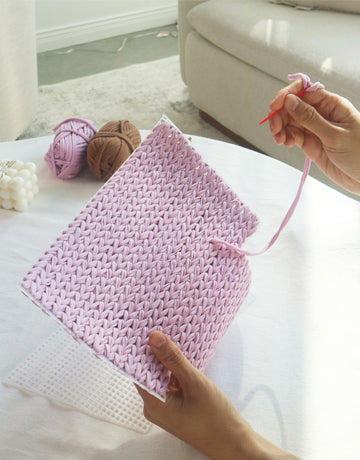

You spot a tiny crocheted bear online. It has neat little ears, a round tummy, and the kind of face that makes you think, “I want to make that.” Then you open the pattern and meet a wall of shorthand: MR, sc, inc, dec, FLO, {18}. Suddenly the cute toy feels less like a hobby and more like a secret code.
That feeling is normal. Amigurumi crochet patterns look complicated before they feel familiar. Once you know what each part means, though, they read more like a recipe than a riddle. You gather your materials, follow the steps in order, and build one small piece at a time until a shape appears in your hands.
You’re also joining a big creative crowd. The crochet and knitting community includes more than 45 million Americans, and amigurumi has grown as a popular pattern-based part of that world, with women aged 25 to 40 noted as the most engaged group according to crochet market statistics collected here. That matters because it means help is everywhere. Patterns, tutorials, and beginner-friendly projects are easier to find than ever.
Your Friendly Guide to Amigurumi Crochet Patterns
Amigurumi is the art of crocheting small stuffed shapes, usually animals, dolls, food, or playful characters. Most pieces are built from simple stitches repeated in rounds, then stuffed and sewn together. If you can make a single crochet and count carefully, you can learn amigurumi.
The easiest way to think about amigurumi crochet patterns is to compare them to a baking recipe. A recipe tells you what ingredients to buy, what order to follow, and how the finished thing should look. A pattern does the same. It lists yarn, hook, notions, stitch terms, and then gives you instructions row by row or round by round.
Beginners often assume they need to memorise everything before starting. You don’t. You only need to recognise the key parts as they appear.
A pattern doesn’t expect you to know everything at once. It expects you to take the next stitch, then the next one after that.
There’s also a reason amigurumi feels satisfying so quickly. The projects are structured. You can see progress after just a few rounds. One evening might give you a finished head. Another might give you tiny arms or a little tail. That small-step rhythm makes the craft feel manageable.
If you’ve been staring at a pattern and wondering where to begin, start with this idea: you are not reading a puzzle. You are reading instructions for making a shape.
Decoding Your First Amigurumi Pattern
A beginner pattern usually has the same basic parts. Once you know where each part lives, the page becomes much less intimidating.

The materials list
This is your ingredient list. It tells you what yarn, hook, stuffing, eyes, needle, and extras the designer used. Read it before you do anything else.
If a pattern names a specific yarn brand, don’t panic if you can’t find it. What matters most is the yarn weight, fibre feel, and the firmness of your fabric once crocheted. The exact brand is helpful, but it isn’t magic.
The abbreviations and glossary
This is your translation key. It explains short forms like sc for single crochet, inc for increase, and dec for decrease. Many beginners skip this part and then wonder why the instructions seem impossible.
Keep the glossary open while you work. If you’re still learning the starting technique, a simple visual tutorial like this magic circle crochet guide can help the written instructions make more sense.
The main instructions
This is the method section of the recipe. It usually appears in rounds such as:
- R1 for Round 1
- R2 for Round 2
- {12} for total stitches at the end of that round
- (sc, inc) x 6 for a repeated sequence
Designers often build toys piece by piece. You may see sections for head, body, arms, ears, or accessories. Don’t worry if the toy looks incomplete at first. Amigurumi often comes together near the end.
The finishing notes
These notes tell you when to stuff, where to place eyes, and how to sew pieces together. They matter more than beginners expect.
A simple pattern often succeeds or fails in the finishing. Two identical crocheted heads can look very different depending on how evenly they’re stuffed and where the facial features are placed.
| Pattern part | What it does | What beginners should check |
|---|---|---|
| Materials list | Names tools and supplies | Yarn weight, hook size, stuffing |
| Abbreviations | Translates shorthand | US terms vs terms you already know |
| Main rounds | Gives stitch-by-stitch steps | Repeats, counts, round numbers |
| Piece labels | Separates head, body, limbs | Which parts are worked first |
| Assembly notes | Explains finishing | Stuffing timing and placement |
Practical rule: Read the full pattern once before your first stitch. You’ll spot colour changes, sewing steps, and any unusual abbreviations before they surprise you.
Gathering Your Amigurumi Making Supplies
A good amigurumi setup doesn’t need to be huge. It needs to be sensible. The goal is a firm, tidy fabric that holds stuffing well and shows the shape clearly.

The basic shopping list
Most beginner projects call for a short set of essentials:
- Yarn: Smooth yarn is easier to see and count than fluffy novelty yarn.
- Crochet hook: Amigurumi often uses a slightly smaller hook than garments so the stitches stay tight.
- Stuffing: Polyester fibre fill is common because it’s light and easy to shape.
- Stitch markers: These help you track the first stitch of each round in a spiral.
- Yarn needle: You’ll use it for closing openings and sewing pieces together.
- Eyes or embroidery thread: Facial details can be plastic safety eyes or stitched features.
- Small scissors: Clean trimming matters when weaving ends neatly.
Why these choices matter
Amigurumi isn’t just about making stitches. It’s about making fabric with structure. If the stitches are too loose, stuffing peeks through. If the yarn is fuzzy, it becomes harder to count rows and place the hook correctly.
Cotton and acrylic are both common choices. Cotton often gives crisp stitch definition and a firmer feel. Acrylic can be soft, widely available, and friendly for beginners. Neither is automatically better. The right one depends on the look and feel you want.
A Canadian yarn reality check
Many beginner patterns are written around US yarn brands. That can be frustrating if you’re shopping in Canada and can’t find the exact skein. According to guidance focused on this gap, many amigurumi patterns call for US yarn brands, leaving Canadian beginners to guess at equivalents, and a Canadian Yarn Guide that maps US weights to Canadian brands and includes tension-check swatches can help address those common substitution problems noted in online forums from 2023 to 2025 in this discussion of Canadian yarn substitution needs.
That means your best move isn’t to hunt endlessly for one exact label. It’s to compare these three things:
-
Weight name
Look for terms such as worsted or aran in the pattern, then match as closely as you can in your local shop. -
Fibre behaviour
A soft drapey yarn can change the shape even if the label looks similar. -
Your fabric test
Crochet a small swatch in the round if possible. If gaps show, go down a hook size.
A simple Canadian substitution table
| What to compare | Why it matters | What to look for in Canada |
|---|---|---|
| Yarn weight | Affects overall size and density | Match the weight name as closely as possible |
| Fibre | Changes stretch and firmness | Smooth cotton or acrylic tends to be beginner-friendly |
| Hook size | Controls gap size | Use the hook that gives tight stitches |
| Tension check | Confirms shape before you begin | Make a small test piece, not just a chain |
If a pattern says “use Brand X” and you only have a local option, treat it like swapping one baking ingredient for another. You don’t copy the packet. You match the function.
Reading the Language of Amigurumi Patterns
The strange-looking line in a pattern usually becomes simple once you break it into pieces. Think of it as reading a map legend. Each symbol tells you where to go next.
How a pattern line works
Take this common instruction:
R3: (sc in 2, inc) x 6 {24}
Here’s what each part means:
- R3 means Round 3
- (sc in 2, inc) is the sequence you’ll repeat
- x 6 means repeat that sequence six times
- {24} tells you the total stitch count at the end
So you single crochet in the next 2 stitches, then make an increase, and repeat that full sequence around. When you finish the round, you should count 24 stitches.
If your count is off, don’t keep going and hope it fixes itself. In amigurumi, one missed stitch often shows up later as a wonky shape.
Why the numbers create the shape
Researchers examining computational and mathematical approaches to amigurumi note that the relationship between starting stitches and increase rows determines the shape, and for a round piece starting with 6 stitches, each increase row adds exactly 6 stitches, creating a predictable system that helps with scaling and design, as described in this ACM summary on amigurumi mathematics.
That sounds technical, but the practical meaning is simple. The numbers are not random. They are shaping instructions.
A round start might look like this:
- R1: 6
- R2: 12
- R3: 18
- R4: 24
Each round grows in a steady pattern. That’s why a tidy ball or head starts to form instead of a pointy cone or floppy circle.
If the stitch count at the end of a round matches the pattern, you’re not just counting correctly. You’re protecting the shape.
Common US amigurumi stitch abbreviations
Patterns often use US crochet terms. If you learned from UK terms or from video without the abbreviations, this table helps.
| Abbreviation | Full Term | What It Means |
|---|---|---|
| sc | Single crochet | The main stitch used in most amigurumi |
| inc | Increase | Two stitches worked into one stitch |
| dec | Decrease | Two stitches turned into one |
| sl st | Slip stitch | A joining or moving stitch with very little height |
| ch | Chain | The foundation loop used to begin or bridge |
| st | Stitch | One completed crochet stitch |
| rep | Repeat | Do the same instruction again |
| rnd | Round | One full circuit around the piece |
| BLO | Back loop only | Work through only the back loop |
| FLO | Front loop only | Work through only the front loop |
Symbols that confuse beginners most
A few pattern marks cause the most hesitation:
- Parentheses group stitches that belong together.
- Asterisks also mark a repeated sequence in some patterns.
- Brackets or braces often show the total stitch count.
- Commas separate actions in order.
If you want extra practice with crochet shorthand before tackling a toy pattern, this how to read crochet patterns article is a useful companion.
A quick reading habit
Before each round, do this:
- Read the whole line once.
- Circle or note the repeated section.
- Say the sequence out loud.
- Crochet it slowly the first time.
- Count before moving on.
That tiny pause saves a lot of unravelling.
Essential Stitches and Techniques for Cute Creations
The good news is that most amigurumi projects rely on a small set of repeat skills. Once your hands learn them, you’ll use them again and again.

The magic ring
A magic ring gives you a tight, adjustable centre. It’s the neat little starting point used for heads, bodies, paws, and other rounded parts. Instead of leaving a hole in the middle, you pull the tail to close the opening.
Many beginners find the first magic ring fiddly. That’s normal. It often feels awkward once or twice, then suddenly clicks.
The increase
An increase means working two stitches into one stitch. That’s what allows the fabric to spread and create width.
Standard amigurumi shaping commonly follows a rule where stitches increase by 6 per round from a magic ring start, such as R1: 6, R2: 12, R3: 18, and that progression is used to build a balanced round shape according to this amigurumi pattern-reading guide. In plain language, evenly spaced increases help your crochet grow into a smooth ball instead of a misshapen lump.
The invisible decrease
A regular decrease can leave a visible bump. An invisible decrease hides that narrowing much better by changing how you pick up the loops before completing the stitch.
That’s why many polished amigurumi toys look smooth around the face and body. The shaping is there, but the decrease line doesn’t shout at you.
If you’d like a closer look at this method, this invisible decrease crochet tutorial shows why many crocheters prefer it for toys.
Spiral rounds and joined rounds
Most amigurumi is worked in a continuous spiral. That means you keep crocheting around without closing each round with a slip stitch. The shape becomes smoother, but you must mark the first stitch of each round.
Joined rounds are less common in basic amigurumi. They can be useful for some decorative pieces, but many toys use spirals because the surface looks more smooth.
A short visual demo can make these hand motions easier to understand:
Clean colour changes
Colour changes seem scary until you know the trick. Start the final stitch of the old colour, then finish that stitch with the new colour. That makes the new round begin cleanly.
For stripes, keep your tension steady and avoid pulling the carried yarn too tightly. For tiny details like noses or blush spots, embroidery after crocheting is often easier than changing colours mid-round.
Small repeated techniques build nearly every amigurumi project. Master the handful, and the rest starts to feel familiar.
Adjusting Size and Customizing Your Amigurumi
One of the nicest things about amigurumi is that patterns are flexible. The same bunny can become pocket-sized or extra cuddly depending on your yarn, hook, and tension.

What changes the final size
Three choices affect size most:
| Choice | What usually happens | What to watch for |
|---|---|---|
| Thicker yarn | Makes the toy larger | Gaps may appear if the hook is too large |
| Smaller hook | Makes stitches tighter | Fabric can become stiff and hard to work |
| Looser tension | Can enlarge the piece | Stuffing may show through |
If your toy looks larger than expected, that doesn’t always mean you made a mistake. It may mean your yarn and hook combination creates a bigger version.
Easy ways to customise
You don’t need advanced design skills to make a pattern feel personal. Start with small changes that don’t affect the structure.
- Change the colours: A bear in cream and brown feels classic. The same bear in mint or lilac feels playful.
- Add stitched details: Eyebrows, sleepy eyes, freckles, or a tiny smile can change the whole personality.
- Include simple accessories: A bow, scarf, flower, or mini hat can make a basic pattern look unique.
- Swap facial style: Embroidered eyes create a softer look than plastic eyes.
- Adjust firmness: More stuffing gives a plumper shape. Less stuffing creates a softer toy.
Keep one part constant
When beginners customise, they often change yarn, hook, colours, and details all at once. That makes it hard to know what caused the final result. A steadier approach is to keep one thing constant while changing another.
For example, keep the same pattern and yarn, but try a different hook. Or keep the same structure and only change colours. That way, you learn what each choice does.
A pattern is a starting point, not a strict law. Once you understand the shape, you can make it feel like yours.
The Final Touches for Professional Looking Amigurumi
The last stage is where a cute project becomes a polished one. Many beginners focus so hard on the stitches that they rush the finishing. Slow down here. It makes a visible difference.
Stuffing without lumps
Add stuffing in small pieces instead of one big handful. Push each piece into place gently with your fingers or the blunt end of a tool, then shape as you go.
If you overstuff too early, the outside can stretch before the inside is evenly filled. If you understuff, the toy may collapse or wrinkle. Aim for smooth firmness, not hardness.
Use enough stuffing to support the shape, but keep checking the surface. If stitches start to spread open, pause and reassess.
Sewing pieces on evenly
Before you sew anything permanently, pin or hold the parts in place and look from several angles. Check the front, sides, and top. Ears that look even from the front can sit at different heights when viewed from above.
A yarn needle and the same yarn used in the project usually give the neatest result. Use small whipstitches or mattress-like sewing stitches, and secure the part firmly if the toy will be handled often.
Choosing eyes safely
Safety eyes are called that because they lock into place more securely than loose buttons or beads. But that doesn’t mean they are the right choice for every recipient.
For toys intended for very young children, many crafters prefer embroidered eyes and features. Stitched details remove the risk of hard plastic parts coming loose. If a toy is decorative or intended for an older child or adult, safety eyes can work well and give a clean finish.
Finishing details that help
- Weave in ends carefully: Don’t just knot and trim near the surface.
- Shape after stuffing: Squeeze and smooth the piece to settle the fill.
- Place features before attaching backs: It’s easier to adjust early.
- Check symmetry in daylight: Small differences show more clearly in natural light.
The finishing stage rewards patience. A few extra minutes here can improve the whole toy.
Start Your Amigurumi Adventure Today
Amigurumi crochet patterns look much easier once you know what you’re reading. The abbreviations are just shorthand. The rounds are just repeated steps. The shaping numbers are instructions for building a form, one stitch at a time.
Your first project doesn’t need to be perfect. It needs to teach you something. Maybe you’ll learn how tight your stitches need to be. Maybe you’ll finally understand why a stitch marker matters. Maybe your little bear will have one ear slightly higher than the other, and you’ll still love it because you made it.
That’s how this craft works. You start with a pattern, a hook, and a small amount of patience. Then the yarn turns into something with personality.
If you’re itching to make something with your hands, beginner-friendly kits can also be a great way to keep the momentum going. They remove the supply-hunting stage and let you focus on the fun part, which is making.
If you’re ready for an easy, satisfying next project, browse Stitch Mingle for beginner-friendly DIY kits and creative accessories. You can explore the main shop collection, try giftable favourites like the Puppy and Bear keychain kits, or personalise your finished bag or project pouch with custom patches and name tags.