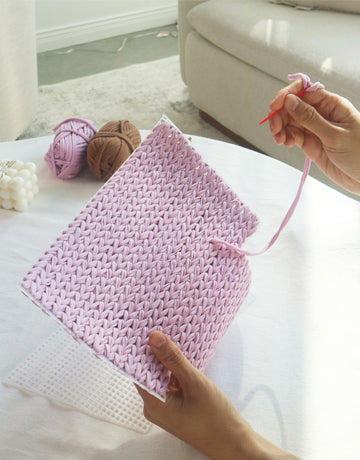

You start a project full of enthusiasm, make a long starting chain, crochet the first row, and then see it. The edge is tight, the fabric curls, and the stitch count feels suspicious. That moment puts a lot of beginners off crochet far more than it should.
Foundation chain crochet fixes that exact problem by building the chain and the first row at the same time. Instead of fighting a stiff edge, you get a base that’s more flexible, easier to count, and usually neater on the first try. If you already know the regular chain stitch in crochet, this is the next technique that makes everything feel more polished.
The End of Annoying Starting Chains
A standard starting chain can feel unfair to beginners. You make one long row of chains, then you have to find the right chain, insert your hook into a tiny loop, and hope your tension stays even from one end to the other. If your chains are too tight, the whole bottom edge can pull inward. If they’re too loose, the edge can look floppy and untidy.
Foundation chain crochet solves that in a more natural way. You build the base row as actual stitches, one by one, instead of making a separate chain first and hoping it behaves later. Many crocheters find that this feels less fiddly because each new stitch clearly shows where the next one should go.
It's like assembling a ladder as you climb it rather than laying all the rungs on the floor first and trying to connect them afterwards. The structure appears as you work. That makes it easier to read your stitches and easier to spot mistakes early.
A good foundation row feels calm. You can see the top of the stitch and the chain base underneath, which makes the whole project easier to understand.
This is especially helpful when you’re making anything that needs a comfortable edge, such as hat brims, cuffs, necklines, scarves, or blankets that shouldn’t bunch up at the beginning. It also saves beginners from one of the most discouraging crochet habits of all, frogging the first row over and over.
Why You'll Love the Foundation Chain Technique
The biggest reason people fall in love with foundation chain crochet is simple. It behaves better.
A traditional chain can act like a rigid border under your work. Foundation stitches are usually more forgiving, so the bottom edge moves more like the fabric above it. That matters for wearables and for anything that should drape nicely instead of feeling cinched at the start.

Better stretch from the first row
The easiest way to understand this is to compare two waistbands. One feels like soft leggings and moves with you. The other feels like a stiff belt and tells the whole garment where it’s allowed to bend. Foundation rows tend to give you more of that soft, flexible feeling.
That’s why many crocheters like them for cuffs, hems, and openings that need to stretch over hands or heads without looking distorted afterward.
More even tension for beginners
Beginners often pull the starting chain tighter than the rest of the project without realising it. That creates an edge that looks different from every row above it. Foundation chain crochet helps because you’re making functional stitches from the beginning, so your hands settle into a rhythm earlier.
Instead of chaining, then switching to row work, you stay in one flow. For many people, that makes the tension more consistent and the stitch shape easier to recognise.
Faster in practice, even if it feels new at first
At first, foundation chain crochet can seem slower because there’s more to remember. After a little practice, though, you’re combining two jobs into one. You don’t have to make a long chain and then work back into it. You create the lower chain and upper stitch together.
Here’s why that matters in real projects:
- Fewer tiny loops to hunt for: You’re not squinting at a long chain trying to find the correct insertion point.
- Less guesswork: Each completed stitch gives you a visible base for the next one.
- Cleaner starts: The edge often looks more intentional right away.
Practical rule: If a project needs flexibility at the edge, foundation chain crochet is often the more comfortable starting point.
Your Step-by-Step Guide to Foundation Single Crochet (FSC)
You sit down to start a scarf, chain what feels like forever, then the edge twists, tightens, and already looks different from the fabric you want to make. FSC solves that problem by building the starting edge and the first row at the same time. It is also one of the easiest places to adapt your hand motion if you crochet left-handed, because you only need to learn one repeated sequence.

A common workshop method starts with a slip knot and chain 2, then works the first stitch into the second chain from the hook, as shown in this foundation chain photo tutorial. That tutorial also explains why crocheters often use the back bump of the chain. It helps create a cleaner lower edge and gives you a clearer place to work the next stitch.
Setting up your first loops
Start with a slip knot on your hook. Chain 2.
Now stop for a second and look closely at the chain. You are about to build a stitch with two parts. The top part becomes a single crochet. The bottom part becomes a new chain base. That is the whole idea of FSC, and once that clicks, the stitch feels much less mysterious.
Turn the chain slightly and find the little ridge along the back. That ridge is the back bump. It works like the spine of the chain, keeping the base neat and easier to spot later.
If you crochet right-handed, hold the chain so the hook can enter that back bump from front to back. If you crochet left-handed, mirror the motion in the direction that feels natural in your hand. The structure of the stitch stays the same.
Making the first foundation single crochet
Insert your hook into the second chain from the hook, under the back bump if you can see it clearly. Yarn over and pull up a loop. You now have two loops on your hook.
Next, yarn over and pull through one loop only. This small move matters a lot. It creates the chain base for the next stitch. Beginners often rush past this part, but it is the step that makes FSC different from ordinary single crochet.
Now yarn over again and pull through both loops. Your first foundation single crochet is complete.
You should see two layers. The top looks like a regular single crochet. The bottom looks like a tiny chain. Those two layers are your roadmap for every stitch that follows.
Repeating the motion without getting lost
For the next stitch, insert your hook into the new chain base at the bottom of the stitch you just made, not into the top V. That is the part many beginners miss at first.
A helpful way to read it is to look for the small horizontal opening along the lower edge. That opening is the door to the next stitch. Once you can spot it, FSC becomes much more predictable.
Work the same sequence again:
- Insert into the chain base
- Yarn over and pull up a loop
- Yarn over and pull through one loop to make the new chain base
- Yarn over and pull through two loops to finish the single crochet
The rhythm is steady once your hands learn it. Base first, stitch second. Chain first, single crochet second. It works a bit like building a ladder one rung at a time, with the lower rung ready before you stand on the upper one.
If you want to see the hand motion in action, this video helps slow the process down:
How to keep your FSC neat
Your first few stitches may look bulky or uneven. That is normal, especially if long starting chains have trained your hands to pull too tight.
Try these adjustments while you practise:
- Keep the pull-through-one-loop step relaxed: If that chain base is tight, the next insertion point becomes hard to find.
- Pinch the newest stitch lightly: Holding the base with your fingers can help you see where the hook goes next.
- Count the top stitches only: The starting chain does not count as an FSC stitch.
- Use a smooth, light-coloured yarn: Clear stitch definition makes the chain base much easier to read.
- For left-handed crocheters, mirror the path, not the logic: You are still finding the lower chain base, making one loop for the chain, then completing the single crochet.
If the stitch still feels slippery, slow down and inspect each completed FSC before making the next one. You are teaching your eyes what to look for. That visual skill matters just as much as hook control.
If you'd like a second walkthrough focused just on this stitch, the foundation single crochet tutorial with extra practice guidance is a handy companion while you practise.
If you can identify the top V and the lower chain separately, you are reading FSC correctly.
Exploring Foundation Stitch Variations
You have learned the version that gives a firm, tidy edge. Now it helps to know you are not stuck with just one foundation stitch. The same built-in-chain idea can be stretched taller or softer depending on the fabric you want.
That matters a lot for beginners. A stitch that is too short can feel stiff across a long starting row, while a taller one often gives your hands a little more room to keep the tension even. Left-handed crocheters also tend to find that comparing the stitch heights makes the path of the hook easier to read, because the structure stays the same even when the motion is mirrored.

Foundation half double crochet
Foundation half double crochet, or FHDC, sits in the middle. It has more height than FSC, but it still feels compact and controlled. If FSC feels a little dense for a scarf or blanket edge, FHDC often gives a nicer balance.
The setup usually begins with chain 3 and working into the third chain from the hook, as shown in this foundation crochet stitches tutorial. That same tutorial explains the easy-to-miss step where you pull through one loop to create the chain base before finishing the half double crochet.
That small chain-forming step is what many beginners miss. The stitch on top can still look acceptable for a few repeats, but the lower edge starts to lose its pattern. Then the next insertion point gets harder to spot.
Foundation double crochet
Foundation double crochet, or FDC, gives the tallest start of the three common versions here. It works well when you want fabric that bends and drapes more easily, such as tops, cardigans, or looser wraps.
The logic is still familiar. You build the lower chain first, then place the double crochet on top of it. The main difference is that the extra yarn over makes the stitch taller, so the row grows faster and feels more open.
If long starting chains usually end up too tight in your hands, FDC can feel surprisingly forgiving. Each stitch has more vertical space, so it is often easier to spot where the hook should go next. Left-handed crocheters can use the same sequence in reverse direction. Find the lower chain, make it first, then complete the double crochet above it.
For extra practice with that taller version, this foundation double crochet tutorial walks through the stitch in closer detail.
Choosing your foundation stitch
| Stitch Type | Best For | Starting Chains | Relative Height |
|---|---|---|---|
| FSC | Dense edges, dishcloths, bags, sturdy bands | 2 | Short |
| FHDC | Afghans, scarves, balanced drape | 3 | Medium |
| FDC | Garments, airy starts, looser fabric | Varies by pattern | Tall |
A simple way to choose is to match the stitch to the feeling you want in the first row.
- Pick FSC for a firmer edge that holds shape.
- Pick FHDC for a flexible middle ground.
- Pick FDC for more drape and a roomier start.
Foundation stitches work like the same sentence spoken in different lengths. The message stays the same, but the rhythm changes. Once you understand that, the variations stop feeling like three separate techniques and start feeling like one skill you can adjust to suit the project.
Common Mistakes and How to Fix Them
Foundation chain crochet usually goes off track in quiet, predictable ways. The stitch is built from two parts at once, a chain at the bottom and a stitch on top, so a tiny tension change in one part shows up quickly in the other. Once you know what to watch for, the fixes are simple and reassuring.

When long starting rows go wrong
A long foundation row can feel fine for the first few stitches, then suddenly the count drifts or the edge starts pulling tight. That is one of the biggest beginner frustrations, especially if long starting chains have already been giving you trouble. The easiest fix is to break the row into small checkpoints instead of treating it like one giant count.
- Use markers every 10 or 20 stitches: This turns a long row into small sections you can count without stress.
- Count at each marker: If you added or skipped a stitch, you catch it early.
- Check the stretch of the base: The lower chain should bend easily. If it feels like a cord, relax your grip on the chain portion of each stitch.
Markers work like mile signs on a road. You stop guessing where you are.
You might notice the edge looks twisted
Lay the work flat after the first 5 to 10 stitches. The lower chain should sit in a tidy line under the top stitches.
If the edge corkscrews or flips, you are probably inserting your hook into slightly different parts of the base from stitch to stitch. Slow down and find the same entry point each time. Many beginners do better when they gently pinch the last completed stitch and look for the little horizontal chain at the bottom before inserting the hook.
You might notice the next insertion point keeps disappearing
This usually means the chain portion of the stitch is too tight. The top of the stitch may look fine, but the base closes up, which makes the next stitch harder to place.
Try making the chain part a touch taller before you finish the stitch above it. A good test is visual. If you can clearly see the small base chain and slide the hook under it without forcing it, your tension is in a workable range. If you have to wrestle the hook in, loosen that part on the next stitch.
Your row may be growing unevenly
This happens when the stitch on top and the chain below are not getting the same amount of yarn. Foundation crochet works like building a ladder. If one rung is tiny and the next is tall, the whole edge starts to wobble.
A simple reset helps:
- Pause every few stitches and compare them: The bases should look similar in size.
- Use the hook shaft as a guide: Pull loops up to the thicker part of the hook so they stay consistent.
- Practice on 10 stitches first: A short sample lets your hands learn the rhythm before you commit to a full row.
Left-handed adaptations that actually help
Left-handed crocheters often run into a second layer of frustration. The stitch itself is not harder. The problem is that many tutorials show the movement from the opposite direction, so the important little details are harder to spot.
A smoother approach is to follow the structure, not the screen direction.
- Watch where the base chain forms: Focus on the lower chain being made first, then the stitch above it.
- Turn still frames into your guide: Pause videos and study the hook placement one step at a time.
- Keep the working yarn and tail easy to identify: That makes it much easier to tell which edge is the foundation edge and where the next insertion point should be.
If a right-handed tutorial feels confusing, the tutorial may be the problem, not your hands. That reminder matters. Left-handed beginners often improve quickly once they stop trying to copy the exact motion and start following the stitch anatomy instead.
Projects and Patterns Perfect for Your New Skill
Foundation chain crochet shines when the first edge needs to look good and move well. That makes it a lovely choice for beginner-friendly projects such as headbands, cowls, hat brims, simple tops, and dishcloths. It’s also useful for blanket starts when you want a cleaner edge and less drama in the first row.
If you’re still building confidence, start small. A short headband lets you practise the stitch without a huge count. A cowl gives you more repetition, which helps the hand motion settle in. Once that feels natural, scarves and blankets become much less intimidating.
A useful way to think about this skill is that it improves the beginning of almost any yarn-based project. The neater and more flexible your start, the more enjoyable the rest of the making tends to be.
Internal links
| Link Text | URL |
|---|---|
| Stitch Mingle beginner kits | https://stitchmingle.com |
| Stitch Mingle best sellers | https://stitchmingle.com/collections/best-sellers |
| Stitch Mingle custom patches | https://stitchmingle.com/collections/custom-patches |
If you're ready for another satisfying beginner project, Stitch Mingle makes it easy to keep creating. You can explore beginner-friendly DIY kits, browse best sellers, or personalise something fun with custom patches, all with clear instructions and a polished finished look.