
You want to make something sweet, personal, and useful. A pooh bear blanket ticks every box. It feels thoughtful, looks charming in a nursery, and gives you a handmade gift that people keep.
The problem is that most tutorials jump straight into full crochet patterns, graphghans, or detailed stitching charts. That’s fine if you already crochet confidently. It’s much less fun if you just want a lovely result without spending your weekend wrestling with yarn counts and pattern symbols.
A simpler route works better for many beginners. Start with a ready-made blanket, then add a Pooh-inspired design with patches or simple stitched panels. That gives you the handmade look without the stress of building the whole blanket from scratch.
Creating a Handmade Hug for Someone Special
A pooh bear blanket works because it feels familiar and gentle. People recognise the warm colours, the soft storybook mood, and the comforting nursery feel straight away. It’s the kind of gift that suits a baby shower, a first birthday, or a quiet “welcome home” present for new parents.
That kind of project matters even more when crafters want something personal instead of another mass-produced throw. In California, sustainable crafting saw a 28% rise in eco-friendly DIY kit sales in 2025, yet existing Pooh Bear blanket content still leans heavily toward imported ready-made products, leaving demand for beginner-friendly DIY patterns underserved. The same source notes that 35% of CA Etsy customers are interested in personalised Disney-inspired crafts, which shows why so many people are looking for a more creative option than buying one off a shelf (Alibaba Winnie the Pooh blanket listings).
That gap is good news for beginners. It means you don’t have to follow the crowd and make the most complicated version possible. You can choose a low-sew approach and still end up with a gift that feels polished.
Practical rule: If a project feels intimidating before you even buy the materials, simplify the base first. A pre-made blanket saves time, reduces mistakes, and gives you more energy for the decorative part.
If you’re also comparing cosy blanket styles for older gift recipients, this guide to everything about wearable blankets for adults is useful because it shows how function, softness, and presentation all shape the final gift.
A beginner-friendly pooh bear blanket isn’t about doing less. It’s about putting your effort where it shows most.
Gathering Your Hundred Acre Wood Supplies
The easiest pooh bear blanket starts with one decision. Do you want to decorate an existing blanket, or build a design from small stitched panels? Both can look lovely. The right choice depends on how much time you have and how comfortable you feel with needles, yarn, or ironing.
Choosing your method
Here’s a side-by-side comparison to help you decide.
| Factor | Appliqué Method | Plastic Canvas Method |
|---|---|---|
| Base | Ready-made fleece, cotton, or flannel blanket | Multiple plastic canvas panels joined together |
| Skill level | Very beginner-friendly | Beginner-friendly with a little patience |
| Main decorative element | Iron-on patches, sticker-on patches, or hand-sewn appliqués | Yarn-stitched bear, honey pot, bee, or letter motifs |
| Tools needed | Iron, pressing cloth, scissors, optional embroidery needle | Tapestry needle, yarn, scissors |
| Time feel | Faster to finish | Slower but more detailed |
| Best for | Baby gifts, quick presents, personalised throws | Pixel-style designs, names, modular keepsakes |
| Common concern | Worry about patch placement | Worry about joining panels evenly |
| Good shortcut | Use pre-made shapes and name patches | Work one square at a time |
If you love soft texture and want ideas for choosing a plush base fabric, the ultimate faux fur blanket guide is helpful for understanding pile, warmth, and finish before you commit to a blanket style.
Supplies for the appliqué route
This method is great if you want a polished result quickly.
You’ll need:
- A plain blanket base. Fleece, flannel, or smooth cotton are easiest because patches sit flat and stay visible.
- Pooh-inspired patches. Think bear silhouettes, honey pots, bees, balloons, initials, or name labels.
- An iron and pressing cloth. The cloth protects delicate fabrics and helps prevent shine marks.
- Small embroidery scissors for trimming threads or tidying edges.
- Optional embroidery floss if you want to add a simple running stitch around each patch for extra security.
A smooth blanket matters more than people expect. Thick cable textures and high-pile chenille can make patch edges lift or look uneven.
Supplies for the plastic canvas route
This option feels a bit like building a blanket from sturdy illustrated tiles.
You’ll need:
- Pre-cut plastic canvas sheets
- Yarn in a small colour palette such as buttery yellow, warm red, cream, brown, and black
- A tapestry needle with a blunt tip
- Sharp scissors
- A backing fabric if you want a softer reverse side
- Clips or stitch markers to hold panels in order while joining
Plastic canvas is useful for beginners because it gives you structure. The holes create a natural grid, so you don’t have to guess where your stitches should land.
A good beginner palette has one main colour, one contrast colour, one outline colour, and one neutral. That’s enough to make the motif readable without making the project fiddly.
If you’d like extra background on yarn-based blanket techniques before choosing your low-sew version, this crochet article from Stitch Mingle gives helpful context without requiring you to commit to a full crochet blanket.
Your simplest shopping checklist
If you want the shortest possible supply list, use this:
- Blanket for the base
- Decorative patches or panels for the design
- Needle or iron depending on your method
- Thread or yarn in matching colours
- Gift ribbon or tag for the finished presentation
That’s enough to make a pooh bear blanket that looks thoughtful and complete.
Designing Your Whimsical Blanket Motif
The design stage is where beginners often overcomplicate things. They try to include every character, every accessory, and a full border before they’ve even placed the main motif. A better plan is to choose one focal point and support it with a few smaller details.
For many blankets, the focal point is the centre. On a baby blanket, a single bear-inspired motif in the middle usually looks calm and balanced. If you prefer a playful look, scatter small elements like bees, honey pots, balloons, or initials around the corners and edges.
Three layout ideas that work well
You don’t need advanced drawing skills. A pencil sketch on paper is enough.
- Centrepiece layout. One large Pooh-inspired bear shape sits in the middle, with the recipient’s name underneath.
- Corner cluster layout. A small bear, a honey pot, and a bee fill one corner while the rest of the blanket stays simple.
- Storybook repeat layout. Several small motifs appear across the blanket in a gentle pattern.
If you’re not sure which one to choose, start with the centrepiece layout. It’s easiest to place, easiest to personalise, and hardest to make look cluttered.
Keep it inspired rather than copied
There’s an important difference between “Pooh-inspired” and directly reproducing licensed art. If you’re making a personal gift, the safest creative route is to design around the mood and symbols rather than copying an exact commercial illustration.
That can mean using:
- Warm yellow and soft red colours
- Rounded bear shapes
- Honey pots and buzzing bees
- Simple balloon or woodland details
- Hand-lettered names or initials
This approach makes the blanket feel personal instead of store-bought.
The character’s story has deep roots. Pooh first appeared by name on Christmas Eve, 1925, and the character was fully embodied in Winnie-the-Pooh in October 1926. That long history still shows up in modern craft culture, including a 25% year-over-year increase in Pooh-inspired textile entries at the San Diego County Fair from 2022 to 2025 (Winnie-the-Pooh background and cited fair trend).
A simple planning formula
Use this quick design formula before attaching anything:
- Choose one hero image
- Add one supporting motif
- Decide where the name goes
- Leave blank space around the design
- Check balance from a few steps away
Too many motifs make a handmade blanket look busy. Blank space makes the central design feel intentional.
For more visual inspiration around bear-themed yarn projects, this Winnie-the-Pooh crochet post from Stitch Mingle can help you translate character colours and shapes into a beginner-friendly layout.
A pooh bear blanket doesn’t need perfect illustration. It needs a clear focal point and a cosy, recognisable feel.
Two Easy Methods for Crafting Your Blanket
You can make a pooh bear blanket without knitting a full blanket from scratch. That’s the secret. Use either a decorated ready-made blanket or a set of stitched plastic canvas panels.
Both methods let you focus on the fun part: making the design.

Making a low-sew appliqué blanket
This is the easiest route for most beginners because the blanket already exists. Your job is to decorate it neatly.
Start by washing and drying the blanket if the fabric allows it. That removes finishes that can interfere with adhesion and also lets you see how the fabric behaves after laundering. Press it flat so your design area is smooth.
Lay the blanket on a table or clean floor. Place your patches without attaching them yet. Move them around until the spacing feels balanced.
A good order is:
- central motif first
- name or initials second
- small accents last
Once the layout looks right, take a quick photo. That gives you a placement reference if anything shifts.
Attaching patches neatly
If you’re using iron-on patches, place a pressing cloth over each patch and follow the instructions that came with your materials. Press firmly instead of sliding the iron around. Sliding can distort both the patch and the blanket surface.
If you’re using sticker-on patches for a decorative piece rather than a heavily washed baby blanket, press each one down carefully and smooth from the centre outward to avoid bubbles or lifted edges.
For extra durability, add a hand-sewn outline with embroidery floss. A simple running stitch works well. You don’t need tiny perfectionist stitches. Even spacing matters more than small spacing.
Common beginner mistakes with appliqué
- Placing everything too high. Centre the design based on the visible folded blanket, not just the raw dimensions.
- Skipping the test position. Always arrange first, attach second.
- Using a textured blanket. Rough texture can make the motif look wobbly.
- Choosing too many patch sizes. One large, one medium, and a few small accents usually look best.
If the blanket is for a baby, smooth the reverse side with your hand after every sewn patch. You want the back to feel tidy and comfortable.
Making a plastic canvas panel blanket
This method gives you a charming, old-school craft finish. It works especially well if you like bold shapes and simple colour blocks.
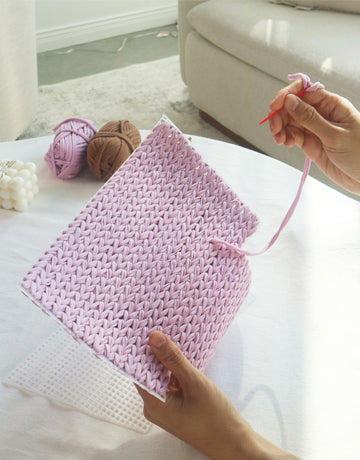
Instead of stitching directly onto fabric, you create separate panels on plastic canvas. Each panel can show part of the design, such as a bear face, a honey pot, a letter, or a small bee. When all the panels are complete, you join them into one blanket or lap throw.
Start by sorting your panels before stitching. Label them lightly on the back if your design has multiple sections. This is a small habit that prevents big confusion later.
Stitching the motif on plastic canvas
The most common beginner stitch here is the tent stitch. It’s diagonal, easy to repeat, and gives the surface good coverage. Work in one direction as much as possible so the finished panel looks consistent.
Helpful habits:
- Keep yarn lengths manageable so they don’t tangle
- Don’t pull too tightly or the canvas may warp
- Check the front every few rows to make sure colours stay in the right place
This method feels almost like colouring by squares. That’s why many new crafters enjoy it. You can stop after one panel, come back later, and still know exactly where you left off.
Building the image panel by panel
There are two smart ways to plan a plastic canvas pooh bear blanket.
The first is a feature-panel approach. One square shows the bear, one shows a honey pot, one shows the name initial, and the rest use simple coordinating patterns.
The second is a grid-image approach. Several squares combine to form one larger central image. That looks impressive, but it requires more layout checking before assembly.
If this is your first attempt, use feature panels. They’re easier to stitch, easier to fix, and more forgiving if one square ends up slightly tighter than another.
When to choose this method
Plastic canvas is a great fit if:
- you like structured crafts
- you want to work in short sessions
- you enjoy pixel-style motifs
- you’d rather avoid fabric pressing and patch placement
It also gives you a nice backup plan. If one panel doesn’t work, you only redo that panel instead of reworking the whole blanket.
Which method should you pick
Choose appliqué if your main goal is speed, softness, and easy personalisation.
Choose plastic canvas if you enjoy stitching detail and want a more handmade, panelled look.
Neither option is “less real” than a full crochet blanket. They’re more approachable. That matters, especially if the gift deadline is close and you want the process to stay fun.
Assembling and Finishing Your Masterpiece
Finishing is what makes a handmade blanket look intentional rather than half-done. The decorative part gets all the attention, but the final checks are what give the blanket a clean, gift-ready look.
Finishing an appliqué blanket
If you chose the appliqué route, inspect every edge closely. Run your fingertips around each patch and look for spots that lift, curl, or feel loose. Re-press or add a few securing stitches where needed.
Then turn the blanket over and check the reverse side. Trim stray threads and make sure knots are neat and flat. If you added several sewn details, a soft backing fabric can hide the reverse side and make the blanket feel smoother.
A final gentle press helps the whole piece look settled and organised.
Joining plastic canvas panels
Lay all finished panels on a flat surface before stitching them together. This is the moment to correct orientation mistakes. It’s much easier to swap two squares before joining than after.
Use a whipstitch with yarn to connect panel edges. Match hole to hole and keep the tension even. Pull snugly enough to close gaps, but not so tightly that the joined edge buckles.
A simple order helps:
- Join each row first
- Check alignment
- Join the rows together
- Add any border last
The neatest joins happen when you stitch panels in the same direction each time. Consistency shows more than speed.
If you need a refresher on tidy finishing techniques for yarn ends, this guide on how to fasten off crochet is useful even if your project isn’t a full crochet blanket, because the same clean-ending habits apply.
Easy upgrades that make it look polished
These finishing touches don’t add much difficulty, but they improve the result a lot:
- Add a border. Ribbon, blanket stitch, yarn wrapping, or fabric binding can frame the design.
- Attach a backing. Fleece or flannel softens the reverse side of appliqué or canvas work.
- Include a label. A small name tag or “made with love” tag gives the blanket a keepsake feel.
- Steam lightly if suitable. This helps flatten minor ripples after assembly.
A pooh bear blanket should feel warm, soft, and secure. Finishing is where you make sure it does.
Caring For and Gifting Your Creation
A handmade blanket lasts longer when the care routine matches the materials you used. If your blanket includes patches, stitched panels, or decorative threadwork, wash it gently. A mesh laundry bag helps protect edges from snagging, and air drying is often kinder than high heat.
Natural fibres are especially worth considering if you’re making a baby gift or a blanket for a household sensitive to dust and residue. California parents have been asking about Pooh Bear blanket care for wildfire smoke exposure, and that concern has become more visible because 2025 CAL FIRE data showed 12 major wildfires impacting 45% of the state. The same source notes that experts recommend natural fibre DIY alternatives to reduce concerns around microplastic shedding under newer California regulation (Lambs & Ivy Pooh blanket page with cited regional context).
That’s one more reason to choose materials thoughtfully instead of grabbing the cheapest plush option available.
A simple care routine
- Wash gently with cool water when the materials allow it
- Use a mesh bag if the blanket has patches or hand stitching
- Air dry flat when possible to protect shape and edges
- Store clean in a breathable space, away from smoke or damp
- Brush off surface dust before washing if the blanket has been displayed
If you want broader fabric-care advice for wool, cotton, and woven blankets, this comprehensive guide to blanket maintenance is a practical companion.
Make the gift feel extra special
Presentation changes how handmade work is received. Fold or roll the blanket neatly, wrap it with ribbon, and include a small tag with the baby’s name or a short note. If the design includes a name patch or stitched initial, point that out when you give it. People love knowing what was customised just for them.
A pooh bear blanket already feels tender and nostalgic. Good care and thoughtful wrapping help it stay that way.
Frequently Asked Questions and Your Next Project
Can I use a different type of blanket for the appliqué method
Yes. Fleece, flannel, and smooth cotton are the easiest options. Avoid highly textured blankets because patches and stitched motifs can sit unevenly on the surface.
What if I make a mistake on a plastic canvas square
You can remove the yarn and redo that area without ruining the canvas. That’s one of the friendliest parts of this method. It’s forgiving.
How can I make my blanket bigger
For appliqué, start with a larger ready-made throw. For plastic canvas, add more squares and repeat your border or filler motif so the design still feels balanced.
What should I make next
If you enjoyed this project, look for another kit-based craft that keeps the same low-pressure feel:
- Best sellers that make polished gifts quickly
- New arrivals if you want a fresh weekend project
- Gifting ideas for birthdays, baby showers, and holidays
If you’re ready to turn this idea into a real weekend project, explore Stitch Mingle for beginner-friendly DIY kits, custom patches, and giftable craft supplies that make handmade projects feel approachable from the very first step.