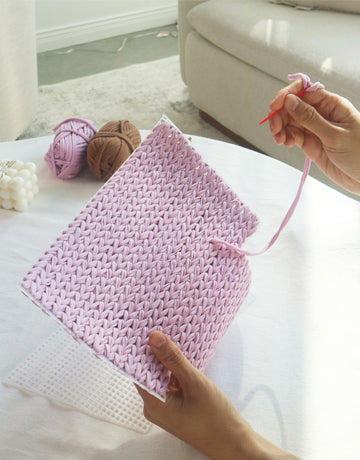

Ready to start knitting but don't know where to begin? A high-quality knitting kit for beginners in Canada is your best starting point. This guide offers a comprehensive overview of what to look for in a kit, a step-by-step tutorial for your first project, and a curated list of resources to help you on your crafting journey. Our goal is to eliminate the guesswork, allowing you to focus on the creative process and successfully complete your first handmade item.
Why a Knitting Kit is the Best Entry Point

Starting a new craft like knitting can be overwhelming. A walk into a craft store reveals a wall of yarn in countless colours and textures, along with a dizzying array of needles and accessories. This is precisely where a well-designed knitting kit for beginners in Canada proves its value.
A kit is a curated crafting experience. It packages all the necessary components—yarn, needles, and a pattern—into one box, solving the "where to start" problem. This streamlined approach ensures all materials are compatible and suited for a beginner, setting you up for success from the very first stitch.
Key Advantages of Starting with a Kit
Opting for a kit is the most efficient way for a new knitter to begin, as it systematically removes common barriers to entry.
- Eliminates Guesswork: Kits are assembled by experts who match the yarn type and weight to the appropriate needle size. This crucial pairing is essential for achieving even stitch tension.
- Guaranteed Compatibility: Every component is chosen to work together, from the yarn's fibre content to the pattern's complexity.
- Cost-Effective: Purchasing items individually can be more expensive and may lead to buying unnecessary tools. A kit typically provides better value by bundling only the essentials.
A knitting kit is more than just supplies; it's a guided learning experience. It is engineered to take you from a ball of yarn to a finished project, transforming a potentially complex hobby into an accessible and rewarding one.
The timing for starting is excellent. The craft is experiencing significant growth in Canada, with the knitting yarn market reaching USD 499.8 million in 2024. This indicates a large and active community of makers. You can explore the data in the latest Canadian knitting market research.
Ultimately, a kit is designed to make your introduction to knitting enjoyable and stress-free.
Anatomy of a High-Quality Beginner Knitting Kit
To ensure a positive learning experience, a knitting kit for beginners in Canada must contain specific components. Understanding these elements and their functions is key to selecting the right kit.
Essential Kit Components Table
This table outlines the critical components of a beginner knitting kit and explains their importance.
| Component | Technical Specification | Rationale for Beginners |
|---|---|---|
| Beginner-Friendly Yarn | Worsted-weight or chunky yarn; smooth ply; light colour. | A smooth texture prevents snagging, while a light colour enhances stitch visibility. A heavier yarn weight (worsted or chunkier) produces larger stitches that are easier to see and manipulate. |
| Appropriate Needles | 8mm to 10mm diameter; made of bamboo or wood. | Bamboo or wood needles offer more "grip" than metal, preventing stitches from slipping off accidentally. This provides greater control for new knitters developing muscle memory. |
| A Simple Pattern | Step-by-step instructions for a basic project (e.g., scarf, dishcloth). | Starting with an achievable project builds confidence. Simple patterns focusing on the basic knit stitch (garter stitch) ensure a successful first outcome. |
| Essential Accessories | Darning/tapestry needle (blunt tip, large eye); stitch markers. | A tapestry needle is crucial for weaving in ends to create a professional finish. Stitch markers are used to mark specific points in a pattern, such as the beginning of a round. |
With these components, you are equipped for a successful first project that will build a strong foundation for your new skill.
Ready to find your perfect match? Find your perfect start with our beginner-friendly craft kits.
You can also explore our complete guide on what to look for in a knitting kit for beginners.
How to Select the Right Knitting Kit for Your First Project
Choosing your first knitting kit is an exciting step. The decision largely depends on the type of project that inspires you. Kits are project-based, so selecting one that results in an item you genuinely want to use or wear is the best motivation for learning.
Identify Your Ideal Starter Project
Beginner kits are designed around simple, satisfying projects that ensure a high success rate. Consider which of these appeals to you.
- Garter Stitch Scarf: The classic first project. It requires only the basic knit stitch and involves no complex shaping, allowing you to master the fundamentals.
- Simple Beanie (Knit Flat or in the Round): A great second project or an ambitious first. It introduces skills like decreasing stitches and, if knit in the round, circular knitting.
- Dishcloths or Coasters: These are small, quick projects perfect for practicing new stitches. Their low-stakes nature makes them ideal for learning and experimenting.
The hand knitting market is thriving, valued globally at USD 5.2 billion in 2024. Yarn sales constitute 60% of this market, and with North America (including Canada) representing a 35% market share, crafters have access to a vast array of high-quality materials. Learn more about the growth of the hand knitting market.
Choose the Right Yarn Fibre
The yarn fibre determines the final look, feel, and care instructions for your project. Beginner kits typically feature one of two main types.
- Natural Fibres: Merino wool and cotton are common choices. Wool offers warmth and natural elasticity, which is forgiving for beginners with uneven tension. Cotton is durable, absorbent, and ideal for household items.
- Synthetic Fibres: Acrylic is a popular synthetic choice due to its durability, affordability, and machine-washable properties. It comes in a wide spectrum of colours and is a practical option for easy-care items.
Budget and Value Analysis
In Canada, a quality beginner knitting kit typically costs between $40 and $90 CAD. The price is primarily influenced by the yarn's fibre content; a kit with 100% merino wool will be more expensive than one with an acrylic blend. However, a higher price does not always mean it is better for a beginner. An affordable acrylic kit is an excellent, low-risk way to determine if you enjoy the craft before investing in more expensive materials.
Where to Buy a Knitting Kit for Beginners in Canada

Knowing where to purchase your kit can enhance your initial experience. Whether you prefer the personalized service of a local shop or the broad selection of an online retailer, Canada offers excellent options.
Option 1: Local Yarn Stores (LYS)
A Local Yarn Store is more than a shop; it's a community hub.
- Expert Advice: Staff are typically avid knitters who can provide personalized recommendations.
- Tactile Experience: You can see and feel the yarn before purchasing.
- Community Connection: Many LYSs host classes and social "knit nights," which are great for connecting with other crafters.
Option 2: Canadian Online Shops
Online retailers offer a vast selection of kits from independent Canadian designers and dyers.
- Wide Variety: Access unique kits not available in larger stores.
-
Convenience: Shop from home and have your kit delivered.
Pro Tip: When shopping online, choose a Canadian-based store to avoid unexpected customs duties and fees that can occur with international shipping. Always check the company's shipping origin.
Option 3: Major Craft Retailers
Large chains like Michaels are widely accessible across Canada.
- Accessibility and Affordability: These stores are numerous and frequently offer sales and coupons, making them a budget-friendly option.
- Reliable Selection: They consistently stock a range of beginner-friendly kits.
When making an online purchase, verify shipping costs to your province and review the return policy before finalizing your order.
Ready to explore some options? Find your perfect start with our beginner-friendly craft kits at Stitch Mingle.
You can also explore our complete guide on what to look for in a knitting kit for beginners.
How-To: Complete Your First Knitting Project (A Simple Scarf)
With your kit in hand, you are ready to begin. This section provides a step-by-step guide to creating a simple garter stitch scarf, a perfect first project.
Step 1: The Slip Knot and Casting On
Every knitting project begins with these two fundamental techniques.
- Create a Slip Knot: This is an adjustable loop that acts as the anchor for your project. Place the slip knot on one needle and tighten it gently.
- Cast On Your Stitches: "Casting on" is the process of creating the foundation row of stitches on your needle. For a standard scarf using chunky yarn, casting on 15 to 25 stitches will create a good width. Follow the visual guide included in your kit's pattern.
Step 2: The Knit Stitch
For a garter stitch scarf, the knit stitch is the only stitch you need to learn. Repeating this stitch creates a squishy, reversible fabric. A common mnemonic helps beginners remember the four movements:
- "In through the front door": Insert the right-hand needle into the first stitch on the left needle, from front to back.
- "Around the back": Wrap the working yarn counter-clockwise around the tip of the right-hand needle.
- "Peek through the window": Pull the right needle back through the stitch, bringing the wrapped loop with it to create a new stitch.
- "And off jumps Jack": Slide the original stitch off the left-hand needle.
Repeat this sequence for every stitch in the row. When the row is complete, transfer the needle with the stitches to your left hand and begin again. Continue knitting row after row until your scarf reaches the desired length, typically 150 cm to 180 cm.
Step 3: Binding Off and Weaving in Ends
Once your scarf is the desired length, you must secure the stitches to prevent them from unravelling.
- Bind Off: This technique creates a finished edge. To bind off, knit the first two stitches. Then, use your left needle to lift the first stitch over the second stitch and off the right needle. Knit one more stitch, and repeat the process. Continue across the row until only one loop remains. Cut the yarn, leaving a tail, and pull it through the final loop to secure it.
- Weave in Ends: Use the tapestry needle from your kit to weave the starting and ending yarn tails into the fabric of the scarf. This hides the ends and gives your project a clean, professional finish.
For more details on the tools required for this process, review our guide on the ideal knitting for beginners kit.
Next Steps: Resources for New Canadian Knitters
Completing your first project is just the beginning. The knitting community is a vast and supportive resource for continuing your journey, offering inspiration, patterns, and technical support.
Online Communities and Learning Platforms
Digital platforms are invaluable for connecting with other knitters and expanding your skills.
- Ravelry: An essential resource, Ravelry is a massive database of patterns, yarns, and forums. You can find groups specifically for Canadian knitters, track your projects, and access thousands of free patterns.
- Facebook Groups: Search for "Knitting Canada" or similar terms to find active communities. These groups are excellent for asking questions and sharing your finished objects (FOs).
- YouTube Tutorials: Video is an excellent medium for learning new techniques. Channels like Sheep & Stitch and RJ Knits offer clear, high-quality tutorials for everything from basic stitches to advanced skills.
Engaging with the community transforms knitting from a solo activity into a shared passion. Many knitters complete an average of 12 projects per year once they become more involved. You can read more about the knitting community to understand its scale.
Common Beginner Knitting Questions Answered
Here are answers to some of the most frequently asked questions by new knitters.
What Is The Easiest Yarn To Use?
The ideal yarn for a beginner is smooth, light-coloured, and worsted-weight or chunky. A smooth yarn (like a merino wool or acrylic) won't split or snag. A light colour makes stitches easy to see, and a thicker yarn knits up quickly, providing satisfying results.
I Keep Dropping Stitches! What Should I Do?
Dropping a stitch is a common and fixable error. The easiest way to fix it is with a small crochet hook. Insert the hook into the dropped stitch from front to back, catch the horizontal strand ("ladder") behind it, and pull it through the loop. Repeat for each dropped row until the stitch is back at the top and can be placed on the needle.
How Much Should A Good Kit Cost In Canada?
A quality knitting kit for beginners in Canada typically costs between $40 and $90 CAD. The price variance is mainly due to the yarn's fibre content. Kits in this range generally offer an excellent balance of high-quality materials and value, ensuring a positive first knitting experience.
Explore more with Stitch Mingle:
- Discover Your First Project: Beginner-Friendly Craft Kits
- Learn More About Kits: What to Look for in a Knitting Kit for Beginners
- Expand Your Crafting: Adult Craft Kits in Canada
- Find Your Next Idea: Easy Crafts to Do at Home
- Visit Our Homepage: https://stitchmingle.com