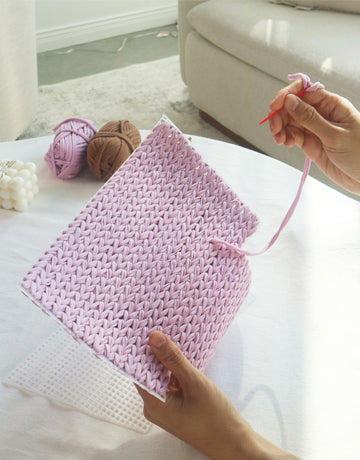

You've probably done this already. You spot a hooked rug with soft, chunky loops and rich colour, then think, “I'd love to try that.” A minute later, you search for rug hooking supplies and run into hooks, frames, monk's cloth, linen, wool cuts, cutters, binding tape, and advice that seems written for someone who already knows the craft.
That's where most beginners get stuck. Not because rug hooking is too hard, but because the supply list looks more technical than the first project really needs to be.
The good news is that rug hooking has always had a practical side. During its peak years in North America, from 1900 to 1950, it was widely used to create floor coverings in households that couldn't afford commercially made carpets, and the great majority of antique hooked rugs sold today were produced in that period, according to this history of rug hooking. In other words, this craft wasn't built on fancy shopping. It was built on smart use of materials.
Your Journey into Rug Hooking Starts Here
A first trip to buy rug hooking supplies can feel oddly similar to buying kitchen gear when you've only ever baked from a boxed mix. Suddenly every tool sounds important, and every supply seems like it might be the wrong one.

Here's the simpler way to look at it. Rug hooking is just pulling strips or fibres through a woven backing to make loops. That's it. The supplies matter because they affect how easy that motion feels in your hand, how well the loops stay put, and how tidy the finished rug looks.
If you already love studying rug texture and construction, it helps to compare techniques across styles. This guide on understanding hand-knotted rugs is useful because it trains your eye to notice structure, durability, and craftsmanship, even though hand-knotting is a different method.
Many beginners also freeze at the pattern stage. If that's you, browsing a few hooked rug patterns can make the whole craft feel more concrete. Once you can picture your first small mat, coaster, or wall piece, the supply choices get easier.
Start small: Your first goal isn't building a lifelong studio. It's making one satisfying project without wasting money on tools you may not need yet.
A smart beginner kit should do three things:
- Feel comfortable in your hands so you can enjoy learning the motion
- Use forgiving materials that don't fight you while you practise
- Leave room for substitutions if a specialty item isn't available locally
That's the mindset that keeps rug hooking exciting instead of overwhelming.
The Essential Toolkit Hooks Frames and Backing
The core rug hooking supplies fall into three jobs. The hook pulls fibre through the backing, the frame keeps your work steady, and the backing holds the loops in place. If you understand those three parts, the craft store stops feeling like a wall of unfamiliar tools.

Choosing a hook that fits your hand
Beginners often assume they need several hooks right away. One good hook is enough for a first project.
What matters most is comfort. You will repeat the same pulling motion hundreds of times, so a hook that feels awkward in the first five minutes will feel much worse after half an hour. A smooth shaft, a handle that does not pinch your fingers, and a weight that feels balanced are better signs of quality than fancy packaging.
Recent interest in ergonomic tools has a practical reason. Ergonomic hooks have seen a 35% sales spike since 2025, and they can reduce finger stress by up to 22% compared to traditional narrow-handled hooks, based on the verified data tied to this video reference. If your hands tire easily, or if you spend a lot of time typing, a thicker handle is often money well spent.
Three tool types show up often in shops:
- Traditional hooks have a simple wooden handle and metal shaft. They are straightforward, widely available, and give a direct feel in the hand.
- Ergonomic hooks have a thicker or shaped handle. They are often easier for longer practice sessions.
- Punch-style tools are for a related craft, not standard rug hooking. Beginners mix these up all the time because the finished surface can look similar at a glance.
A quick visual helps before you shop:
If you are building a budget starter kit, put your money into the hook before the frame. A comfortable hook changes every minute you spend working. A basic frame can often be improvised or upgraded later.
Frames that hold tension without fuss
A frame solves a very simple problem. It keeps the backing taut so your other hand is not doing all the stabilizing work.
That sounds minor until you try hooking without one. Loose backing shifts, wrinkles, and sags, which makes it harder to place even loops. Beginners often blame themselves for uneven results when the underlying issue is poor tension.
Common beginner frame options
| Frame type | Best for | What beginners should know |
|---|---|---|
| Hoop frame | Small projects | Portable and affordable, but can feel cramped on larger designs |
| Stretcher frame | General beginners | Stable and easy to understand |
| Gripper strip frame | Larger rugs | Holds backing securely, often preferred once you commit to bigger work |
An embroidery hoop can be a smart substitute for a tiny sampler or coaster. It is not ideal for every rug hooking project, but it is a sensible way to start without buying everything at once. That budget-friendly approach matters. Your first kit should help you learn the motion, not pressure you into buying studio-level equipment on day one.
A frame reduces frustration. That alone can make practice feel much more enjoyable.
Backing that supports the loops
Backing confuses many beginners because the names vary by shop, region, and tradition. The easiest way to judge it is to look at the weave.
You want a backing that is open enough for your hook to pass through without a fight, but firm enough to grip the loops after they are pulled. If the fabric feels floppy, loosely woven, or quick to distort in your hands, it will be harder to work on and harder to finish neatly.
Three common choices:
Linen
Linen is durable and dependable. Many experienced rug hookers stick with it because it handles repeated pulling well and stays stable on the frame. If you already know you enjoy the craft, linen can be worth the higher upfront cost.
Monk's cloth
Monk's cloth is often the easiest starting point for beginners. It is widely available, easier to hook through, and usually less intimidating than linen. For many first projects, it offers the best balance between comfort and cost.
Burlap or hessian
Burlap is usually the low-cost option. It can work for practice pieces, especially if budget is the main concern, but it frays more easily and can feel rougher under the hook. If you choose it, plan to secure the edges early so the backing does not start unraveling while you work.
A good beginner test is simple. Hold the fabric up to the light, check that the weave looks even, then tug it gently in both directions. You want structure with a little give, not a fabric that shifts shape right away. That small check can save you money and spare you a lot of frustration later.
Painting with Fibre Choosing Wool Yarn and Other Materials
Tools get a lot of attention, but fibre is what gives a hooked rug its personality. Beginners often raise the biggest budget question: do I really need wool strips, or can I use something else?

The honest answer is that you can start with alternatives, but each material behaves differently. Some are easier, some are cheaper, and some produce a much more traditional finish.
Wool strips for the classic look
If you want the classic primitive hooked-rug texture, wool strips are the gold standard. In Canadian rug hooking practice, a #8 cut wool strip, which is 1/4 inch, is the benchmark for most primitive-style kits, and it gives 1.5 to 2 times the coverage efficiency of a single strand of yarn, according to Woolery's rug hooking hooks guide.
That coverage point matters. It means wool strips fill space faster than yarn, so your project grows more quickly and your surface tends to look fuller.
Yarn for easy access
Yarn is easier to find than cut wool. Many beginners already have some at home. That makes it tempting, and for practice pieces or soft decorative work, it can be a reasonable entry point.
Still, yarn changes the look. It usually gives a finer, less chunky surface than traditional wool strips. If you're trying to recreate that old-school hooked rug appearance, yarn may feel a bit too tidy or thin.
Recycled fabric for budget-friendly experimenting
Old wool garments, felted sweaters, and even T-shirt fabric can all become rug hooking material. This is one of the smartest ways to experiment without spending much up front.
Recycled material works especially well when you treat your first piece as a learning project rather than a family heirloom. You'll learn how loops sit, how colours interact, and how different fabrics glide through the backing.
Side-by-side comparison
| Material | Best point | Trade-off |
|---|---|---|
| Pre-cut wool strips | Traditional look and fuller coverage | More specialised to buy |
| Craft yarn | Easy to find and familiar | Different texture from classic primitive rugs |
| Recycled wool clothing | Budget-friendly and characterful | Requires prep work |
| Recycled T-shirt fabric | Accessible and fun for practice | Less traditional finish |
Material match matters: The fibre, the hook, and the backing need to cooperate. If one part feels wrong, beginners often blame themselves when the real issue is the combination.
How to choose without getting stuck
If you want the easiest first decision, use this rule of thumb:
- Choose wool strips if you want a traditional primitive-style rug
- Choose yarn if you're testing the motion and already have supplies at home
- Choose recycled fabric if your main goal is learning on a budget
A small example helps. If you're making a tiny mat for a side table, recycled wool from an old skirt can give lovely texture and save money. If you're making a pattern with broad shapes and want visible loops quickly, #8 cut wool strips make the process feel much more rewarding.
Colour choice confuses people too. Don't start by buying every shade. Pick a small palette with contrast: a background, a main motif colour, a lighter highlight, and a darker accent. That keeps your project organised and helps you spot where your loops are going.
Tools for a Perfect Finish Cutters Binders and More
You finish hooking the last row, hold up your piece, and realise the final 10 percent needs its own small set of tools. The loops are there, but the edges need taming, loose threads need trimming, and the whole project needs to feel finished rather than just done.
That is why these supplies matter. They are the tidy-up crew.
Start with the tools you will reach for every time
A sharp pair of scissors earns its place fast. You will trim backing, snip thread, neaten edges, and cut small bits of fibre. For a first kit, comfort matters as much as sharpness. If the handles pinch your fingers or the blades chew the fabric instead of slicing it, the job becomes harder than it needs to be.
A sewing needle and thread belong nearby too. New rug hookers sometimes treat finishing as a separate skill, but it is really just a few simple jobs done neatly. You might fold under an edge, secure a corner, or stitch down binding. A basic hand-sewing needle is enough for a first project.
If your backing frays easily, hemming or securing the edge before you hook can save frustration later. It works like taping the edge of wrapping paper before you fold it. The material behaves better, and you waste less of it fighting loose threads.
Tools that save time, but can wait
A rotary cutter helps if you plan to cut a lot of strips yourself. Scissors work, especially at the beginning, but a rotary cutter gives more even strips and speeds up prep. If you are building a budget-conscious starter kit, this is an easy item to postpone until you know you enjoy cutting your own wool.
A self-healing cutting mat goes with the rotary cutter for the same reason a baking tray goes under cookie dough. It protects the surface underneath and gives you a safe place to work. Useful, yes. First-day requirement, no.
A binding tape, wool strip, or other edge-finishing material is worth choosing earlier than many beginners expect. The finish you want affects what you buy. A floor rug usually needs a sturdier edge plan than a piece that will hang on the wall. If you like learning from examples, these beginner rug hooking kits that show a sensible starter bundle can help you spot which finishing items are often included and which are optional.
A practical order for buying
- Buy now: scissors
- Buy soon: needle, thread, and the finishing material your project will need
- Buy later: rotary cutter, cutting mat, and specialty finishing tools
That order keeps your first kit lean. You are buying for the project in front of you, not for every future technique at once.
A smart starter kit avoids duplicate jobs. If scissors can handle your first project well, let them. Add specialty tools only when they solve a real problem you have actually reached.
Build Your First Kit A Rug Hooking Shopping List
By this point, the supply list should feel less like a mystery and more like a short set of decisions. You don't need the fanciest version of everything. You need a balanced kit that works together.
If you'd rather start with a curated approach before buying individual tools, these rug hooking kits for beginners can help you compare what a sensible starter bundle usually includes.
Beginner Rug Hooking Starter Kit Checklist
| Item | What to Look For (Beginner Focus) | Priority |
|---|---|---|
| Rug hook | Comfortable handle, smooth shaft, easy grip | Absolute essential |
| Backing fabric | Stable weave, beginner-friendly feel, enough margin around pattern | Absolute essential |
| Frame or hoop | Holds backing taut without slipping | Absolute essential |
| Fibre material | Pre-cut wool strips, yarn, or prepared recycled fabric | Absolute essential |
| Sharp scissors | Comfortable grip and clean cutting | Absolute essential |
| Pattern | Simple design with clear shapes | High |
| Needle and thread | For edge prep and finishing | High |
| Finishing material | Binding tape, wool strip, or chosen edge finish | Medium |
| Rotary cutter | Helpful for cutting many strips evenly | Optional upgrade |
| Cutting mat | Useful if cutting your own strips regularly | Optional upgrade |
Two starter-kit paths that work well
The strict-budget kit
Use a basic hook, monk's cloth or other beginner-friendly backing, an embroidery hoop or simple frame, scissors, and recycled wool or yarn. This setup keeps costs down and still teaches the core skill.
The smoother-learning kit
Choose an ergonomic hook, a sturdier frame, quality backing, and pre-cut wool strips. You'll spend more up front, but the materials will usually cooperate more easily.
A beginner mistake I see often is mixing a bargain backing with difficult homemade strips and a tiny uncomfortable hook. Each item seems cheaper on its own, but the overall experience gets frustrating fast. A modest, well-matched kit is better than a large random pile of supplies.
Where to Find Supplies and Smart Budget Tips
The easiest place to start is often local. Independent yarn shops, rug hooking studios, fibre festivals, guild sales, and thrift shops can all be useful, especially when you want to touch materials before buying.

There's also a real budget reason to look nearby. Verified data notes that beginners can often reduce shipping costs by 25 to 40% by seeking local sources, and in California, where annual wool production exceeds 1.2 million pounds, farm-to-hook sourcing can be a practical and sustainable option, as noted in this Woolery collection reference.
Smart ways to spend less without cutting quality
- Repurpose fabric carefully from wool garments, skirts, or sweaters if you want texture without buying all-new materials
- Borrow a frame first if you're testing the craft before investing in your own
- Use a small project size so you need less backing and fibre
- Keep your supplies organised so offcuts, hooks, and wool strips don't disappear between sessions. A simple guide to storage for craft supplies can help if your workspace is small
Quick beginner FAQs
Can I start rug hooking without a frame
Yes, but it's harder to keep the backing evenly tensioned. For most beginners, a frame or hoop makes learning easier.
Is burlap good enough for a first project
It can be, especially if budget matters. Just expect more fraying and handle the edges carefully.
Should I buy pre-cut wool or cut my own
Pre-cut wool removes one technical step, so it's easier for a first project. Cutting your own becomes more appealing once you know what strip width and texture you like.
If you love crafts that feel approachable from the very first session, Stitch Mingle is worth a look. The shop focuses on beginner-friendly DIY kits and accessories with clear instructions, quality materials, and guided projects that remove the usual shopping guesswork. It's a great place to pick up an easy, satisfying creative project while you build confidence with hands-on making.