
So, you’re thinking about diving into the world of needle and thread? Awesome. But you’ve probably come across two terms that sound similar but are worlds apart: cross stitch and embroidery. It’s a common point of confusion, so let's clear it up.
At its core, the main distinction is beautifully simple. Cross stitch is a type of counted-thread embroidery, where you create a picture using tiny, uniform X-shaped stitches on a gridded fabric. Think of it like a soothing, fabric version of pixel art.
Embroidery, on the other hand, is the free-spirited cousin. It’s like painting with thread, where you use a whole vocabulary of different stitches—satin stitch, backstitch, French knots, you name it—to create flowing lines, fill in shapes, and add all sorts of cool textures to your fabric.
Cross Stitch vs Embroidery at a Glance
For those who just want the quick-and-dirty breakdown, this little table lays out the core differences side-by-side.
| Feature | Cross Stitch | Embroidery |
|---|---|---|
| Technique | Counted-thread; uniform X-shaped stitches on a grid. | Free-form; uses a variety of stitches (e.g., satin, backstitch). |
| Primary Fabric | Even-weave fabric like Aida cloth with a visible grid. | Plain-weave fabrics like cotton, linen, denim, or felt. |
| Needle Type | Blunt-tipped tapestry needle that passes through holes. | Sharp-tipped embroidery needle that pierces the fabric. |
| Patterns | Follows a gridded chart, similar to paint-by-numbers. | Often follows a design transferred onto the fabric as an outline. |
| Best For | Geometric patterns, pixelated art, samplers, and lettering. | Flowing lines, filling shapes, detailed textures, and personalization. |
| Creative Freedom | More structured and methodical. | Highly flexible and allows for artistic improvisation. |
Hopefully, that gives you a clearer picture. While both are incredibly rewarding hobbies, knowing how they differ is the key to picking the right one for your first project. Now, let’s dig a little deeper into what makes each craft unique.
Exploring the World of Cross Stitch
If you're looking for a craft that’s as relaxing as it is rewarding, cross stitch is a wonderful place to start. It’s a specific type of counted-thread embroidery, which is just a fancy way of saying that every single stitch is carefully counted and placed on a special grid-like fabric.
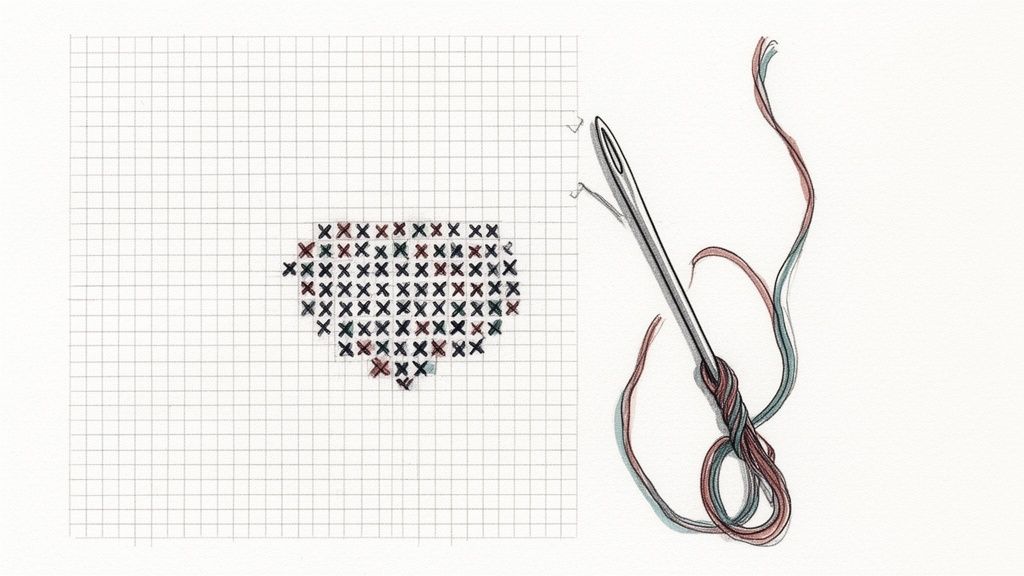
The name gives it all away—the craft is built entirely around the X-shaped stitch. You create these tiny, uniform Xs on a gridded fabric, usually Aida cloth. The magic of Aida cloth is that its little woven squares give you a perfect guide for where to put your needle. It really does feel a bit like paint-by-numbers, which is why so many beginners find it incredibly calming.
This structured method is a huge part of its appeal. In fact, here in Canada, cross stitch has been more popular with beginners than traditional embroidery since the early 2010s. A 2022 survey found that 72% of respondents chose a cross stitch kit to start their stitching journey because the grid-based patterns felt so straightforward. In contrast, embroidery's free-form nature intimidated 55% of those same newcomers.
The Essential Toolkit
One of the best things about cross stitch is that you don't need a huge pile of supplies to get started. Its minimalist toolkit is a major plus for anyone just dipping their toes into needlecraft.
You really only need four things to get going:
- Fabric: Typically Aida cloth, which has that all-important grid.
- Floss: This is just stranded cotton thread, and it comes in every colour imaginable.
- Needle: You'll want a blunt-tipped tapestry needle so you don't accidentally split the fabric's fibres.
- Pattern: A chart that looks like a grid, showing you exactly where each colour goes.
This is exactly why all-in-one kits are such a fantastic option. They take all the guesswork out of the equation by bundling everything you need into one neat package, making the whole experience feel less daunting and a lot more fun.
The real beauty of cross stitch is in its predictability. Each little 'X' builds on the last, slowly forming a pixel-perfect image. You're practically guaranteed a beautiful result, which is an amazing confidence booster.
Perfect Projects for Beginners
Because of its grid-based nature, cross stitch is absolutely perfect for creating designs with a charming, pixel-art vibe. Projects are often small and totally manageable, meaning you can finish something you're genuinely proud of in just a weekend.
It's ideal for making things like:
- Witty or inspirational quotes to hang on your wall.
- Cute little pixel-art keychains.
- Festive ornaments for the holidays.
- Personalized nameplates for a nursery or kid's room.
These small wins provide a huge sense of accomplishment. They let you master the basic stitch while creating something tangible and lovely. If you're looking for an easy first project, our guide to counted cross stitch kits for beginners can help you find your perfect starting point. It's truly the best way to get a feel for the stitching world.
Discovering the Art of Embroidery
If cross stitch is the calm, structured cousin, then embroidery is its free-spirited, artistic sibling. Think of it as painting with a needle and thread. Instead of being guided by a grid of X-shaped stitches, embroidery opens up a world of flowing lines, lush textures, and filled-in designs on almost any fabric you can get your hands on.
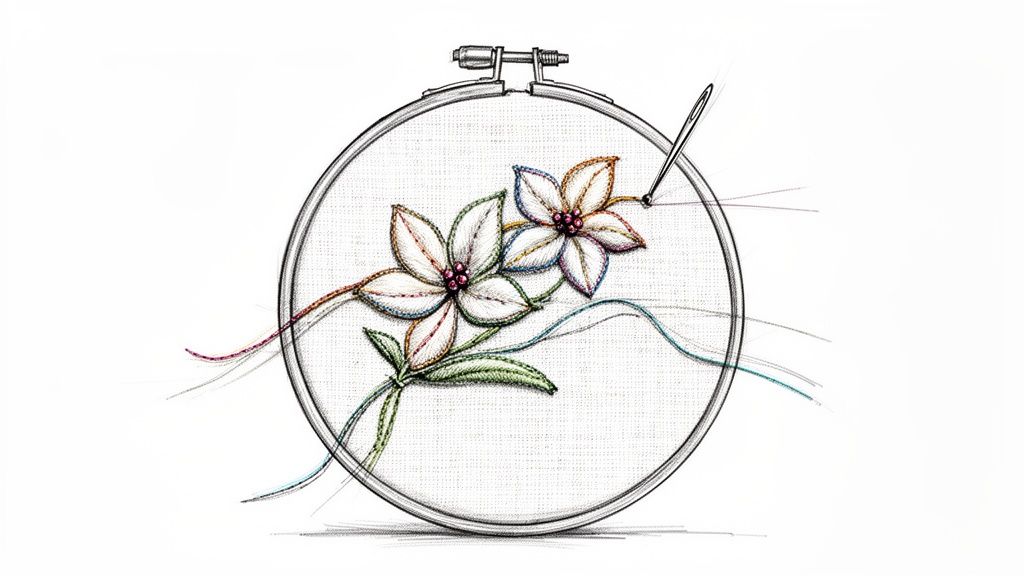
This is the craft for anyone with a creative itch or the desire to add a truly personal stamp on their belongings. With embroidery, you aren't boxed in. The needle becomes your brush, and the fabric your canvas.
Mastering Foundational Stitches
The real charm of embroidery comes from its massive library of stitches. But don't let that intimidate you! While there are hundreds out there, you only need to learn a handful to start making something beautiful. These are the building blocks for nearly any design you can dream up.
Here are three of the most essential stitches to get you started:
- Backstitch: This is your go-to for crisp outlines and lettering. It creates a solid, unbroken line that looks almost like it was drawn with a fine pen.
- Satin Stitch: Need to fill in a shape with smooth, vibrant colour? The satin stitch is your best friend. It’s made by laying straight stitches right next to one another, giving you a gorgeous, satin-like finish.
- French Knot: These are perfect for adding little pops of texture and detail. Use them for the centre of a flower, tiny eyes on a character, or just to sprinkle a bit of dimension across your piece.
Just by mastering these three, you can create some seriously impressive, personalized art. If you're looking for more ideas, check out our guide to embroidery kits for beginners.
Embroidery’s true strength is its adaptability. It transforms everyday items into one-of-a-kind pieces, allowing you to wear your creativity on your sleeve—literally.
Unleashing Your Creative Potential
One of the biggest differences when comparing cross stitch vs embroidery is the freedom you have with materials. Embroidery isn't tied down to one type of fabric, which lets you take on unique projects that go way beyond something you'd just hang on the wall. You can embroider on:
- Classic cotton or linen for traditional hoop art.
- Tough denim to personalize a jacket.
- Even unexpected materials like leather for a custom keychain.
This versatility is a huge part of its appeal. Here in Canada, embroidery has deep roots, especially with women aged 30-50 who love to work with their hands. A 2023 survey of 1,200 hobbyists revealed that 68% preferred embroidery for its artistic freedom, while only 32% chose cross stitch for its structured nature. This trend is fuelled by embroidery's flexibility, making it perfect for creating things like custom iron-on patches and stylish keychain kits. You can dive deeper into these embroidery trends and findings.
2. Comparing the Tools and Materials
Getting your supplies together is one of the most exciting parts of starting a new craft. When it comes to cross stitch versus embroidery, the tools you'll gather are one of the biggest things that set them apart. While they share a few basics, like thread, most of the core materials are completely different.
The Foundation: Fabric Choices
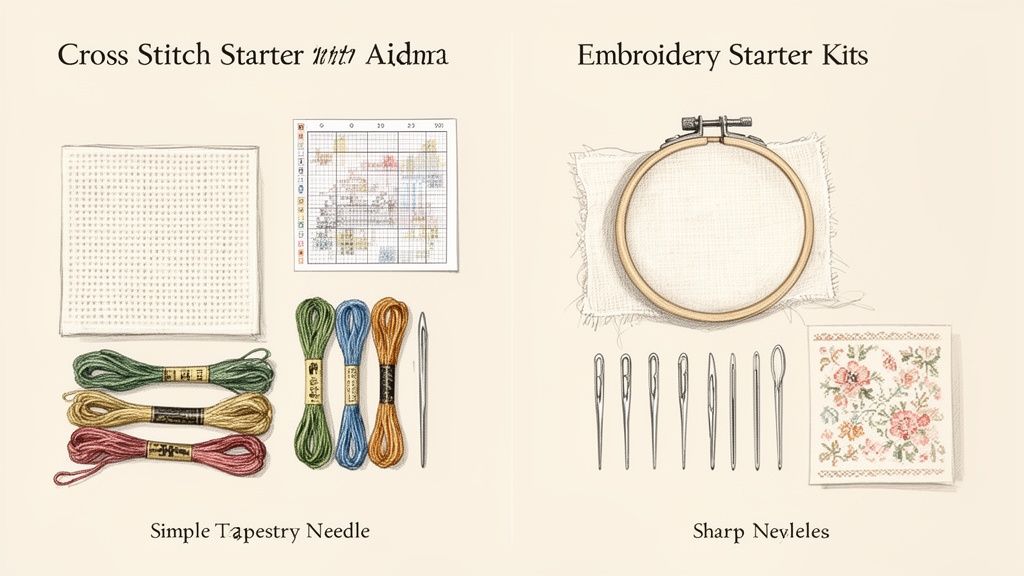
The first major fork in the road is the fabric. Cross stitch is almost always done on a special fabric called Aida cloth. It has a unique, grid-like weave that creates obvious holes for your needle. This grid makes it incredibly easy to create those uniform, X-shaped stitches. You'll see Aida described by its "count," like 14-count, which just means there are 14 squares (and potential stitches) per inch.
Embroidery, on the other hand, is all about freedom. You can stitch on almost any plain-weave fabric you can think of—cotton, linen, and even sturdy stuff like denim. Your fabric becomes a blank canvas, since you aren't tied to a pre-woven grid.
Needles, Threads, and Hoops
The differences definitely don't stop there. The needles for each craft are built for entirely different tasks. Cross stitchers use a blunt-tipped tapestry needle. It's designed to glide smoothly through the holes in Aida cloth without snagging or splitting the fabric's threads. For embroidery, you need a sharp-tipped needle that can cleanly pierce tightly woven fabric wherever you want your stitch to go.
The needle is the perfect real-world example of the core difference between the two crafts. A cross stitch needle navigates a grid, while an embroidery needle forges its own path.
While both crafts use standard stranded cotton floss, how you hold the fabric is another key distinction. An embroidery hoop is a must-have for most embroidery projects. It keeps the fabric pulled tight, which is crucial for preventing your stitches from puckering the material. Some cross stitchers use hoops, but many don't bother, especially when working on smaller pieces or with stiffer Aida cloth that holds its shape well.
Here’s a quick rundown of the essential toolkits for each:
-
Cross Stitch Essentials:
- Fabric: Aida cloth or another even-weave fabric.
- Needle: A blunt tapestry needle.
- Pattern: A gridded chart you follow by counting squares.
-
Embroidery Essentials:
- Fabric: Cotton, linen, denim, or felt.
- Needle: A sharp embroidery needle.
- Pattern: A design you transfer right onto the fabric.
Seeing these differences makes it clear why getting a dedicated kit is such a good idea. If you’re wondering how kits bring all these essentials together, take a look at our guide on finding the perfect sewing kits for beginners. It’s the easiest way to start your stitching journey without any of the guesswork.
How to Choose Your First Stitching Project
So, you're ready to pick up a needle and thread, but which path do you take? Deciding between cross stitch and embroidery really boils down to what you're hoping to get out of the experience. Are you looking for a chill, structured way to unwind? Or are you itching to let your creative side run wild and personalize everything in sight?
Answering that one question is pretty much the secret to finding the perfect craft for you.
If you just want to relax and follow a clear, predictable path to a finished piece, cross stitch is probably your best bet. It's fantastic for anyone who loves the satisfaction of following a pattern and seeing a picture slowly take shape, stitch by stitch. I like to think of it as a kind of "paint-by-numbers" with thread—it's wonderfully meditative and you're guaranteed a great-looking result.
On the other hand, if you're dreaming of adding some custom flowers to a denim jacket or creating one-of-a-kind art, embroidery is calling your name. This craft is all about creative freedom. It's perfect for adding a personal touch to clothes, bags, and home decor, letting you express yourself in a way that the structured nature of cross stitch just doesn't allow for.
Matching Your Goals to a Craft
Think about your personality. Are you someone who loves a good plan and finds comfort in order? Or are you more of an adventurous, "let's see where this goes" kind of person?
You might be a cross stitcher if you:
- Find a sense of calm in following a clear chart.
- Are a fan of retro, pixel-art vibes or want to stitch up some witty quotes.
- Need a project you can easily pick up and put down without losing your spot.
- Are looking for a low-stress hobby to help you decompress.
You'll probably love embroidery if you:
- Want to essentially "draw" with thread and create fluid, painterly designs.
- Are excited by the idea of personalizing your wardrobe or home.
- Enjoy learning a whole bunch of different stitches to create cool textures.
- Prefer having the freedom to change up a design as you work.
This little decision guide can help you see which craft fits your idea, whether you're aiming for structured grid art or something more freeform.
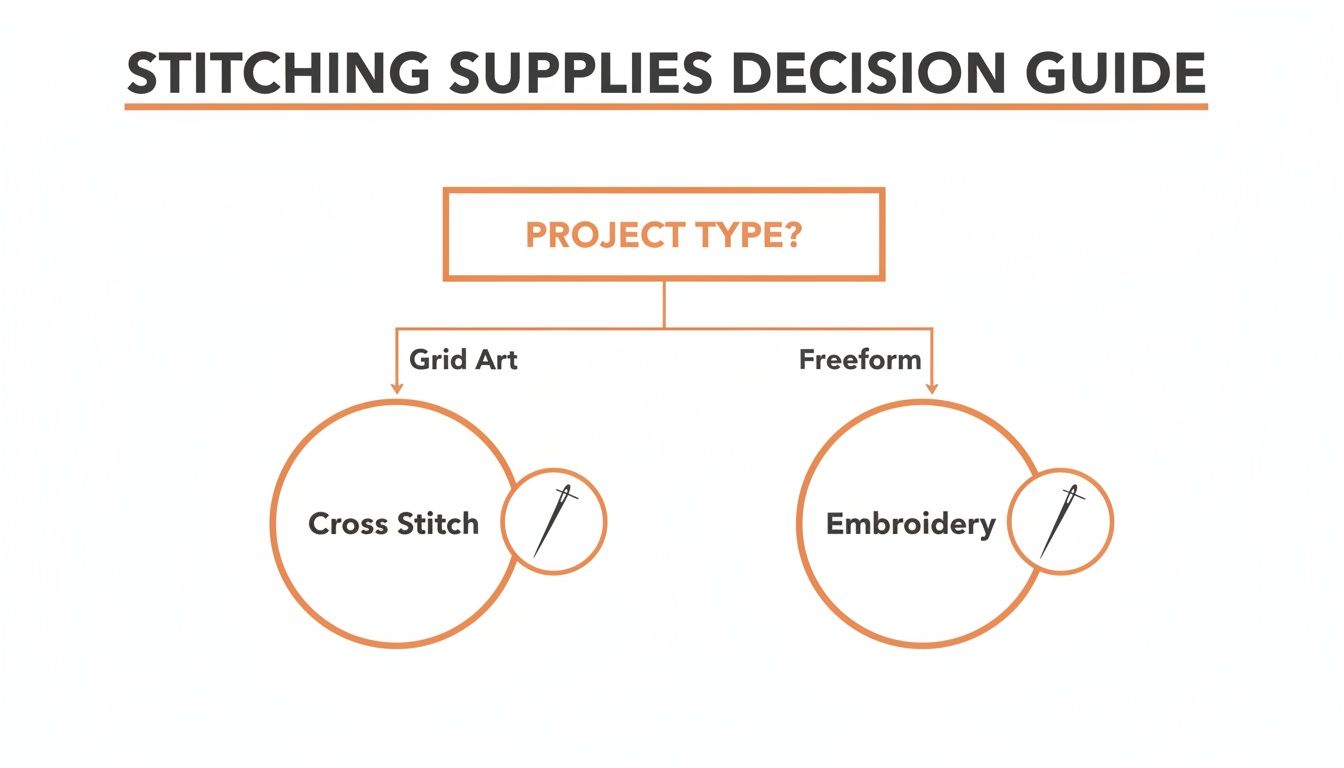
As you can see, the final look you're going for—either something grid-based or totally free-flowing—is the biggest clue for which supplies you'll need.
Thinking About Time and Customization
The time you have to spend on a project is also something to consider. The cross stitch kit market here in Canada is booming, hitting a value of $45 million in 2024. For those of us with busy schedules, a typical cross stitch project takes about 15 hours, which is totally doable over a weekend. Embroidery, with its variety of more complex stitches, can take a bit longer, often closer to 25 hours.
But when it comes to making things your own, embroidery is the clear winner. A whopping 75% of Canadian patch makers use it because it’s just so versatile. You can dig deeper into these craft market trends and statistics if you're curious.
At the end of the day, the best choice is the one that gets you excited to start. Both crafts are a wonderful way to make something beautiful with your own hands, so just trust your creative gut.
Whether you start with a cute little cross stitch keychain or an embroidered patch for your backpack, the most important thing is to just have fun with it.
Finding the Perfect Beginner Kit
Ready to jump in and start stitching? Honestly, grabbing your first all-in-one kit is one of the most exciting parts of the journey. It's also the smartest way to make sure your first project is a success. A good kit takes away all the guesswork, giving you everything you need—pre-cut fabric, the right threads, and clear instructions—so you can just focus on having fun.
Whether you're feeling drawn to the neat, orderly world of cross stitch or the free-flowing art of embroidery, there's a perfect project out there for you. The trick is to find a kit that's specifically designed to help a total newbie build confidence from the very first stitch.
Cross Stitch Kits for Easy Wins
If the methodical, grid-based nature of cross stitch is calling your name, you'll want a kit that makes the process as straightforward as possible. While traditional Aida cloth is the standard, I often recommend a plastic canvas kit for anyone just starting out. They're a game-changer.
- Rigid Structure: Plastic canvas is stiff, so you don't need a hoop to keep it taut. This makes it so much easier to hold and manage.
- Larger Holes: The holes are bigger and super easy to see, which helps you guide your needle to the exact right spot every time.
- Durable Finish: These kits are brilliant for making sturdy little things like keychains, coasters, or magnets that you can actually use right away.
This kind of kit strips away the fiddly bits, letting you focus on mastering the basic X-stitch and getting that awesome feeling of a quick, finished project.
Choosing a kit with a rigid base like plastic canvas or even pre-cut wood eliminates fabric management entirely, allowing you to focus purely on the meditative joy of stitching.
Embroidery Kits for Creative Freedom
For those of you who want to explore the more artistic side of things with embroidery, the best beginner kits will give you a clear path forward without stifling your creativity. Look for projects that provide some structure, like pre-cut materials and fantastic guidance.
Modern embroidery kits often feature really stylish and practical projects that feel much less intimidating than starting a huge piece of hoop art. A leather keychain kit, for instance, gives you a small, manageable canvas to practice on. Or you could try a custom patch kit to create a cool, wearable piece of art. Many of these kits even come with step-by-step video tutorials, which is like having a friendly teacher right there beside you.
When you start with a project that has a defined shape and purpose, you can concentrate on mastering a few key stitches and end up with something that looks polished and professional, even on your first go.
Your Stitching Questions, Answered
Jumping into the world of needlecraft can feel a bit like learning a new language. You've probably got a few questions buzzing around, so let's tackle some of the most common ones. My goal is to get you feeling confident and ready to pick up a needle.
Is Cross Stitch or Embroidery Easier for a Beginner?
Honestly, for most people just starting out, cross stitch is the easier of the two. Think of it as painting by numbers, but with thread. You're working with a single, repeating X-shaped stitch on a special gridded fabric called Aida. The whole process is about following a chart, which can be incredibly relaxing and straightforward.
Embroidery, on the other hand, involves a whole family of different stitches on plain fabric. It's more free-form, which means you need to get a feel for spacing and tension yourself. That said, a simple embroidery kit that only uses one or two basic stitches can be a wonderful starting point, too!
Here's the simplest way to think about it: cross stitch is about counting on a grid, while embroidery is like drawing with thread. If you love structure, you'll probably love cross stitch. If you crave creative freedom, embroidery might be your calling.
Can I Just Use My Cross Stitch Supplies for Embroidery?
While there's a little overlap, the most crucial tools really aren't interchangeable. It's a classic "right tool for the right job" situation. You can definitely use the same colourful cotton floss for both, but the needles and fabric are a different story.
- Cross Stitch needs a blunt-tipped tapestry needle to glide through the holes in the gridded Aida cloth without snagging.
- Embroidery uses a sharp-tipped needle to cleanly pierce plain-weave fabrics like cotton or linen.
Trust me, trying to force a blunt needle through a tight cotton weave is a recipe for frustration. And using a sharp needle on Aida can split the fibres and mess up your grid. Stick with the right tools, and you'll get much cleaner, more beautiful results.
What Kind of Projects Work Best for Each Craft?
This is where the unique personalities of each craft really shine through!
Cross stitch excels at anything with a geometric or pixelated vibe. Its blocky, uniform stitches are perfect for framed quotes, charming retro video game art, or festive holiday ornaments. The neat, structured look is its superpower.
Embroidery is your go-to for creating fluid lines, rich textures, and intricate, detailed images. It’s fantastic for personalizing a denim jacket with flowers, adding a monogram to a tote bag, making artistic patches, or adding a delicate touch to pillowcases. The sheer variety of stitches opens up a massive world of artistic expression.
Ready to stop wondering and start creating? Stitch Mingle has a delightful collection of all-in-one kits designed with complete beginners in mind. Find your perfect first project today and discover the pure joy of making something beautiful with your own two hands! Check out our beginner-friendly kits at https://stitchmingle.com.