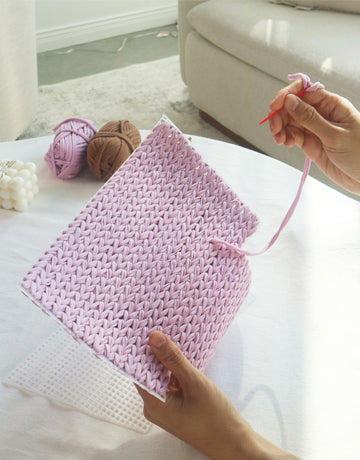

A knitting kit for a beginner is the perfect launchpad into a new hobby, providing everything you need to create something beautiful without the overwhelming trip to the craft store. This guide will walk you through why a kit is the best starting point, what essential tools it should contain, and how to choose the right one for you. We'll even cover the basic "how-to" of knitting your first project and fixing common mistakes.
| Component | Description | Why It's Crucial for Beginners |
|---|---|---|
| Yarn | Pre-measured, smooth, light-colored yarn in medium or chunky weight. | Easy to see stitches, prevents running out mid-project, and is less frustrating than slippery or dark yarns. |
| Knitting Needles | Size-matched to the yarn, typically wood (for grip) or metal (for speed). | Correct pairing is essential for proper stitch tension and fabric structure, avoiding loose or stiff results. |
| Instructions | A printed pattern and/or access to video tutorials. | Clear, step-by-step guidance removes guesswork and makes learning the fundamental stitches much easier. |
| Notions | Includes a tapestry needle, stitch markers, measuring tape, and scissors. | These supporting tools are vital for finishing your project professionally, from weaving in ends to ensuring the correct size. |
By starting with a well-curated kit, you bypass the initial confusion of coordinating supplies and set yourself up for a successful and enjoyable first knitting experience.
Why a Knitting Kit Is Your Best First Step

Starting a new hobby should feel exciting, not like you're trying to solve a puzzle just to get started. We've all been there: standing in an aisle packed with endless yarn weights, textures, and colours, with a whole other wall of needle sizes staring back at you. It’s easy to get overwhelmed and make a simple mistake that leads to a frustrating first attempt.
A well-designed beginner knitting kit is your ticket to avoiding that headache. It’s like having an experienced knitter curate the perfect project for you, so you can skip the guesswork and start creating immediately.
H2: Eliminate the Guesswork
The single best thing about a kit is that all the tricky decisions have been made for you by people who know their stuff. You get the perfect amount of beginner-friendly yarn, paired with the exact right size of needles for that specific fibre.
It’s a bit like getting one of those meal-kit boxes. All the ingredients are pre-measured, and the recipe card shows you exactly what to do. You get to enjoy the process of cooking and end up with something delicious, without the stress of a chaotic grocery run.
This is a game-changer because the relationship between your yarn and needles is everything. If your needles are too big for the yarn, your project will look loose and full of holes. Too small, and the fabric becomes stiff and incredibly difficult to work with. A kit guarantees these two are a perfect match.
H2: Set Yourself Up for a Joyful First Project
If you’re wondering whether a kit is the right move, a quick look at the numbers tells the story. Many people took up knitting during the pandemic—an estimated 52 million Americans tried it, with a huge 280% increase among women aged 25-54. Here in Canada, local yarn shops saw sales jump by around 35%, which really drove the demand for easy-to-use, beginner-friendly options.
To give you a better idea of why starting with a kit is so helpful, here’s a quick comparison.
H3: Knitting Kit vs Buying Supplies Separately
| Feature | Beginner Knitting Kit | Buying Supplies Separately |
|---|---|---|
| Convenience | Everything you need is in one box. | Requires visiting a craft store (or multiple sites) to find individual items. |
| Coordination | Yarn and needles are perfectly matched for the project. | High risk of buying mismatched yarn weight and needle size, leading to frustration. |
| Cost | Often more cost-effective as a bundle. | Can be more expensive, especially if you buy the wrong things and need to repurchase. |
| Guidance | Includes clear, project-specific instructions and often video tutorials. | You're on your own to find a pattern and hope it matches your supplies. |
| Project Success | Designed for a successful first experience to build confidence. | Higher learning curve and potential for a frustrating start. |
While the average knitter finishes about 12 projects a year, beginners using a kit often complete their first one in just a weekend! The streamlined process makes all the difference. You can dive deeper into these crafting trends and what they mean for the community in this insightful video.
Ultimately, a good knitting kit beginner set is built for success. By giving you all the tools and clear guidance, it lets you focus on what really matters: learning the stitches and watching your very first creation take shape.
What's Inside Your First Knitting Kit

That moment when you open your first knitting kit beginner set is pure excitement! At first, it might just look like a bundle of fluff and a couple of sticks, but every single item in there has a role to play. Getting to know your tools is the first real step on your journey from newbie to knitter.
So, let's take a peek inside and see what all these bits and bobs are for.
The two things you'll notice right away are your knitting needles and yarn. These are the heart and soul of your project, and how they work together is everything.
-
Knitting Needles: These are your magic wands. Most beginner kits include needles made of wood or metal. A wood needle with a diameter of 6 mm to 10 mm is fantastic when you're starting out because they have a little bit of grip, which keeps slippery yarn from escaping. Metal needles are slicker, letting you knit much faster once you’ve got your rhythm down.
-
Yarn: A good beginner kit will always include yarn that’s a dream to work with. We’re talking smooth, light-coloured, and usually a medium (worsted weight, ~100g/200m) or chunky weight (bulky, ~100g/130m). This makes it so much easier to see your individual stitches, which saves a ton of frustration. A quality kit also gives you the perfect amount for your project, so you don't have to worry about running out or having lots left over.
H2: The Essential Supporting Tools
Beyond the yarn and needles, you'll find a little bag of what we call notions. Don't underestimate these! They’re the trusty sidekicks that make knitting go smoothly and help you get that polished, professional-looking finish.
A thoughtfully assembled kit ensures you have exactly what you need, right when you need it. For instance, Stitch Mingle's kits for projects like the stylish Kainy bag come with high-quality, pre-cut materials. This kind of preparation means that even your very first project will look impressive right from the get-go.
Think of stitch markers as little bookmarks for your knitting. They’re lifesavers for keeping track of your spot in a pattern, like marking the beginning of a round or reminding you where to add or remove a stitch. So simple, but so helpful.
H2: What to Look For in a Kit
Here’s a quick rundown of the other little helpers you'll find in a great knitting kit beginner package and why they matter:
| Tool | Purpose & Technical Specs | Why It's Important for Beginners |
|---|---|---|
| Tapestry Needle | A large, blunt-tipped needle (size 13-17) with a large eye. | You'll use this to weave in the loose ends of yarn when you’re done. It’s the secret to a clean, seamless finish! |
| Stitch Markers | Small plastic or metal rings (locking or split-ring) that you slip onto your needles. | These help you keep your place in a pattern without constantly having to stop and count stitches. |
| Measuring Tape | A soft, flexible tape, at least 60 inches (150 cm) long. | Absolutely essential for checking your gauge (the number of stitches and rows per 4 inches/10 cm) to make sure your project turns out the right size. |
| Scissors | A small, sharp pair of scissors or special yarn snips. | You'll need these for a clean cut when you finish your project or want to change to a new colour of yarn. |
With these tools in hand, you’re officially ready for your first knitting adventure. Each piece is designed to guide you, from casting on that very first stitch to weaving in the final, satisfying end.
How to Choose the Right Beginner Knitting Kit
With so many options out there, trying to pick your very first knitting kit can feel a little overwhelming. The secret is to find one that genuinely speaks to you—your style, how you like to learn, and what you’re dreaming of making. When you find the right match, that first project becomes a joy, not a chore, setting you up for a hobby you’ll love for years.
So, where do you begin? Start by daydreaming a bit. What project gets you excited? Are you picturing yourself wrapped up in a cozy, chunky scarf this winter? Or maybe you'd get more of a kick out of creating a chic little bag for your essentials? The project you choose will shape the skills you learn right off the bat and how quickly you'll have a finished piece to show off.
H2: Match the Kit to Your Skill and Style
Once you’ve got a project in mind, it’s time for a little honest self-assessment. If you’ve never even held a pair of knitting needles before, that’s totally okay! Just look for kits that are specifically labelled "Absolute Beginner" or "First-Timer." These are thoughtfully designed with simple, repetitive stitches that help you build that all-important muscle memory and give you a boost of confidence.
- Simple Project Example: Think about a kit for a flat scarf or a cute set of coasters. These usually stick to the basic knit stitch (Garter Stitch), which is a fantastic way to practice getting your tension even and score a quick, satisfying win.
- More Complex Project Example: A kit for a simple beanie or a small clutch might be your speed if you're feeling a bit more adventurous. These introduce new skills like purl stitches (Stockinette Stitch), knitting in the round, or simple shaping, offering a gentle challenge once you have the hang of things.
Next up, think about how you learn best. Are you a visual learner who loves following a video tutorial you can pause and rewind? Or do you prefer a printed guide with clear diagrams you can lay out beside you? Many modern kits, including ours here at Stitch Mingle, give you both options, so you're covered no matter your preference.
H2: Consider the Bigger Picture
It’s a great time to be a new knitter. The craft is booming, with manual knitting holding a massive 39% share of the market. This tells us that people are really craving that hands-on, traditional experience. This boom has led to some incredible all-in-one kits that save you from the headache and cost of tracking down supplies separately. For example, the average knitter whips up about 12 projects annually and can easily spend over $300 on supplies in that time. A well-designed kit bundles everything together from the get-go. Stitch Mingle's seasonal bundles are a perfect example of this, often making it much more affordable to start. If you're a numbers person, you can read more about these knitting statistics and their sources on Gitnux.org.
A truly great beginner kit is so much more than just yarn and needles. It’s a complete learning experience in a box. It should feel like a patient friend is guiding you, making sure you feel supported from your very first stitch to your last.
At the end of the day, choosing the right knitting kit beginner set is all about you. Think about what will make you excited to sit down and create. By matching the project, skill level, and teaching style to what feels right for you, you’re not just buying supplies—you’re starting a wonderfully rewarding creative journey.
How-to: Your First Knitting Project Step-by-Step
Alright, let's get those needles clicking! This is the part where you take a simple ball of yarn and start turning it into something real. It can feel a little intimidating at first, but it's just a simple rhythm your hands will learn.
Think of it like learning a dance. First, you have to get on the floor (Casting On). Then, you learn two core moves that make up almost every dance (the Knit Stitch and Purl Stitch). And finally, you take a bow when you're finished (Casting Off). Let's walk through it together.
H2: Step 1: Casting On (Getting Yarn on the Needles)
Before you can make a single stitch, you need to get the yarn onto one of your needles. This all begins with a simple, adjustable loop.
- The Slip Knot: This is your starting point. Make a loop with your yarn, leaving a 6-inch tail. Reach through that loop, grab the yarn that's connected to the ball (the working yarn), and pull a new loop through. Place this loop onto one needle and gently tug both yarn ends to snug it up.
-
The Long-Tail Cast On: This is a popular and stretchy method. Measure a tail of yarn about three times the desired width of your project. Make a slip knot, then arrange the tail yarn over your thumb and the working yarn over your index finger.
- Go under the thumb loop from below.
- Go over and grab the index finger yarn from above.
- Pull it back through the thumb loop.
- Drop the thumb loop and tighten the new stitch on your needle.
- Repeat until you have the required number of stitches.
H2: Step 2: The Two Most Important Stitches
With your stitches all lined up, it’s time to learn the two moves that are the heart and soul of knitting: the knit stitch and the purl stitch. Most beginner projects start with just the knit stitch, so don't feel pressured to master both at once.

Once you've made those initial choices, it's all about the simple, repetitive motion of creating the fabric, one stitch at a time.
- The Knit Stitch (k): Think of this as going in the "front door." Insert your right needle into the front of the first stitch on your left needle, from left to right. Loop the working yarn counter-clockwise around the right needle tip, pull it back through the loop, and let the old stitch slide off your left needle. That's it! You've made a knit stitch. When you knit every row, you create Garter Stitch.
- The Purl Stitch (p): This is the opposite motion. Bring your working yarn to the front. Insert your right needle into the stitch from right to left ("through the back door"). Wrap the yarn counter-clockwise around the right needle tip and push the new loop through to the back. Slide the old stitch off. When you alternate one row of knit stitches with one row of purl stitches, you create Stockinette Stitch.
H2: Step 3: Casting Off (Finishing Your Project)
When your project is the desired length, you must cast off (or bind off) to lock the stitches and prevent unraveling.
- Knit the first two stitches of the row as normal.
- Use the tip of your left needle to lift the first stitch over the second stitch and completely off the right needle. You have one stitch left on the right needle.
- Knit one more stitch from the left needle. You now have two stitches on the right needle again.
- Repeat step 2. Continue this process across the row until only one loop remains.
- Cut the yarn, leaving a six-inch tail. Pull that tail all the way through the final loop and tug to lock it.
It's an exciting time to be learning. The US knitting needles market is set to grow to an incredible USD 1.2 billion by 2027, and so much of that growth is happening online—a recent report showed that 35% of knitters buy all their supplies from websites. That’s exactly why we pour so much effort into our video-guided knitting kit beginner sets at Stitch Mingle. We've seen firsthand how clear, friendly guidance helps turn that initial curiosity into a lifelong passion. You can read more about these fascinating market trends and projections on futuremarketinsights.com.
Don't Panic! Fixing Those Common Beginner Knitting Mistakes
Let's be honest, every new knitter drops a stitch or two. Finding that your neat rows have suddenly gone a bit wobbly isn't a sign you're doing it wrong—it's a rite of passage! These little hiccups are just part of the journey. Think of this as your friendly guide to smoothing out those first few bumps in the road.
When you're just getting started with a knitting kit for a beginner, every mistake can feel like a huge deal. But I promise you, almost everything is fixable. The real skill isn't avoiding mistakes, but learning how to spot them and knowing the simple tricks to get your project back on track.
H2: That Pesky Problem of Uneven Tension
Is your knitting looking a little… quirky? Some stitches are tight and small, while others are loose and loopy? That’s all about tension, and it's easily the most common hurdle for anyone new to the craft. It just means your hands are still learning the rhythm of holding the yarn and needles.
There’s no magic solution here other than practice. Your hands are building muscle memory, so be patient with them!
- If your stitches are too tight: Take a deep breath and consciously relax your grip. You're not trying to strangle the yarn! Let it glide through your fingers instead of pulling it tight after every single stitch.
- If your stitches are too loose: Check where you're forming the stitch. Make sure you're wrapping the yarn around the main barrel of the needle, not just the pointy tip. After you make a stitch, give the working yarn a gentle little tug to snug it up.
H2: The Mystery of the Dropped (and Added) Stitches
Staring at your project and realizing you have a different number of stitches than you started with is a classic "what just happened?" moment. A dropped stitch will leave a little "ladder" running down your work, while an accidental yarn over (an extra wrap of yarn) can create a hole and a new stitch you didn't want. Don't panic!
A small crochet hook (size F/3.75mm or G/4mm), which often comes in handy knitting kits, is your new best friend. To fix a dropped stitch, just slide the hook through the runaway loop from front to back, grab the first "rung" of that ladder, and pull it right through the loop. Keep going up the ladder until the stitch is safely back home on your needle.
A mistake is just a learning opportunity in disguise. The first time you rescue a dropped stitch is a massive confidence boost—it proves you’ve got this!
H2: Sorting Out Twisted Stitches
Ever look down and see a stitch that looks like it's sitting backwards on your needle? That's a twisted stitch. It usually happens when you wrap the yarn the wrong way around the needle or accidentally knit into the back leg of the loop instead of the front.
The good news is, this is an easy fix. Just slip the twisted stitch over to your right-hand needle, give it a little spin so it's facing the right way (the right leg of the stitch should be in front of the needle), and pop it back onto the left-hand needle. It’s a tiny adjustment that makes a huge difference in creating that smooth, beautiful fabric you're aiming for. Learning these little tricks will help you feel ready to take on any knitting kit beginner project.
Your Next Steps After the First Kit
You did it! You’ve woven in that last end and officially finished your first project from a knitting kit beginner set. There's nothing quite like that feeling of holding something you made with your own two hands, is there? So, what now?
That first project is a huge milestone, but it's really just the first step. The skills you just picked up—the basic knit stitch, maybe the purl stitch—are the foundation for a whole world of cozy, creative projects.
H2: Building on Your New Skills
Chances are, your first project was something flat, like a simple scarf or a dishcloth. Now that you've got the hang of that, the natural next step is to start knitting in the round.
Don't let the term intimidate you! Knitting in the round is simply how you create seamless, tube-shaped items. Instead of knitting back and forth in rows, you join your stitches into a circle and just keep knitting around and around. It's the magic behind so many classic projects:
- A simple beanie: This is the perfect second project. You'll use the same stitches you already know, but you’ll get comfortable working on circular or double-pointed needles (DPNs) to create that classic hat shape.
- A cozy cowl: Think of this as a mini, circular scarf. It’s a wonderfully quick and satisfying knit that gives you more practice with working in the round without a lot of complicated shaping.
- A pair of fingerless mitts: These are fantastic for learning how to work with a smaller number of stitches and can be a gentle introduction to simple shaping, like making a thumb gusset.
H2: Making It Your Own
One of the best parts of knitting is that you can put a little piece of yourself into everything you create. As you get more comfortable with the basics, you can start adding personal touches that make your projects truly unique.
Adding a personal touch is what transforms a handmade item into a cherished keepsake. It’s those little details that tell a story and make your creation completely one-of-a-kind.
Why not add a custom embroidered patch or one of Stitch Mingle’s personalized name tags to your finished hats and scarves? It’s a simple, elegant way to "sign" your work and give it a beautifully polished look.
Your Knitting Kit Questions, Answered
It's totally natural to have a few questions buzzing around your head before you dive into a new craft. Let's tackle some of the most common ones I hear from aspiring knitters, so you can feel confident and excited to cast on your first stitch.
H2: How Long Will My First Project Take?
This is probably the number one question! Honestly, for most beginner-friendly kits, you’re looking at a pretty quick and satisfying project. Think a couple of cozy evenings on the sofa or a relaxed weekend afternoon. A simple scarf or a cute set of coasters, for example, can often be finished in just 4-6 hours of focused knitting time.
Of course, the exact time will depend on the project itself and how quickly you find your groove with the stitches. Don't worry, our video tutorials are designed to help you build that rhythm and make the whole process feel smooth and enjoyable.
H2: What Is the Best First Project for a Total Beginner?
My best advice is to start with something small and flat. This way, you can really focus on getting the hang of the basic knit and purl stitches without getting tripped up by more complex shaping or counting. It’s all about building that muscle memory first.
A simple dishcloth or a chunky scarf is perfect. These projects are wonderfully repetitive, which is the secret to building confidence and getting those stitches to look beautifully even.
That’s exactly why we curate Stitch Mingle’s beginner kits the way we do—to make sure your first go is encouraging and, most importantly, fun! If you're looking for even more inspiration, check out our guide to other easy crafts to do at home.
Ready to start your creative journey? The perfect knitting kit beginner set is waiting for you at Stitch Mingle. Our kits include everything you need—from premium, pre-cut materials to step-by-step video guides—to create something beautiful on your very first try. https://stitchmingle.com
Explore More from Stitch Mingle: