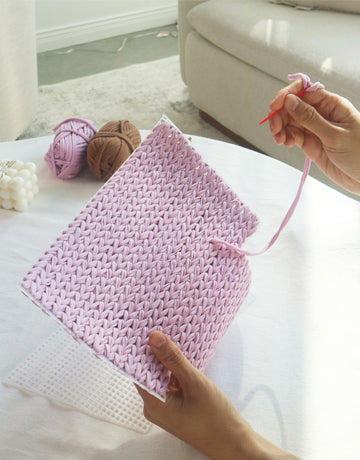

You open the box, spread everything across the table, and feel two things at once. First, delight. The colours are lovely, the texture is inviting, and you can already picture the finished rug in your space. Second, a tiny wobble of panic. What is this mesh for? Which tool do I start with? Am I about to ruin perfectly good yarn?
That mix of excitement and uncertainty is completely normal. A good rug making kit gives you the materials, but true confidence comes from understanding the flow of the project from first look to final display.
Welcome to the World of Rug Making
Most beginners don't need more hype. They need a calm voice beside them saying, yes, this is learnable.
A rug making kit sits in a lovely middle ground between craft and home décor. You're not only making something with your hands. You're making an object with presence. A small rug, wall hanging, or textured mat changes the feel of a room in a way a sketchbook page or practice swatch usually doesn't.
That's part of why this craft feels so satisfying. You can see progress quickly, and each new section of yarn makes the design feel more real.
Rug making also belongs to a much older story of textile making. The groundwork behind today's kits goes back a long way. The U.S. carpet industry began in 1791, and later innovations such as Erastus Bigelow's power loom in 1839 and the Jacquard mechanism in 1849 helped make intricate, repeatable patterns possible before they ever appeared in consumer kits, as noted in this history of rugs and carpet production.
That history matters because it explains why a beginner can open a modern kit and follow a pattern with confidence. You're benefiting from generations of refinement in materials, pattern structure, and technique.
If you're already thinking about where your finished piece might live, it can help to look at professionally styled interiors for scale and placement ideas. A visual resource like this guide to luxury rugs in Niagara can help you notice how rug size, colour, and texture affect the mood of a room.
You don't need perfect technique on day one. You need enough understanding to begin, enough patience to keep going, and enough curiosity to enjoy the little wins.
Your first little win might be simple. Identifying the parts. Making one tidy knot. Choosing where to work. That counts. In rug making, confidence builds from small, visible progress.
Unboxing Your Kit and Preparing Your Workspace
A rug making kit makes more sense once each piece has a job.

What's usually inside the box
Most kits include a backing or canvas, pre-cut yarn or yarn bundles, a tool, and a pattern or printed design. Some also include finishing materials or instructions for edging and backing.
The backing matters more than it first appears. The modern kit format became practical when manufacturers standardised supplies in the 1930s, moving from basic sacking to a gridded canvas with 3.3 holes per inch, which made commercial patterns and all-in-one kits possible according to this rug making history reference.
That standardisation is why your canvas feels organised instead of mysterious. The grid gives you a repeatable structure, which is exactly what a beginner needs.
Here's what each part is doing for you:
- Canvas or backing keeps your pattern organised. It acts like a map.
- Yarn creates the pile, texture, and colour blocks.
- Tool changes based on technique. A latch hook, punch needle, or tufting tool each forms the yarn differently.
- Pattern guide reduces decision fatigue. You're not guessing where every colour goes.
If you want a closer look at basic materials before you begin, this overview of rug hooking supplies is a useful companion.
Rug making kit types at a glance
Not every rug making kit works the same way. This quick comparison helps you identify what you've bought.
| Technique | Tool Used | Best For | Feel |
|---|---|---|---|
| Latch hook | Latch hook tool | Beginners who want clear, repetitive steps | Chunky, fluffy, graphic |
| Punch needle | Punch needle | Smaller projects and relaxed handwork | Soft, looped, textured |
| Tufting | Tufting gun | Makers comfortable with setup and finishing | Fast coverage, bold pile |
Latch hook is often the easiest place to begin because the motion is simple and visible. You can see each knot form. Punch needle feels gentler and more meditative. Tufting can be exciting, but it usually asks more of your setup and finishing process.
Setting up a workspace you'll actually enjoy
You don't need a perfect craft room. You need a stable, comfortable patch of space where your materials won't keep sliding onto the floor.
Try this short setup checklist:
- Choose a flat surface so your canvas stays easy to read.
- Sort yarn before starting by colour family or pattern section.
- Keep scissors nearby if your kit includes longer yarn or finishing steps.
- Sit with good light because counting grid spaces gets tiring in poor lighting.
- Protect your floor or table if glue or trimming will happen later.
If you're unsure what size finished piece makes sense for your room, a visual planning tool like this rug size guide helps you picture placement before you commit to a pattern.
Practical rule: If your tools are organised before your first stitch, the project already feels easier.
That's not glamorous advice, but it works.
Mastering Your First Stitches and Techniques
The first stitch is where many crafters tense up. They're trying to learn the movement, read the pattern, hold the yarn correctly, and judge whether they're doing it “right” all at once.
Don't do that to yourself.
Start in a corner or spare area and practise the movement without worrying about the design.

The basic latch hook motion
If your rug making kit is a latch hook style project, the motion becomes natural surprisingly quickly. Break it down into four tiny actions.
- Fold the yarn Fold one pre-cut strand in half so it forms a loop at the centre.
- Slide the hook under the canvas strand Pass the tool under one section of the grid where the pattern tells you to place that colour.
- Catch the yarn Place the looped middle of the yarn over the hook. The latch opens and closes as you move.
- Pull and tighten Draw the loop partway through, catch the loose ends, then pull them through the loop to form the knot.
Do it slowly for the first few rows. Speed can come later.
A visual demonstration can make that hand motion click faster, especially if you're a learn-by-watching person.
What a good stitch feels like
A proper stitch usually feels secure, not strained. You shouldn't have to yank it hard. The knot sits snugly on the canvas and the yarn ends point upward in an even little tuft.
If your stitches look loose, check whether you're pulling the yarn ends fully through the loop. If they look cramped or messy, you may be catching too much of the canvas or twisting the yarn awkwardly as you pull.
Watch for these very normal beginner habits:
- Pulling too fast can make the latch miss the yarn.
- Skipping grid spaces by accident throws off the design later.
- Mixing colours too early makes the pattern harder to follow.
- Working while tense often leads to tighter, less tidy knots.
Build muscle memory before you build the rug
Give yourself permission to make a few practice knots that aren't part of the final showpiece. That tiny rehearsal saves a lot of frustration.
Try this simple drill:
- Make a short row using one colour only.
- Pause and look at the spacing.
- Undo one knot on purpose so you know how correction feels.
- Make another short row a bit more smoothly.
A beginner doesn't need instant speed. A beginner needs one repeatable motion.
That's the heart of it. Once your hands understand the sequence, the pattern becomes much less intimidating. You stop wrestling with the tool and start noticing the satisfying rhythm of the work.
A Guided Walkthrough of Your First Rug
A first rug usually has a messy middle. The beginning feels exciting. The end feels rewarding. The middle is where you wonder whether it's supposed to look uneven, whether you chose the right colour first, and whether everyone else secretly found this easier than you do.
They didn't. The middle just looks less glamorous.

Start with the least exciting step
If your kit uses a stretched backing, take your time here. This is one of those moments where patience saves the entire project. Expert tufting guidance stresses that the biggest beginner failure point is poor backing adhesion caused by cloth that isn't stretched drum-tight, which can lead to uneven yarn penetration and glue seeping through the front. A rigid frame and tight canvas are essential, as shown in this tufting instruction video.
Even if you're not using a tufting gun, the lesson still applies. A loose foundation creates problems that show up later.
When I guide a beginner through a first piece, I usually suggest this order:
- Secure the backing first so it won't shift while you work.
- Trace or confirm the design clearly before yarn covers the guide lines.
- Choose one starting area instead of hopping around the pattern.
- Work in rows or blocks so the design grows in a tidy way.
Finding your rhythm
Some crafters like to complete one colour at a time. Others prefer moving section by section so the image appears gradually. Both are fine. Pick the method that helps you stay oriented.
If your pattern has a border, that can be a comforting place to begin because it gives the piece an outline. If it has a central motif, starting there can feel more exciting because you see the main design appear early.
A lot of readers ask how close rows should sit. For tufted work, instructional guidance recommends placing rows close together for a denser result and testing a small sample first because yarn thickness changes how tightly fibres can pack. I mention that here as a mindset, not a rigid rule. Let the material tell you what looks balanced.
When the rug looks awkward halfway through, that usually means it's halfway through.
That sentence has rescued many projects.
If you misplace a colour, don't panic. Most hand methods let you remove the yarn and replace it. It's annoying, not disastrous. Keep a small dish or envelope for rescued yarn pieces if they're still usable for your technique.
When motivation dips
The middle stretch is where small systems help. Keep your yarn sorted. Take a photo at the end of each session. Progress is easier to feel when you can compare today's work to yesterday's.
If you enjoy learning through calm, step-by-step teaching styles, some of the same clarity used in a guide for online educators and creators applies surprisingly well to crafting too. Clear sequencing, visible examples, and manageable steps make any skill easier to stick with.
For design ideas when you're ready to try another pattern, these hooked rug patterns can help you think about shape, colour placement, and beginner-friendly motifs.
Your first rug won't feel perfect all the way through. It will feel patchy, then promising, then suddenly real. That's the normal rhythm of making.
Finishing Touches for a Professional Look
The last stitch doesn't mean the rug is finished. It means the rug is ready to become stable, durable, and presentable.
This is the stage many beginners rush because they're eager to display the piece. I understand the urge. But finishing is where handmade becomes polished.

Why finishing matters
A rug that looks charming on the front can still fail in use if the back isn't secured properly. Guidance around rug quality and assurance often points back to material and finishing choices, and one practical lesson for DIY makers is this: without proper finishing, a handmade piece may remain display-quality rather than suitable for high-wear use, as reflected in this GoodWeave report.
That distinction helps you decide what you're making. Is this a wall piece, a bedside accent, or something meant for frequent foot traffic? Your answer affects how carefully you need to back, trim, and protect it.
The key finishing jobs
Most projects need some version of these final steps:
- Secure the back Apply the appropriate adhesive or backing method for your technique. Let it cure fully before moving the piece or folding it.
- Add a secondary backing if needed A fabric or non-slip layer can protect the stitches and make the piece feel more complete.
- Trim the surface Snip stray fibres and level any areas that look uneven. Work slowly so you don't create accidental dips.
- Tidy the edges Fold, bind, or finish raw edges so the rug doesn't fray or curl.
Trimming without fear
Trimming sounds risky until you realise it's usually a series of tiny corrections, not one dramatic haircut. Start with the obvious long strands. Step back. Check the surface from different angles.
If your design has shape changes between colours, gentle carving or contour trimming can help those lines show more clearly. Keep your expectations realistic on a first project. “Cleaner” is the target, not “factory perfect.”
Finishing insight: The back decides how long the rug lasts. The trimming decides how finished it looks.
That's why this stage deserves your full attention. The final hour or two can completely change how your piece reads in the room.
Your Rug Making Questions Answered
Beginners usually ask very practical questions. That's a good sign. It means you're thinking like a maker, not just a shopper.
What's the single hardest part for a beginner
Preparation. Not the stitch itself.
A detailed production guide notes that most project-ending beginner mistakes happen before the main crafting stage starts, especially during cloth stretching, design tracing, or tool setup, which is why careful preparation matters so much in rug work according to this step-by-step guide to how rugs are made.
If your project feels difficult early on, don't assume you're bad at the craft. Check your setup first.
Can I fix a colour mistake
Usually, yes. Most hand techniques let you remove an incorrect strand and replace it. Work gently so you don't distort the surrounding area.
If the yarn has frayed badly or become too short, swap in a fresh piece rather than forcing it.
How do I stop shedding
Some shedding is normal at first, especially before trimming and final cleanup. A careful trim, proper backing, and gentle handling reduce loose fibres.
If your piece is decorative rather than meant for heavy use, that's easier to manage. For a floor piece, finishing quality matters much more.
How do I know whether my rug is for the floor or the wall
Ask two questions. Is the back properly secured, and is the piece sturdy enough for traffic?
If the answer feels uncertain, treat it as décor first. A bedroom accent or wall display is still a real success.
What if I'm slow
Slow is fine. Slow usually means attentive, and attentive beginners often get neater results.
Your first project is not a race. It's practice that happens to become something beautiful.
Continue Your Crafting Journey with Stitch Mingle
A first rug often changes the way you see craft kits. You stop thinking of them as small boxed activities and start seeing them as guided making experiences with a clear beginning, middle, and finish.
That matters because many people assume a first project has to become a lifelong speciality. It doesn't. Sometimes a rug making kit opens the door to other forms of handwork you end up loving just as much.
If you want to keep that momentum going, a useful next step is choosing projects that teach one new skill at a time.
Explore more with Stitch Mingle
| Craft path | What you'll practise | Good if you enjoyed |
|---|---|---|
| Latch hook rug kit ideas | Pattern reading, texture, repetition | Structured yarn work |
| Leather keychain kits | Assembly, finishing, gift-making | Fast weekend projects |
| Plastic canvas kits | Counting, stitching, shape building | Grid-based crafts |
One option in this space is Stitch Mingle, which offers beginner-oriented DIY kits in categories such as needlepoint-style and punch-needle-adjacent textile crafts, along with leather and plastic canvas projects for people who like clear instructions and all-in-one materials.
The bigger lesson from your first rug is simple. You can learn more than one craft, and you don't have to master everything at once. You just need the next project that feels inviting enough to begin.
If you're ready for your next creative win, explore Stitch Mingle for beginner-friendly kits, clear tutorials, and hands-on projects you can finish and feel proud to use, gift, or display.